

Chhath Puja 2026: Dates & Arghya Time
 15th Nov 2026
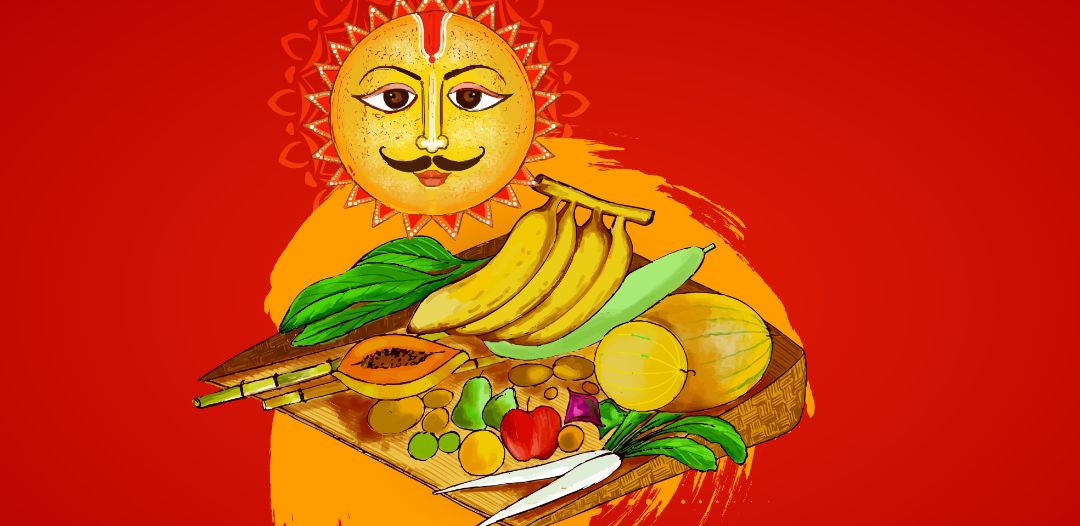
Chhath Puja 2026 is on Sunday, 15 November 2026.
| Nahay Khay | Friday, 13 November |
|---|---|
| Kharna sunset, Sat, 14 Nov | 4:57 PM |
| Sandhya Arghya (sunset), Sun, 15 Nov | 4:57 PM |
| Usha Arghya (sunrise), Mon, 16 Nov | 6:11 AM |
| Times for | Patna (IST) |
Times are for Patna. Sunrise and sunset change by city; cities further west see them later.
On this page: significance · the story · puja at home · samagri · regional traditions · The four days of Chhath · Chhath prasad: thekua and more · Rules of the vrat · dates · prarthanas and mantras with audio · questions about Chhath Puja
Shashti
Saptami

Significance of Chhath Puja
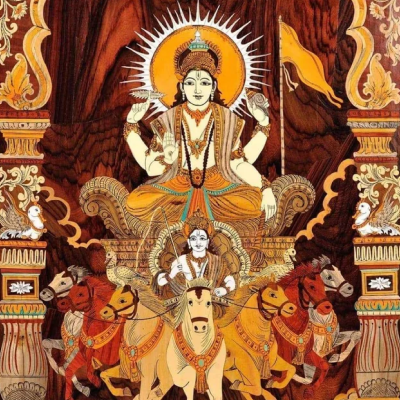
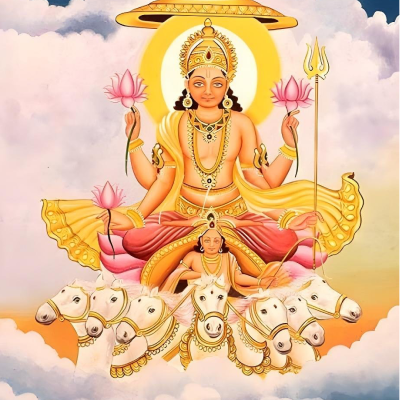
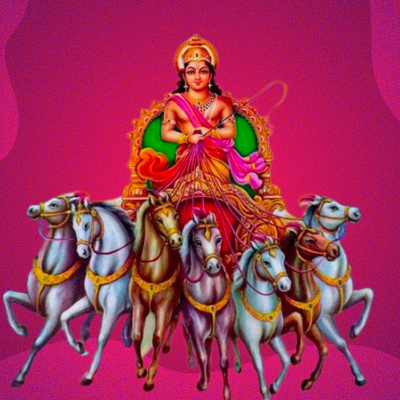
Chhath is a vrat (vowed fast) to the Sun. The vrati worships Surya, the Sun every devotee can watch rising and setting over the water, together with Chhathi Maiya, also known as Shashthi Devi. Both names come from shashthi, the sixth: the main day is Kartik Shukla Shashthi, the sixth lunar day of the bright half of Kartik.
Families describe Chhathi Maiya in more than one way. In popular belief she is Surya's sister. The Puranas know Shashthi Devi as the sixth part of Prakriti, also called Devasena, the goddess who watches over newborns and young children. Other accounts identify her with Usha, the dawn, and honour Pratyusha, whom they take to be the last light of evening, at sunset. These traditions sit side by side.
Both arghyas matter, and many explain them this way. At sunset the vrati thanks the Sun for the day and the season just ended. At dawn she asks for health and long life for the children and the household in the season to come. Chhath falls just after the paddy harvest, and much of what is offered is fresh produce from the fields.
Vratis usually pray for their children and family, or keep the fast to fulfil a mannat (a vow made when a prayer is granted). A smaller Chhath, Chaiti Chhath, is kept in the month of Chaitra, but the Kartik observance is the main one.
The story of Chhath Puja
The Devi Bhagavata Purana tells the story of Shashthi Devi. King Priyavrat, a son of Svayambhuva Manu, had no children with his queen Malini. After the sage Kashyapa performed a sacrifice for a son, Malini conceived, but the child was born dead. Priyavrat carried the body to the cremation ground and, in his grief, was ready to give up his own life.
A goddess then appeared in a shining chariot. She named herself Devasena, a mind-born daughter of Brahma, and Shashthi, the guardian of children. She took the child in her arms and brought him back to life. In return she asked the king to spread her worship, and Priyavrat began honouring her on the sixth day. The same text links her worship to the sixth day after a child's birth.
Many in Bihar also link Chhath to Karna, Surya's son and king of Anga, who is said to have worshipped the Sun every day standing in water. Vratis at the ghat stand in the water in the same way.
How Chhath Puja is observed, at the ghat or at home
- Clean the home and the kitchen Before Nahay Khay, scrub the house, the kitchen and the path to the ghat. Many families cook the festival food on a clay chulha or a stove kept only for Chhath.
- Take the Nahay Khay bath On the first morning, bathe in a river or pond if one is close, and bring some of the water home. At home, add a little Gangajal to your bathing water.
- Eat the one sattvic meal Cook lauki (bottle gourd), chana dal and rice in ghee, with no onion or garlic. Offer it first, then the vrati eats it as her only meal of the day.
- Keep the Kharna fast On the second day the vrati fasts through the daylight hours. Many keep this fast without water too.
- Offer and eat the Kharna prasad After sunset, cook rasiaav (rice kheer sweetened with jaggery) and roti, offer them, and let the vrati eat. The prasad is then shared with the family and neighbours, and the vrati's nirjala (waterless) fast begins.
- Prepare the prasad On the third day, after bathing, make the thekua and kasar in clean or new vessels. Wash and arrange the fruit, sugarcane and other offerings.
- Fill the soop and daura Arrange the prasad and fruit in bamboo soops (winnowing trays) and place them in the daura (a deep bamboo basket). The vrati dresses in a fresh, simple sari.
- Walk to the ghat The family carries the daura to the river or pond, singing Chhath geet on the way. Some vratis cover the road by lying full length on the ground, step after step, to keep a vow.
- Offer Sandhya Arghya During the sunset time shown above, the vrati stands in the water facing the Sun and holds up each soop. Family members pour milk or water from a lota over it as the arghya.
- Light the kosi Families keeping a mannat tie five to seven sugarcane stalks into a canopy, set offerings beneath it and light earthen lamps around it. This is done in the evening and again before dawn.
- Offer Usha Arghya Return to the ghat before daybreak and wait in the water for the sunrise time shown above. Offer arghya to the rising Sun, then give prasad to everyone at the ghat.
- Break the fast with paran The vrati ends her fast with a little water and prasad, and the rest of the prasad is shared with family, friends and neighbours.
Chhath Puja samagri
- Bamboo soops (winnowing trays), one per offering
- A bamboo daura (deep basket) to carry them
- A brass or copper lota for the arghya
- Raw milk and water for the arghya
- Gangajal
- Thekua
- Kasar (rice laddu)
- Sugarcane stalks with leaves
- Whole coconuts
- Bananas
- Sweet lime or other seasonal citrus
- Radish and other seasonal vegetables
- Betel leaves and betel nut
- Earthen diyas, ghee and cotton wicks
- Wheat flour, jaggery and ghee for the prasad
- Rice, jaggery and milk for the Kharna rasiaav
- Lauki, chana dal and rice for Nahay Khay
- A fresh sari or dhoti for the vrati
Regional traditions
- Bihar
- Patna's Ganga ghats, including Gandhi Ghat and Collectorate Ghat, are cleaned and decorated ahead of the arghya days. Women sing Chhath geet, folk songs in Bhojpuri and Maithili handed down through generations.
- Mithila and Nepal's Madhesh
- Janakpur keeps the festival at its sacred ponds, such as Ganga Sagar and Dhanush Sagar, with folk musicians playing dhol and shehnai on the banks. Songs accompany every stage, from preparing the offerings to the walk to the water. Chhath is also kept in Birgunj, Rajbiraj and Kathmandu.
- Jharkhand and eastern Uttar Pradesh
- In Jamshedpur, devotees gather where the Subarnarekha and Kharkai rivers meet. In Varanasi the arghya is offered on the Ganga ghats, among them Assi and Dashashwamedh.
- Delhi, Mumbai and Kolkata
- Purvanchali families in Delhi offer arghya on the Yamuna, at places such as ITO and Kalindi Kunj. In Mumbai the sea stands in for the river at Juhu and Dadar Chowpatty, and in Kolkata families go to Babughat on the Hooghly.
- Abroad
- Bhojpuri-speaking families in Mauritius, and communities in the US, the UK, Canada and Australia, gather at lakes, rivers or beaches. Where there is no water close by, families fill a tub or a small pool at home and stand in it to offer arghya.
The four days of Chhath
- Nahay Khay, "bathe and eat": the vrati bathes, cleans the house and eats one simple meal of lauki, dal and rice. It is a day of getting ready.
- Kharna, also called Lohanda: a day-long fast ends after sunset with rasiaav and roti. Once that prasad is eaten, the vrati takes nothing, not even water, until the end.
- Sandhya Arghya, also called the pehla arag or first arghya: the hardest day, spent fasting and making prasad, ending at the ghat at sunset.
- Usha Arghya, also called bhor ka arghya or the second arghya: the family returns before dawn, offers arghya to the rising Sun, and the vrati ends her fast with paran.
Chhath prasad: thekua and more
Thekua is the centre of the soop. It is a hard, sweet cake of wheat flour, jaggery and ghee, pressed into a carved wooden mould and fried until reddish brown. It stays good for days, which is why families carry it home and send it to relatives long after the festival.
Kasar, a laddu of powdered rice and jaggery, sits beside it, and the Kharna rasiaav is the sweet the vrati eats before her waterless fast begins. The rest of the offering comes from the season: sugarcane, coconut, bananas, citrus and root vegetables. In many homes nobody eats the new sugarcane until it has been offered at the ghat.
Rules of the vrat
- From Nahay Khay onward the household eats only sattvic food, with no onion, garlic, meat, fish or alcohol.
- The vrati keeps a nirjala fast from the Kharna prasad until paran after Usha Arghya.
- Prasad is made only after bathing, in a clean space, with clean or new vessels.
- In Mithila many vratis have their nails cut on the first day.
- In some communities, once a family begins Chhath it is kept every year and handed on to the next generation.
- If you are unwell, pregnant or elderly, you can take part by helping a vrati instead of keeping the waterless fast.
Chhath Puja dates
| Day | Date |
|---|---|
| Sunday | 15 November 2026 |
| Thursday | 4 November 2027 |
Celebrate Chhath Puja with Dharmayana

Festival Pooja & Pandit Booking
Want a Pandit-led pooja for this festival at home, or online if you live abroad? Dharmayana connects you with verified Pandits for all major Hindu festivals — Diwali, Navratri, Shivratri, Janmashtami, Ganesh Chaturthi and more.
You can book:
- Festival pooja at home with a verified Pandit
- Online / virtual pooja with live video and digital prasad
- Same-day sankalp for time-sensitive festivals
Bookings, samagri lists and Pandit assignment are all handled inside the Dharmayana app — choose the festival, pick a date and the rest is taken care of.

Prarthana, Mantras & Vrat Katha
Every festival has its own prarthanas, stotras and vrat kathas. Reading or listening to them on the festival day is the simplest way to observe the tradition at home.
Inside the Dharmayana app you can listen to:
- 1000+ prarthanas, mantras and stotras with clear audio
- Festival-specific kathas — Lakshmi, Durga, Shiva, Ganesha, Krishna
- Multilingual versions: Sanskrit, Hindi, Tamil, Telugu, Kannada and more
Browse the full collection of prarthanas or get the app to play them on the festival morning without ads.

Festival Date, Tithi & Muhurat
Hindu festivals are tied to a specific Tithi, not a fixed date — so the day shifts every year and even varies slightly across cities.
Open the Panchanga for the festival day to see the exact Tithi, Nakshatra, Yoga, Karana and Shubh Muhurat for pooja in your location.
The Dharmayana app keeps track of all upcoming festivals on the Hindu calendar and reminds you in advance.

Personalised Astrology Around Festivals
Festivals are also a good time to look at your kundali — many families plan sankalp, donations or new beginnings around them.
Inside the app you can:
- Generate your personal Vedic kundali
- Talk to a Jyotisha for guidance around career, relationships or health
- Run kundali matching before fixing a marriage during the festival season
All of this is available inside the Dharmayana app — no fixed schedule, use it whenever you need it.
Frequently Asked Questions
What are the Chhath Puja 2026 timings?
Nahay Khay: Friday, 13 November; Kharna sunset, Sat, 14 Nov: 4:57 PM; Sandhya Arghya (sunset), Sun, 15 Nov: 4:57 PM; Usha Arghya (sunrise), Mon, 16 Nov: 6:11 AM. Times are in IST for Patna.
Who is Chhathi Maiya, and how is she related to Surya Dev?
Traditions differ. In popular belief she is Surya's sister. The Puranas describe Shashthi Devi as the sixth part of Prakriti, also called Devasena, who protects children. Some accounts identify her with Usha, the dawn; others speak of Usha and Pratyusha as the Sun's two consorts, honoured at dawn and at dusk.
How long is the Chhath fast, and can you drink water?
The main fast lasts about 36 hours, from the Kharna prasad on the second evening until paran after the dawn arghya. It is nirjala, so the vrati takes no water during that time. Many also fast through the daylight hours of Kharna before it.
What is Kharna in Chhath Puja?
Kharna, also called Lohanda, is the second day. The vrati fasts all day and, after sunset, offers and eats rasiaav (jaggery rice kheer) with roti. The prasad is shared with family and neighbours, and the waterless fast begins after it.
What is offered in the Chhath soop?
Each soop usually holds thekua, kasar, a coconut, bananas, citrus, sugarcane pieces and seasonal vegetables, with betel leaf. The exact list differs between families and regions.
Why is the setting Sun worshipped in Chhath?
The evening arghya thanks the Sun for the day and the harvest just gathered. The dawn arghya asks for blessings for what comes next. Some traditions also link the evening arghya to Pratyusha, seen in these traditions as the Sun's last evening light, and the dawn arghya to Usha.
How many days after Diwali is Chhath Puja?
Chhath follows the lunar calendar, not a fixed count of days. Its main day, Sandhya Arghya, is Kartik Shukla Shashthi, the sixth tithi of the bright half of Kartik, about a week after Diwali; this year's dates are at the top of this page. Nahay Khay comes two days earlier, and Usha Arghya is the next morning.
Is Chhath Puja the same as Randhan Chhath, Hal Chhath or Yamuna Chhath?
No. Randhan Chhath is a Gujarati cooking day before Shitala Satam, on the sixth day of the dark half of Shravan. Hal Chhath, or Hal Shashthi, is the same lunar day, counted as Bhadrapada in north India's calendar, and marks Balarama's birth. Yamuna Chhath, in Chaitra, marks the Yamuna's descent and is kept in Mathura and Vrindavan.
When is Chhath Puja in 2026?
Chhath Puja 2026 falls on Sunday, 15 November 2026.
What is Chhath Puja?
One of the few Hindu rituals with no priest, no idol and no temple — devotees stand waist-deep in a river and offer water themselves to the setting and then rising Sun. The vow at its heart is a 36-hour fast without even a sip of water, kept mostly by women of Bihar, Purvanchal and the Mithila belt of Nepal.
Why is Chhath Puja observed?
The partner deity is Chhathi Maiya, understood as a form of the Vedic dawn goddess Ushas, invoked as the protector of children. That maternal thread runs through the festival's origin stories — King Priyavrata's stillborn son revived by her grace, Sita keeping the vrata to pray for sons, Draupadi and Kunti observing it after escaping the lac palace. Karna, son of Surya, is said to have begun the practice of standing in water to offer arghya. The four days build slowly: Nahay Khay (a Ganga dip and a single sattvic meal), Kharna (a sunset meal of jaggery kheer, after which all food and water stop), then Sandhya Arghya to the setting Sun and Usha Arghya at dawn, when the fast finally breaks. The signature offering is a bamboo soop heaped with thekua, sugarcane and coconut.
What are the other names for Chhath Puja?
Chhath Puja is also known as Dala Chhath, Dala Puja and Surya Shashthi.
Which prarthanas are recited on Chhath Puja?
Aditya Hrudayam, Surya Gayatri Mantra and Aditya Gayatri Mantra are recited on Chhath Puja. You can listen to them with audio on this page.
Book Pandit & Festival Pooja
on the Dharmayana App
Book Chhath Puja Pooja on the Dharmayana App
Verified Pandits, prarthanas with audio and accurate Panchanga, all in one place.


