



Amavasya 2026 is on Sunday, 8 November 2026. Amavasya tithi begins at 11:28 AM IST on 8 Nov and ends at 12:32 PM IST on 9 Nov.
| Amavasya begins / ends | 11:28 AM – 12:32 PM, 9 Nov |
|---|---|
| Snan-daan, 9 Nov | 6:41 AM – 12:32 PM |
| Times for | Ujjain (IST) |
On this page: significance · the story · puja at home · samagri · regional traditions · Amavasya and the ancestors · What to do on Amavasya · What many families avoid on Amavasya · dates · prarthanas and mantras with audio · questions about Amavasya
Amavasya 2026: 8 or 9 Nov?
In Ujjain, Amavasya runs from 11:28 AM, 8 Nov to 12:32 PM, 9 Nov. It covers Pradosh Kaal, the evening after sunset, on 8 Nov, the day of Lakshmi Puja, and is running at sunrise on 9 Nov, the day for snan-daan.
Chaturdashi
Amavasya

Significance of Amavasya
Amavasya is the last tithi of the Krishna Paksha, the waning fortnight, when the Sun and Moon stand together and no moon is seen in the sky. In the amanta calendar followed in much of South and West India, it closes the lunar month. In the purnimanta calendar of the north, it falls in the middle of the month.
Every Amavasya is counted as a fit day for shraddha and tarpan, the offerings made to departed ancestors. Some bathe in a holy river, but most families keep it at home with a bath, a lamp, a quiet fast and charity.
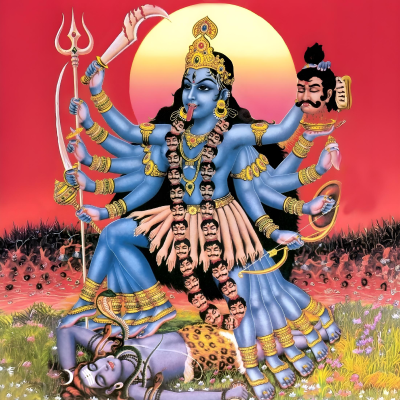
Many teachers say the new moon is not unlucky in itself. It is a day for turning inward, for prayer and silence rather than celebration. Shiva, Kali and Shani are often worshipped on Amavasya, and many families avoid starting new ventures until the bright fortnight begins.
The story of Amavasya
A story often told to explain why food and water are offered to ancestors concerns Karna, the great giver of the Mahabharata. After he fell in the war, his soul reached heaven, but he found himself hungry. Every piece of food he touched turned to gold.
When he asked why, he was told that he had been generous with gold but had never fed his own forebears. Karna replied that he had not known who his ancestors were. He was allowed to return to earth for a fortnight to offer them food and water, and that fortnight is remembered as Pitru Paksha. In some tellings Karna puts his question to Indra, in others to Yama.
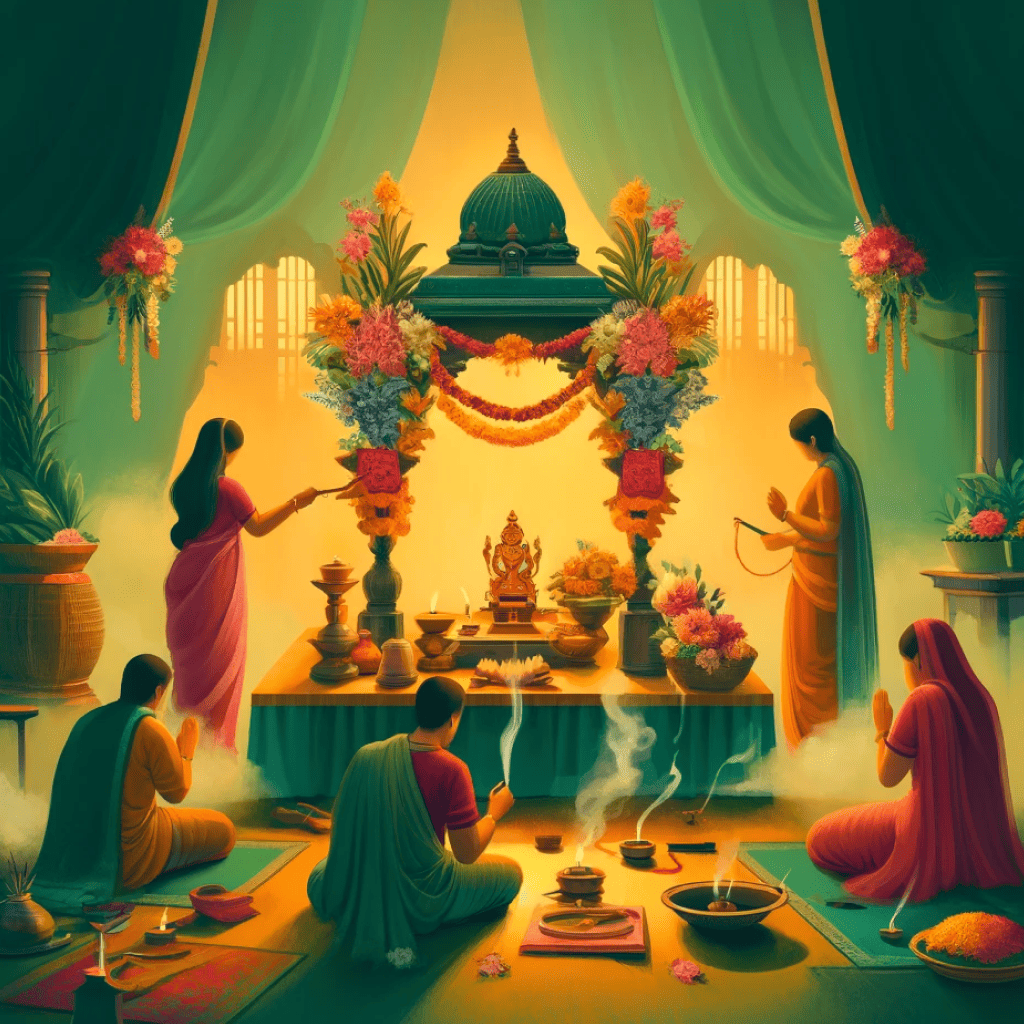
How to do Amavasya puja at home
- Bathe early Wake before sunrise and bathe. If you cannot reach a river, add a few drops of Ganga jal to your bathing water and remember the holy rivers as you pour it.
- Offer water to the Sun Stand facing the rising Sun and offer water from a copper or brass lota.
- Take a sankalp Sit at the family altar and state your name, your gotra if you know it, and your purpose for the day, whether remembering ancestors, a fast or a prayer for the family.
- Offer tarpan Those whose father has passed away offer water mixed with black sesame, with a ring of kusha grass on the finger, calling each ancestor by name. Follow your family priest or elders for the exact method, as it differs between lineages.
- Set food aside for the ancestors Families who perform shraddha offer pinda, rice balls with sesame and ghee. Others keep a portion of the day's simple meal for the crows before the family eats. Many families also set aside a portion for a cow and a dog.
- Worship at the altar Offer water or milk to a Shivalinga, or worship your family deity with flowers and akshat (unbroken rice). Light a lamp of ghee or sesame oil and chant a familiar mantra such as Om Namah Shivaya.
- Give daan Give food, clothes or grain to someone in need, or to a temple kitchen. Many families make this gift in the name of a departed parent or grandparent.
- Close the fast If you are fasting, break it in the evening with simple vegetarian food. Children, elders, pregnant women and anyone with a health condition should eat normally and keep the day through prayer and charity.
Amavasya puja samagri
- Copper or brass lota
- Clean water and Ganga jal
- Black sesame (til)
- Kusha or darbha grass
- Akshat (unbroken rice)
- Flowers
- Sandalwood paste
- Ghee or sesame oil diya with cotton wicks
- Incense sticks
- Milk for abhishek
- Cooked rice, ghee and sesame for pinda, if shraddha is performed
- A small plate of food for crows, cow and dog
- Grain, clothes or food for daan
Regional traditions
- Tamil Nadu
- Aadi Amavasai, Thai Amavasai and Mahalaya Amavasai are the main days for ancestral rites. Families offer tarpanam on a river bank or at the seashore, with large crowds at Rameswaram.
- Gujarat
- The ten-day Dashama Vrata, dedicated to the goddess Dashama or Momai, begins on the Amavasya of Ashadha.
- Jharkhand and West Bengal
- Tribal communities celebrate Sohrai on the Amavasya of Kartik, honouring cattle and the land, remembering ancestors and painting Sohrai art on the walls of their homes.
Amavasya and the ancestors
Tradition holds that the souls of the three preceding generations rest in Pitriloka, a realm between heaven and earth governed by Yama. Shraddha and tarpan are meant for them, and Amavasya is the monthly day set aside for both. Shraddha is the fuller rite, built around the offering of pinda. Tarpan is the simpler offering of water with black sesame.
By custom the eldest son or another male relative on the father's side performs the rite, after bathing and wearing a ring of kusha grass. Many families feed a crow first, since it is believed to carry the offering to the ancestors, and eat only after that. If your parents are living, tarpan is not expected of you; a lamp and a prayer for the family's elders is enough.
What to do on Amavasya
- Bathe early, in a river if you can, or with Ganga jal added to the water
- Offer tarpan with water and black sesame if your father has passed away
- Feed crows, a cow or a dog before the family meal
- Offer water or milk to a Shivalinga
- Light a ghee or sesame oil lamp at the altar in the evening
- Give food, clothes or grain to people in need
- Spend some time in silence, prayer or meditation
What many families avoid on Amavasya
- Starting a new business, project or other auspicious work
- Cutting hair, shaving or cutting nails
- Eating non-vegetarian food
- Lending or borrowing money
- Buying gold, a new vehicle or new clothes
- Arguments and harsh words at home
- In some South Indian families, an oil bath on the day
Amavasya dates
| Day | Date |
|---|---|
| Sunday | 8 November 2026 |
| Monday | 9 November 2026 |
| Tuesday | 8 December 2026 |
| Thursday | 7 January 2027 |
| Saturday | 6 February 2027 |
| Monday | 8 March 2027 |
| Tuesday | 6 April 2027 |
| Thursday | 6 May 2027 |
| Friday | 4 June 2027 |
| Sunday | 4 July 2027 |
| Monday | 2 August 2027 |
| Tuesday | 31 August 2027 |
Celebrate Amavasya with Dharmayana

Festival Pooja & Pandit Booking
Want a Pandit-led pooja for this festival at home, or online if you live abroad? Dharmayana connects you with verified Pandits for all major Hindu festivals — Diwali, Navratri, Shivratri, Janmashtami, Ganesh Chaturthi and more.
You can book:
- Festival pooja at home with a verified Pandit
- Online / virtual pooja with live video and digital prasad
- Same-day sankalp for time-sensitive festivals
Bookings, samagri lists and Pandit assignment are all handled inside the Dharmayana app — choose the festival, pick a date and the rest is taken care of.

Prarthana, Mantras & Vrat Katha
Every festival has its own prarthanas, stotras and vrat kathas. Reading or listening to them on the festival day is the simplest way to observe the tradition at home.
Inside the Dharmayana app you can listen to:
- 1000+ prarthanas, mantras and stotras with clear audio
- Festival-specific kathas — Lakshmi, Durga, Shiva, Ganesha, Krishna
- Multilingual versions: Sanskrit, Hindi, Tamil, Telugu, Kannada and more
Browse the full collection of prarthanas or get the app to play them on the festival morning without ads.

Festival Date, Tithi & Muhurat
Hindu festivals are tied to a specific Tithi, not a fixed date — so the day shifts every year and even varies slightly across cities.
Open the Panchanga for the festival day to see the exact Tithi, Nakshatra, Yoga, Karana and Shubh Muhurat for pooja in your location.
The Dharmayana app keeps track of all upcoming festivals on the Hindu calendar and reminds you in advance.

Personalised Astrology Around Festivals
Festivals are also a good time to look at your kundali — many families plan sankalp, donations or new beginnings around them.
Inside the app you can:
- Generate your personal Vedic kundali
- Talk to a Jyotisha for guidance around career, relationships or health
- Run kundali matching before fixing a marriage during the festival season
All of this is available inside the Dharmayana app — no fixed schedule, use it whenever you need it.
Frequently Asked Questions
What are the Amavasya 2026 timings?
Amavasya begins / ends: 11:28 AM – 12:32 PM, 9 Nov; Snan-daan, 9 Nov: 6:41 AM – 12:32 PM. Times are in IST for Ujjain.
Is Amavasya a good or bad day?
Amavasya is neither good nor bad in itself. It is a day set aside for ancestors, prayer and charity, so families usually avoid celebrations and new beginnings and use it for quieter religious practice instead.
Who should do tarpan on Amavasya?
By tradition, tarpan is offered by those whose father has passed away, usually the eldest son or another male relative on the father's side. Customs differ between families and regions, so ask your elders or family priest. If your parents are living, you need not offer tarpan.
Can we do puja at home on Amavasya?
Yes. A simple puja at home is common on Amavasya: a bath, water to the Sun, worship of Shiva or the family deity, a lamp and a prayer for the ancestors. What families avoid is starting new ventures, not prayer.
Can we cut hair or nails on Amavasya?
Most families avoid cutting hair, shaving and cutting nails on Amavasya. It is a matter of custom rather than a rule laid down for everyone, so follow your family's practice.
Can we eat non-veg on Amavasya?
Many Hindu families keep the day vegetarian, especially when tarpan or shraddha is performed. Those who fast eat simple vegetarian food in the evening.
How is a Monday or Saturday Amavasya different?
An Amavasya that falls on a Monday is called Somvati Amavasya and is valued for river baths, Shiva worship and peepal tree puja. One that falls on a Saturday is called Shani Amavasya and is used for the worship of Shani.
Should we fast on Amavasya?
Fasting on Amavasya is optional. Those who fast usually take light food such as fruit during the day and a simple meal in the evening, following family custom. Anyone with a health condition should not fast without a doctor's advice.
When is Amavasya in 2026?
Amavasya 2026 falls on Sunday, 8 November 2026. Amavasya tithi runs from 11:28 AM, 8 Nov to 12:32 PM, 9 Nov IST, as calculated for Ujjain. Times shift by a few minutes for other cities.
What is Amavasya?
Amavasya is the moonless night that Hindu tradition reserves for the dead. Of the 96 occasions scripture lists for Shraddha, twelve are these monthly new moons — believed to be when the pitrus (ancestors) draw closest to the living and accept offerings of water and sesame.
Why is Amavasya observed?
The name itself says it: a-ma-asya, 'moon not there'. With no lunar light, the night belongs to the pitrus. The Garuda Purana goes so far as to say that anyone who has forgotten an ancestor's exact death-tithi can perform a single Shraddha on Ashwin Krishna Amavasya — known as Sarva Pitru or Mahalaya Amavasya — and discharge the debt for all forebears, known and unknown. Two weekday coincidences raise the stakes further: a Monday Amavasya becomes Somvati Amavasya, a Saturday one Shani Amavasya, both sought out for ritual baths and Shani propitiation. The same tithi carries Kalasarpa Dosha puja and, in Kartik, lights up as Diwali. Regional touches vary — Mumbai's Dhora and Kathkari communities worship an unpeeled coconut as the ancestor; Karnataka's farmers keep Mattu Amavasya for their cattle.
Which prarthanas are recited on Amavasya?
Mahakali Mahakaleshwara Mantra and Pitru Devata Mantra are recited on Amavasya. You can listen to them with audio on this page.
Book Pandit & Festival Pooja
on the Dharmayana App
Book Amavasya Pooja on the Dharmayana App
Verified Pandits, prarthanas with audio and accurate Panchanga, all in one place.


Next Amavasya dates
- Amavasya November 2026, 8 Nov
- Amavasya December 2026, 8 Dec
- Amavasya January 2027, 7 Jan
- Amavasya February 2027, 6 Feb
- Amavasya March 2027, 8 Mar
- Amavasya April 2027, 6 Apr
- Amavasya May 2027, 6 May
- Amavasya June 2027, 4 Jun
- Amavasya July 2027, 4 Jul
- Amavasya August 2027, 2 Aug
- Amavasya September 2027, 30 Sep
- Amavasya October 2027, 29 Oct
