



Dhanteras 2027 is on Wednesday, 27 October 2027. Trayodashi tithi begins at 01:03 AM IST on 27 Oct and ends at 10:50 PM IST on 27 Oct. Trayodashi is the tithi at sunrise on 27 Oct.
| Pradosh Kaal, Yam Deepam | 5:49 PM – 8:22 PM |
|---|---|
| Shopping choghadiya (Labh, Amrit) | 6:34 AM – 9:22 AM |
| Shopping choghadiya (Shubh) | 10:47 AM – 12:11 PM |
| Shopping choghadiya (Char, Labh) | 3:00 PM – 5:49 PM |
| Shopping choghadiya (Shubh, Amrit, Char) | 7:24 PM – 10:50 PM |
| Times for | Ujjain (IST) |
On this page: significance · the story · puja at home · samagri · regional traditions · What to buy on Dhanteras · What to avoid on Dhanteras · Yam Deepam · dates · prarthanas and mantras with audio · questions about Dhanteras
Dhanteras 2027: 26 or 27 Oct?
Dhanteras 2027 is on Wednesday, 27 October. In Ujjain, Trayodashi tithi covers Pradosh Kaal, the period after sunset, on 27 Oct. On 26 Oct it begins at 1:03 AM, after Pradosh Kaal.
Trayodashi
Chaturdashi

Significance of Dhanteras
Dhanteras takes its name from dhan (wealth) and teras (the thirteenth), because it falls on the thirteenth lunar day of the dark fortnight just before Diwali. It is the first of the five days of the festival. In many homes the first Diwali lamps are lit this evening and kept burning through the night.
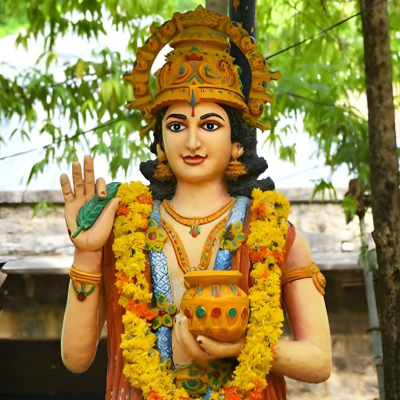
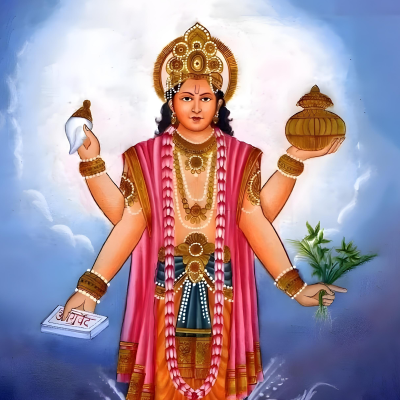
The wealth honoured on this day is wider than money. Dhanvantari, the physician of the gods and the patron of Ayurveda, is worshipped on the same tithi, so good health is counted as the first kind of wealth. For several years India's Ministry of Ayush observed Ayurveda Day on Dhanteras, before moving it to a fixed date in September.
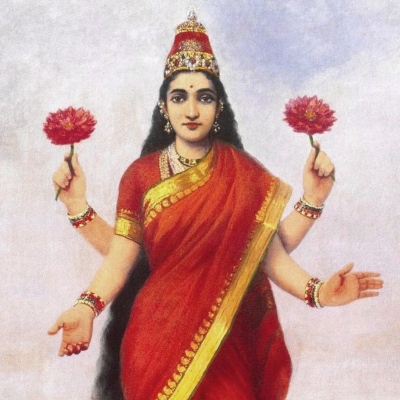
The evening brings three prayers together. Lakshmi and Kubera are worshipped for steady prosperity and Dhanvantari for health. A lamp is set out for Yama, asking that no one in the family dies before their time. Buying something new for the home, especially in metal, is the custom most people know.
The story of Dhanteras
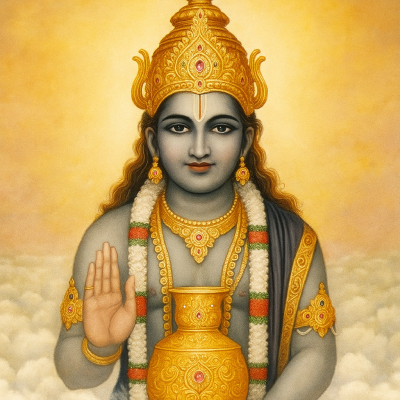
When the devas and asuras churned the ocean of milk in search of amrit, many treasures rose from the waters before the nectar itself. Dhanvantari, counted as a form of Vishnu, came up holding the pot of amrit, and tradition credits him with bringing the knowledge of Ayurveda to the world. Some accounts place Lakshmi's rising from the same churning on this tithi. That is one reason she is welcomed this evening with Kubera, the keeper of the gods' treasury.
A folk tale of a prince saved from snakebite by his bride's vigil of lamps is why many families keep a flame at the threshold tonight.
How to do Dhanteras puja at home
- Finish cleaning and draw a rangoli Complete the Diwali cleaning, wash the entrance and draw a rangoli at the door. Some families mark Lakshmi's footsteps at the door in rice paste and kumkum.
- Bring home the new purchase Buy your utensil, coin or broom during the day and keep it near the altar. Some families give a new broom a brief puja before it is first used.
- Set up the altar Cover a clean stool with a red cloth and place images of Lakshmi, Ganesha and Kubera on it, with a picture of Dhanvantari if you have one. Keep a kalash of water with mango leaves beside them.
- Take the sankalp In Pradosh Kaal, during the muhurat shown above, sit facing the altar and sip water three times to purify yourself. State your name, your family and your wish for the household's health and prosperity.
- Worship Ganesha first Offer Ganesha kumkum, akshat (unbroken rice), flowers and durva grass, and ask that the puja go without obstacles.
- Worship Dhanvantari Offer sandalwood paste, flowers, incense and a ghee lamp, then naivedya of sweets, milk or curd. Pray for the good health of everyone in the home.
- Worship Lakshmi and Kubera Offer kumkum, akshat, flowers, incense and a ghee lamp. Place coins, jewellery or the new purchase before them, and offer sweets, batashas (sugar drops) or puffed rice.
- Offer the Yam Deepam Light the lamp for Yama and place it outside the main door with the flame facing south, as described further down this page.
- Aarti and prasad Perform the Lakshmi aarti, ask forgiveness for any mistake made in the puja, and share the prasad with the family.
- Light the house Set diyas at the entrance, windows and kitchen, and keep one burning near the altar through the night. Place them away from curtains and out of children's reach.
Dhanteras puja samagri
- Images or pictures of Lakshmi, Ganesha and Kubera
- Picture of Dhanvantari (optional)
- Wooden stool and a red cloth
- Kalash with water and mango leaves
- Earthen diyas, ghee or sesame oil, and cotton wicks
- A clay or wheat-flour lamp for the Yam Deepam
- Kumkum, turmeric and sandalwood paste
- Akshat (unbroken rice)
- Flowers and a marigold garland
- Durva grass
- Incense sticks and camphor
- Sweets, batashas and puffed rice for naivedya
- Milk or curd for Dhanvantari
- Dried coriander seeds and jaggery (in Maharashtrian homes)
- Betel leaves and supari
- Coins, jewellery or the day's new purchase
- Rice flour and colours for rangoli
Regional traditions
- Maharashtra
- Dried coriander seeds are lightly pounded with jaggery and offered as naivedya, then shared as prasad.
- Tamil Nadu
- In some traditional households women prepare marundu, a herbal preparation, on this day. It is offered in the puja and eaten early on the morning of Naraka Chaturdashi.
- Ayurvedic practitioners
- Vaidyas, Ayurvedic colleges and clinics observe the day as Dhanvantari Jayanti and worship him as the patron of their healing tradition.
- Jain communities
- Some Jain communities call the day Dhanyateras, the auspicious thirteenth, and link it with Mahavira's last days before his nirvana at Diwali.
What to buy on Dhanteras
Buying something new on Dhanteras brings fresh wealth into the house on the day Lakshmi is first welcomed for Diwali. Families usually choose things that last and will be used at home. Our separate guide on what to buy on Dhanteras goes into each item in more detail.
- Gold or silver, as jewellery or as a coin stamped with Lakshmi and Ganesha that can be kept in the puja.
- Brass, copper or silver utensils for the kitchen, a long-standing sign of a full home.
- A new broom, a modest purchase linked with sweeping out want and keeping a clean home for Lakshmi.
- Images of Lakshmi and Ganesha for the main Diwali puja two days later.
- A Gomti chakra, which some families keep with their valuables.
- Larger items such as a vehicle or a home appliance, which many people time to this day.
- If money is tight, a broom or one small brass item is enough. The custom is about welcoming, not spending.
What to avoid on Dhanteras
These are popular beliefs rather than scriptural rules, and families differ. Where your household has its own custom, follow it.
- Iron items, and in many homes steel too, since it is seen as a form of iron.
- Sharp objects such as knives and scissors.
- Glass and mirrors.
- Black items and black clothes.
- Plastic, or anything broken or chipped.
- Buying oil or ghee on the day.
- Lending money or settling debts, which some believe sends wealth out of the house.
Yam Deepam
Yam Deepam, or Yamadeepdaan, is a lamp offered to Yama, the lord of death, on the evening of Dhanteras. Yama guards the southern direction, so the lamp is placed outside the main door with its flame facing south. The prayer behind it is simple: protect the family from an untimely death.
Details differ from home to home. Many light one lamp of clay or wheat-flour dough filled with oil, while others light thirteen. Our article on the 13 diyas of Dhanteras explains that custom. Many also light a second lamp for Yama on the evening of Chaturdashi.
Light it after sunset, in Pradosh Kaal, around the time of the main puja. Face south, fold your hands and ask Yama to keep the household safe. Set the lamp where it cannot be knocked over and let it burn out on its own.
Dhanteras dates
| Day | Date |
|---|---|
| Wednesday | 27 October 2027 |
Celebrate Dhanteras with Dharmayana

Festival Pooja & Pandit Booking
Want a Pandit-led pooja for this festival at home, or online if you live abroad? Dharmayana connects you with verified Pandits for all major Hindu festivals — Diwali, Navratri, Shivratri, Janmashtami, Ganesh Chaturthi and more.
You can book:
- Festival pooja at home with a verified Pandit
- Online / virtual pooja with live video and digital prasad
- Same-day sankalp for time-sensitive festivals
Bookings, samagri lists and Pandit assignment are all handled inside the Dharmayana app — choose the festival, pick a date and the rest is taken care of.

Prarthana, Mantras & Vrat Katha
Every festival has its own prarthanas, stotras and vrat kathas. Reading or listening to them on the festival day is the simplest way to observe the tradition at home.
Inside the Dharmayana app you can listen to:
- 1000+ prarthanas, mantras and stotras with clear audio
- Festival-specific kathas — Lakshmi, Durga, Shiva, Ganesha, Krishna
- Multilingual versions: Sanskrit, Hindi, Tamil, Telugu, Kannada and more
Browse the full collection of prarthanas or get the app to play them on the festival morning without ads.

Festival Date, Tithi & Muhurat
Hindu festivals are tied to a specific Tithi, not a fixed date — so the day shifts every year and even varies slightly across cities.
Open the Panchanga for the festival day to see the exact Tithi, Nakshatra, Yoga, Karana and Shubh Muhurat for pooja in your location.
The Dharmayana app keeps track of all upcoming festivals on the Hindu calendar and reminds you in advance.

Personalised Astrology Around Festivals
Festivals are also a good time to look at your kundali — many families plan sankalp, donations or new beginnings around them.
Inside the app you can:
- Generate your personal Vedic kundali
- Talk to a Jyotisha for guidance around career, relationships or health
- Run kundali matching before fixing a marriage during the festival season
All of this is available inside the Dharmayana app — no fixed schedule, use it whenever you need it.
Read more
Frequently Asked Questions
What are the Dhanteras 2027 timings?
Pradosh Kaal, Yam Deepam: 5:49 PM – 8:22 PM; Shopping choghadiya (Labh, Amrit): 6:34 AM – 9:22 AM; Shopping choghadiya (Shubh): 10:47 AM – 12:11 PM; Shopping choghadiya (Char, Labh): 3:00 PM – 5:49 PM; Shopping choghadiya (Shubh, Amrit, Char): 7:24 PM – 10:50 PM. Times are in IST for Ujjain.
Which gods are worshipped on Dhanteras?
Lakshmi and Kubera are worshipped for prosperity, and Dhanvantari for health. Ganesha is worshipped first, as at the start of any puja. A separate lamp is offered to Yama outside the door.
Is Dhanteras the same as Dhanvantari Jayanti?
They fall on the same tithi, the thirteenth day of the dark fortnight before Diwali. Dhanteras is the household festival of wealth and the first day of Diwali. Dhanvantari Jayanti is the birth anniversary of the god of Ayurveda and is kept on the same day.
Why do people buy a broom on Dhanteras?
A broom keeps the house clean, and a clean home is believed to welcome Lakshmi. Buying a new one on Dhanteras stands for sweeping out poverty and worry. It is also an affordable way to keep the custom of buying something new.
Can I buy steel utensils on Dhanteras?
Families differ. Many avoid steel because it is a form of iron, which is widely held to be inauspicious on this day. Others buy stainless steel without concern. If you want to be safe, choose brass, copper or silver.
Is it necessary to buy gold on Dhanteras?
No. Gold and silver are popular, but no rule requires them. A brass utensil, a broom or a diya bought with a sincere prayer keeps the custom just as well.
When is Dhanteras in 2027?
Dhanteras 2027 falls on Wednesday, 27 October 2027. Trayodashi tithi runs from 01:03 AM, 27 Oct to 10:50 PM, 27 Oct IST, as calculated for Ujjain. Times shift by a few minutes for other cities.
What is Dhanteras?
Dhanteras is Dhanvantari Jayanti — the day Vishnu's physician avatar rose from the churning ocean holding the pot of Amrita, the nectar of immortality. Falling on Kartik Krishna Trayodashi, it opens the five days of Diwali with a lamp lit facing south for Yama, the god of death.
Why is Dhanteras observed?
Two stories share this tithi. The Bhagavata Purana places Dhanvantari's emergence here, carrying both the Amrita Kalasha and the eight-branched knowledge of Ayurveda — which is why physicians and Ayurvedic clinics treat it as their patron's birthday. The second story explains the Yama Deepam: King Hima's sixteen-year-old son was fated to die of snakebite on the fourth night of his marriage. His bride heaped gold coins and ornaments at the doorway, lit lamps everywhere, and sang through the night. Yama arrived as a serpent, was dazzled by the glare, sat on the pile listening, and left at dawn. Households still place a single lamp facing south outside the door at dusk to ward off untimely death. Lakshmi-Kubera puja follows during Pradosh Kaal, timed to Sthir Lagna so the goddess 'stays put'.
What are the other names for Dhanteras?
Dhanteras is also known as Dhanatrayodashi and Dhanvantari Trayodashi.
Which prarthanas are recited on Dhanteras?
Dhanvantari Mantra, Dhanvantari Stotram, Kubera Dhana Prapti Mantra and Lakshmi Gayatri Mantra are recited on Dhanteras. You can listen to them with audio on this page.
Book Pandit & Festival Pooja
on the Dharmayana App
Book Dhanteras Pooja on the Dharmayana App
Verified Pandits, prarthanas with audio and accurate Panchanga, all in one place.


