The Significance of 13 Diyas on Dhanteras
Light against the dark, protection through flame

Aditya Pandey
08 Oct 2026 • 7min
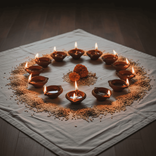
Lighting 13 diyas on Dhanteras—a practice centred on the ritual of yama deepam—is one of the oldest and most protective customs of this festival. The diyas are meant to guard against untimely death and bring good health to your household for the coming year. This is not merely a symbolic gesture. The 13 diyas carry specific spiritual intention, each one addressing a different aspect of wellbeing and protection as you move into the darker months ahead.
Dhanteras falls two days before Diwali, in the month of Kartik according to the Hindu lunar calendar. It is named for Dhanvantari, the deity of medicine and wellness, who is said to have emerged from the cosmic ocean on this very day. On Dhanteras, the focus is not on celebration but on health, safety and the prevention of harm. This is why the rituals of this day are quieter and more protective than the visible joy of Diwali itself.



Why 13 Diyas Matter
The number 13 carries deliberate weight in this practice. Each diya represents one of the 13 lunar months in a traditional year, so lighting all 13 together is believed to offer protection through all the months ahead. Some traditions also connect the 13 diyas to the 13 principal pranas, or life forces, in the body—the idea being that by honouring them with light, you strengthen your own vital energy for the year to come.
The central diya among the 13 is the yama deepam (also called yam deep), which is placed as a barrier against Yama, the god of death. This is not from fear alone, but from respect. In Hindu philosophy, Yama is not cruel but just—he holds the boundary between life and death. By lighting the yama deepam in his name, you acknowledge his role and invoke his protection so that death does not come before its time.
The Practice of Yama Deepam
The yama deepam is traditionally placed in the southern corner of your home, since the south is Yama's direction. This diya should ideally be made of clay and filled with sesame oil, as sesame is believed to have purifying and protective properties. The practice is to light this diya in the evening on Dhanteras and let it burn through the night.
Some families keep the yama deepam burning continuously until the morning, while others light it fresh each evening during Dhanteras. Either way, the ritual is performed quietly and with intention. You may say a simple prayer or mantra as you light it, asking for health and long life for those in your home. The point is not elaborate ceremony, but sincere focus.
The remaining 12 diyas are placed in other parts of the home—some in corners, some at the entrance, some near the place where the family gathers. Together, they create a protective circle of light around your space and the people within it.
Regional Variations in the Ritual
The practice of lighting 13 diyas is widespread across India, but the details vary by region and family tradition. In some households, all 13 diyas are lit together at one altar or entrance; in others, they are distributed throughout the home. In some regions, the diyas are made of clay at home in the days before Dhanteras; in others, they are bought ready-made.
Parts of North India emphasize the yama deepam very strongly, while in South India the focus may be more evenly spread across all 13 lights. In Gujarat and Rajasthan, some families incorporate the lighting of diyas with small acts of charity—offering light to a neighbour or to a temple as part of the same intention. What remains constant is the core idea: that light guards against harm, and that Dhanteras is the day to invoke that protection.
How the Ritual Connects to Wellness
Dhanteras is dedicated to Dhanvantari, who gave humanity the practice of Ayurveda—the traditional Indian system of medicine and wellbeing. By lighting the 13 diyas on this day, you are aligning yourself with that tradition of care for health. The ritual is a way of saying: I acknowledge the importance of health, I honour the forces that protect it, and I invite them into my home and my year.
The practice connects you to an old understanding that wellbeing is not something you take for granted. It requires intention, respect and small acts of ritual care. The diyas themselves are simple—just clay, oil and a wick—but that simplicity is part of the point. You are not trying to impress anyone, not even the divine. You are simply being clear about what matters: that you and those you love stay safe and well.
Preparing Your Home for Dhanteras
Begin by gathering or making your diyas a few days before the festival. If you are making them, this can be a meditative act in itself. Fill them with sesame oil or ghee, depending on your preference and availability. Sesame oil is traditional for the yama deepam in particular, but any oil that burns cleanly will serve.
On the day of Dhanteras, clean the areas where you will place the diyas. You need not undertake a complete house-cleaning, but a simple sweeping and wiping of the spaces where light will burn creates a sense of preparation and respect. Decide where your yama deepam will go—traditionally the south, but use your judgment about your home's layout and safety. The other 12 diyas can go at doors and windows, in corners, or at an altar if you keep one.
As the sun sets, light your diyas with calm attention. You may use a simple mantra, such as "Om Dhanvantaraye Namaha" (a salutation to Dhanvantari), or simply hold the intention of health and protection as you kindle each flame. The ritual itself is brief, but its effect—the warm light spreading through your home—often lasts far longer in memory than the few minutes it takes to perform.
How to light 13 Diyas on Dhanteras
- Gather or make your diyas Collect or prepare 13 earthenware diyas a few days before Dhanteras. Fill each with sesame oil or ghee and place a wick inside. Sesame oil is traditional for the central yama deepam.
- Choose placement for each diya Decide where your 13 diyas will go. The yama deepam traditionally goes in the southern corner or direction of your home. Distribute the other 12 around doors, windows, corners or at an altar.
- Clean the areas around your diyas Sweep and wipe the spaces where the diyas will burn. This creates a sense of preparation and respect, and ensures the diyas are placed safely away from fabrics or curtains.
- Light your diyas at sunset As evening falls on Dhanteras, light each diya mindfully. You may whisper a simple prayer, such as 'Om Dhanvantaraye Namaha', or hold the intention of health and protection for your household.
- Keep the yama deepam burning through the night Let the yama deepam burn continuously through the night if possible. You may allow the other diyas to burn naturally until they go out, or extinguish them when you feel the ritual is complete.
Common questions
Can I use regular oil instead of sesame oil for the yama deepam?
Sesame oil is traditional and preferred for the yama deepam because of its protective properties in Ayurvedic and ritual practice, but any pure oil that burns cleanly—such as coconut oil or ghee—can be used if sesame is not available. The intention behind the ritual matters more than the exact material.
What time of day should I light the 13 diyas on Dhanteras?
The 13 diyas are traditionally lit at sunset or in the early evening of Dhanteras. The yama deepam in particular is lit as dusk falls and is ideally kept burning through the night, though some families light it fresh each evening of the festival.
If I can't light 13 diyas, is lighting fewer diyas still meaningful?
Yes. If circumstances prevent you from lighting 13 diyas, lighting even one or a few diyas with clear intention is still a valid practice. The number 13 carries specific symbolic meaning, but the core ritual—lighting a flame for protection and health—does not depend on it.

Related Articles