

Mahakumbh


Festival Pooja & Pandit Booking
Want a Pandit-led pooja for this festival at home, or online if you live abroad? Dharmayana connects you with verified Pandits for all major Hindu festivals — Diwali, Navratri, Shivratri, Janmashtami, Ganesh Chaturthi and more.
You can book:
- Festival pooja at home with a verified Pandit
- Online / virtual pooja with live video and digital prasad
- Same-day sankalp for time-sensitive festivals
Bookings, samagri lists and Pandit assignment are all handled inside the Dharmayana app — choose the festival, pick a date and the rest is taken care of.

Prarthana, Mantras & Vrat Katha
Every festival has its own prarthanas, stotras and vrat kathas. Reading or listening to them on the festival day is the simplest way to observe the tradition at home.
Inside the Dharmayana app you can listen to:
- 1000+ prarthanas, mantras and stotras with clear audio
- Festival-specific kathas — Lakshmi, Durga, Shiva, Ganesha, Krishna
- Multilingual versions: Sanskrit, Hindi, Tamil, Telugu, Kannada and more
Browse the full collection of prarthanas or get the app to play them on the festival morning without ads.

Festival Date, Tithi & Muhurat
Hindu festivals are tied to a specific Tithi, not a fixed date — so the day shifts every year and even varies slightly across cities.
Open the Panchanga for the festival day to see the exact Tithi, Nakshatra, Yoga, Karana and Shubh Muhurat for pooja in your location.
The Dharmayana app keeps track of all upcoming festivals on the Hindu calendar and reminds you in advance.

Personalised Astrology Around Festivals
Festivals are also a good time to look at your kundali — many families plan sankalp, donations or new beginnings around them.
Inside the app you can:
- Generate your personal Vedic kundali
- Talk to a Jyotisha for guidance around career, relationships or health
- Run kundali matching before fixing a marriage during the festival season
All of this is available inside the Dharmayana app — no fixed schedule, use it whenever you need it.
Frequently Asked Questions
What is Mahakumbh?
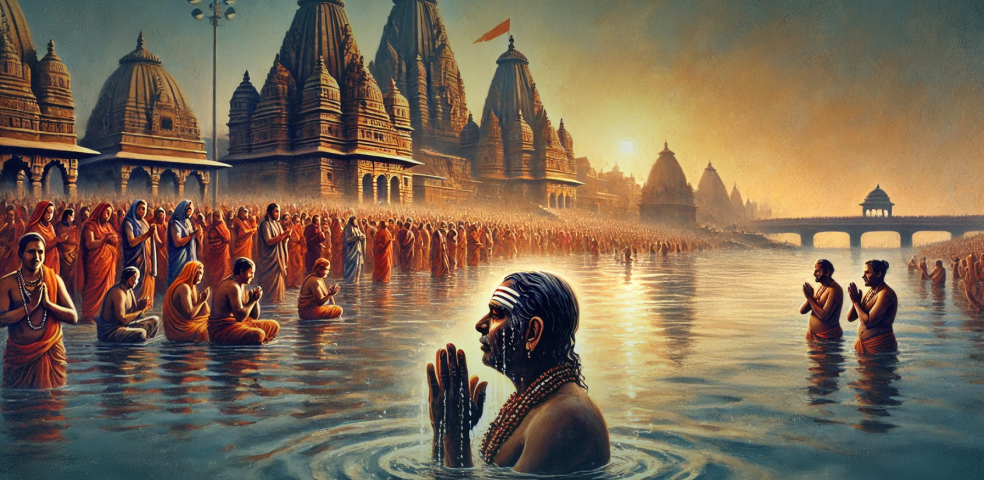
When Mohini — Vishnu disguised as an enchantress — fled to heaven with the pot of amrita, drops fell at four river spots. The Kumbh rotates between them on a Jupiter-Sun cycle, and at its peak hour the river itself is said to turn back into that nectar.
Why is Mahakumbh observed?
The bathing order matters more than the bath. The holiest spot belongs to the naga sadhus — warrior-ascetic orders who once worked as mercenaries — and their Shahi Snan (royal procession to the water) opens each mela. Rival akharas fought bloody battles over precedence as late as 1807, until courts had to fix a written sequence. Tradition credits the 8th-century philosopher Adi Shankara with first gathering ascetics here for debate, and the festival's scriptural anchor sits in late layers of the Skanda Purana rather than the Vedas. The astronomy is site-specific: Haridwar's dates run on the solar calendar (Mesha Sankranti, Vaisakhi), while Prayagraj, Ujjain and Nashik follow lunar Purnima and Amavasya — each tied to a different Jupiter–Sun configuration.
Which prarthanas are recited on Mahakumbh?
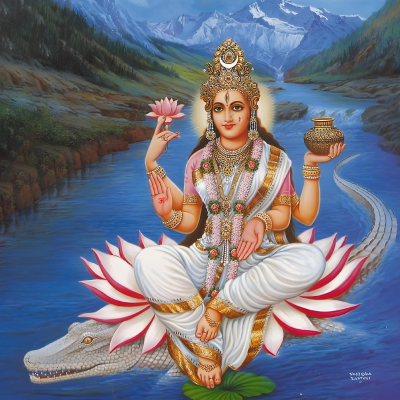
Ganga Ashtakam and While Having Bath are recited on Mahakumbh. You can listen to them with audio on this page.
Book Pandit & Festival Pooja
on the Dharmayana App
Book Mahakumbh Pooja on the Dharmayana App
Verified Pandits, prarthanas with audio and accurate Panchanga, all in one place.


