Adhika Jyeshtha Amavasya


Festival Pooja & Pandit Booking
Want a Pandit-led pooja for this festival at home, or online if you live abroad? Dharmayana connects you with verified Pandits for all major Hindu festivals — Diwali, Navratri, Shivratri, Janmashtami, Ganesh Chaturthi and more.
You can book:
- Festival pooja at home with a verified Pandit
- Online / virtual pooja with live video and digital prasad
- Same-day sankalp for time-sensitive festivals
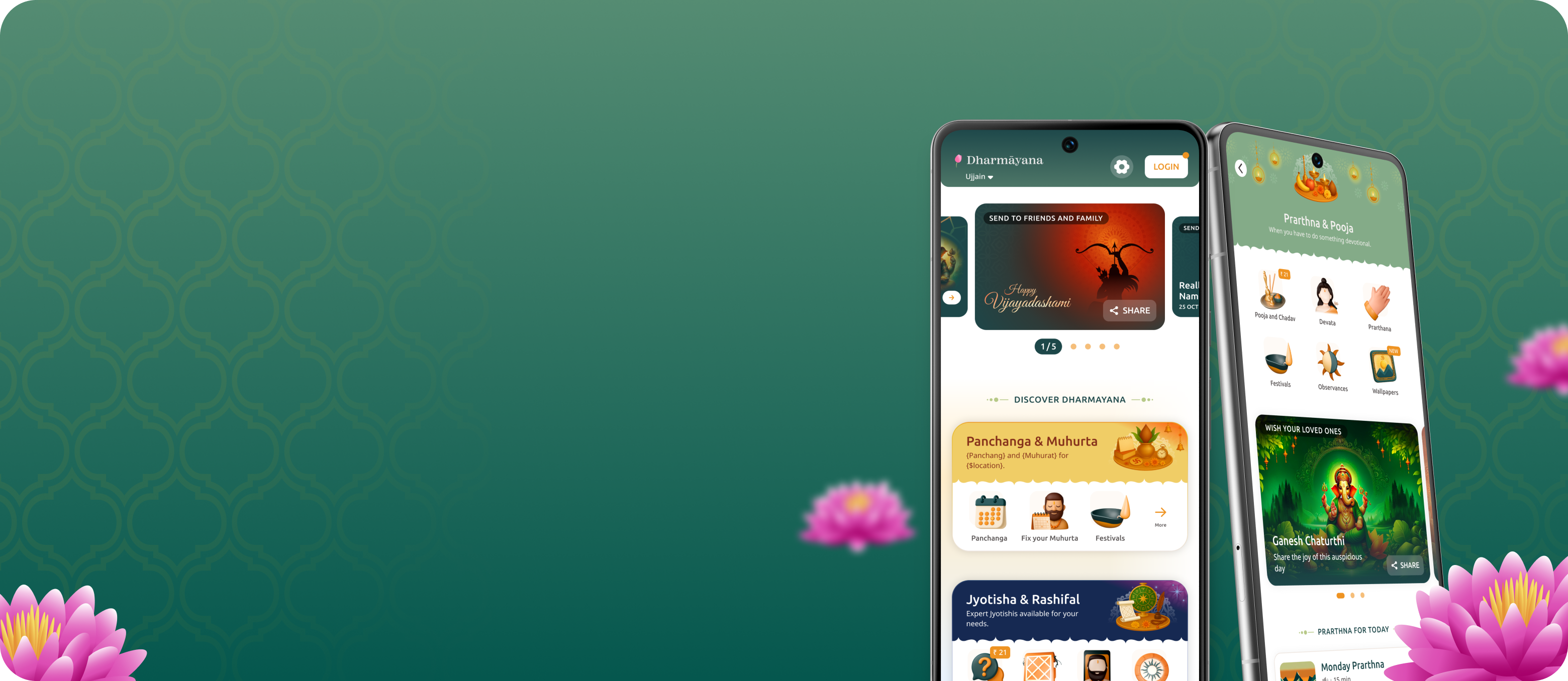
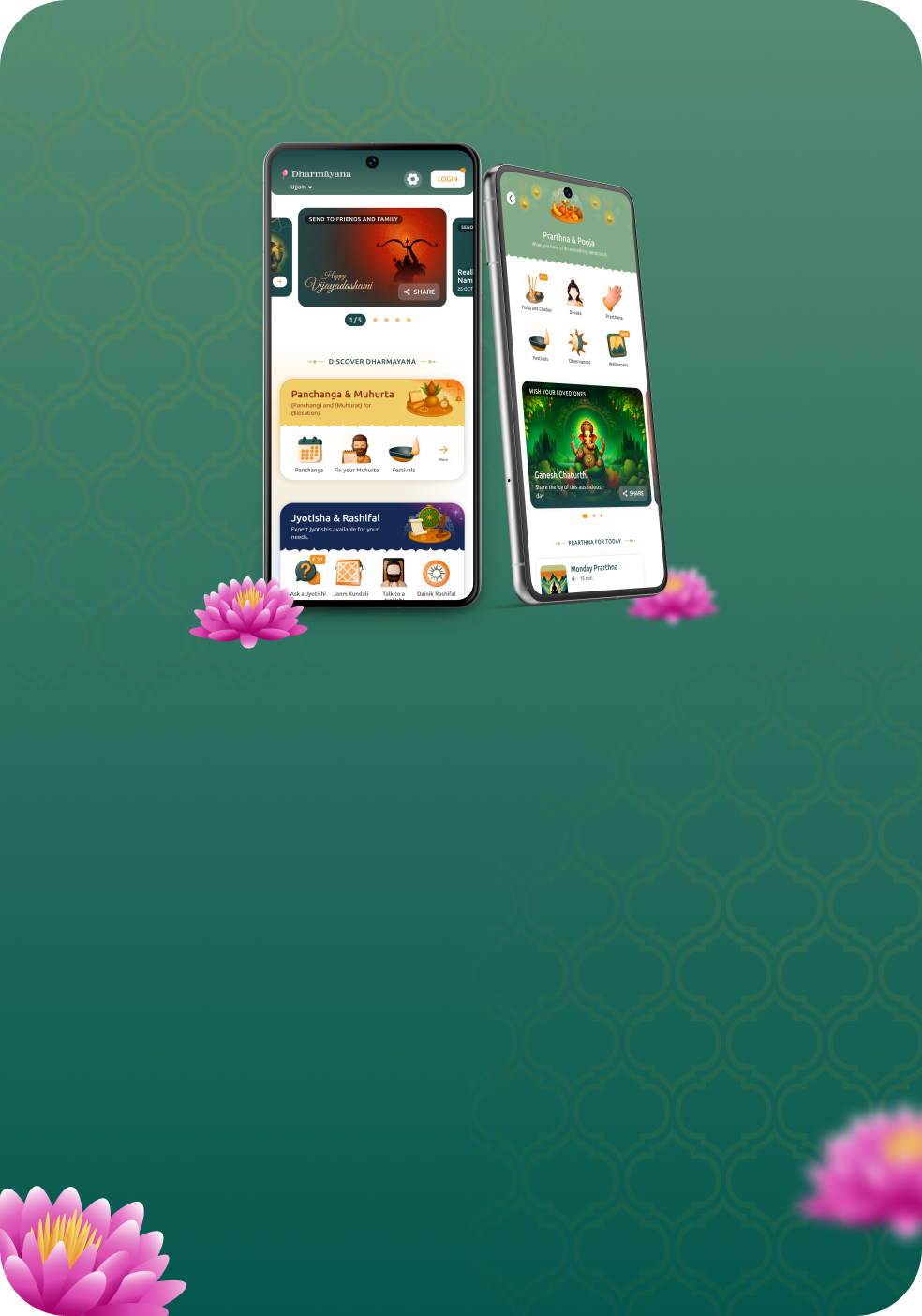
Bookings, samagri lists and Pandit assignment are all handled inside the Dharmayana app — choose the festival, pick a date and the rest is taken care of.

Prarthana, Mantras & Vrat Katha
Every festival has its own prarthanas, stotras and vrat kathas. Reading or listening to them on the festival day is the simplest way to observe the tradition at home.
Inside the Dharmayana app you can listen to:
- 1000+ prarthanas, mantras and stotras with clear audio
- Festival-specific kathas — Lakshmi, Durga, Shiva, Ganesha, Krishna
- Multilingual versions: Sanskrit, Hindi, Tamil, Telugu, Kannada and more
Browse the full collection of prarthanas or get the app to play them on the festival morning without ads.

Festival Date, Tithi & Muhurat
Hindu festivals are tied to a specific Tithi, not a fixed date — so the day shifts every year and even varies slightly across cities.
Open the Panchanga for the festival day to see the exact Tithi, Nakshatra, Yoga, Karana and Shubh Muhurat for pooja in your location.
The Dharmayana app keeps track of all upcoming festivals on the Hindu calendar and reminds you in advance.

Personalised Astrology Around Festivals
Festivals are also a good time to look at your kundali — many families plan sankalp, donations or new beginnings around them.
Inside the app you can:
- Generate your personal Vedic kundali
- Talk to a Jyotisha for guidance around career, relationships or health
- Run kundali matching before fixing a marriage during the festival season
All of this is available inside the Dharmayana app — no fixed schedule, use it whenever you need it.
Frequently Asked Questions
What is Adhika Jyeshtha Amavasya?
The closing new moon of Adhika Jyeshtha — the leap lunar month inserted when a month contains no solar transit. Because Krishna claimed this 'impure' month as his own and named it Purushottam Maas, its Amavasya is reserved for japa, charity and Vishnu worship rather than weddings or housewarmings.
Why is Adhika Jyeshtha Amavasya observed?
Adhika Maas slips into the Hindu calendar roughly once every 33 months, whenever a lunar month holds no Sankranti — the sun's monthly shift between zodiac signs. Scripture calls it Mal Maas, the impure month: marriages, Upanayana, vastu rites, vehicle purchases and even starting new vows are barred. To rescue the month from neglect, the Padma Purana says Krishna adopted it and lent it his own name, Purushottam — 'the best among men' from the Vishnu Sahasranama. The Amavasya that closes this rare month is therefore treated as a once-in-three-years window. Devotees finish their month-long vrata on this day with Bhagavad Gita Chapter 15 recitation, dana to an odd number of brahmins (never one, up to eleven), and tarpana for ancestors — believed many times more fruitful than on an ordinary Amavasya. In 2026 it falls on a Monday, making it Somvati Amavasya as well.
What are the other names for Adhika Jyeshtha Amavasya?
Adhika Jyeshtha Amavasya is also known as Adhika Darsha Amavasya.
Which prarthanas are recited on Adhika Jyeshtha Amavasya?
Dwadashakshara Mantra and Vishnu Shanthakaram Mantra are recited on Adhika Jyeshtha Amavasya. You can listen to them with audio on this page.
Book Pandit & Festival Pooja
on the Dharmayana App
Book Adhika Jyeshtha Amavasya Pooja on the Dharmayana App
Verified Pandits, prarthanas with audio and accurate Panchanga, all in one place.