How to Read the Panchang?
A Simple Guide to Hindu Astrology & Auspicious Timings.

S Raj Abhinay
26 Feb 2025 • 7min

The Panchang is an essential tool in Hindu astrology, used to determine auspicious timings for various activities like weddings, pujas, travel, and business decisions. Derived from Sanskrit, "Panchang" means “five limbs”, referring to its five key elements:
- Tithi (Lunar Day)
- Vara (Weekday)
- Nakshatra (Lunar Constellation)
- Yoga (Auspicious or Inauspicious Period)
- Karana (Half of a Tithi)
By learning to read the Panchang, you can align your activities with favorable cosmic energies for better success and harmony.
Step-by-Step Guide to Reading the Panchang
Step 1: Identify the Date & Location
Each Panchang is location-specific, as planetary positions differ based on geography. Choose a Panchang relevant to your location to get accurate details.
Step 2: Check the Tithi (Lunar Day)
The Tithi represents the Moon’s movement relative to the Sun. Each lunar month has 30 Tithis, divided into:
- Shukla Paksha (Waxing Moon) – First half, leading up to Full Moon (Purnima).
- Krishna Paksha (Waning Moon) – Second half, leading to New Moon (Amavasya).
Example:
If today’s Panchang says "Ekadashi Tithi till 2:00 PM, then Dwadashi begins," it means:
- Till 2:00 PM, it's Ekadashi (ideal for fasting & spiritual activities).
- After 2:00 PM, Dwadashi starts (which is good for charity and religious activities.)
Each Tithi has specific significance. For instance:
- Purnima (Full Moon) – Good for religious rituals.
- Amavasya (New Moon) – Ideal for ancestor prayers but not for new beginnings.
Step 3: Check the Var (Weekday)
Each day of the week (Vara/Varam/Var) is ruled by a planet and affects the energy of the day:
- Sunday (Ravi Var)/Sun - Leadership, health, politics
- Monday (Soma Var)/Moon - Emotional healing, family matters
- Tuesday (Mangal Var)/Mars - Physical work, courage, but avoid conflicts
- Wednesday (Budha Var)/Mercury - Business, education, communication
- Thursday (Guru Var)/Jupiter - Spirituality, learning, investments
- Friday (Shukra Var)/Venus - Love, beauty, finance, luxury
- Saturday (Shani Var)/Saturn - Discipline, hard work, property matters
Example:
If today is Thursday (Guru Vara), it is an excellent day to start a new educational course or spiritual practice.
Step 4: Check the Nakshatra (Lunar Constellation)
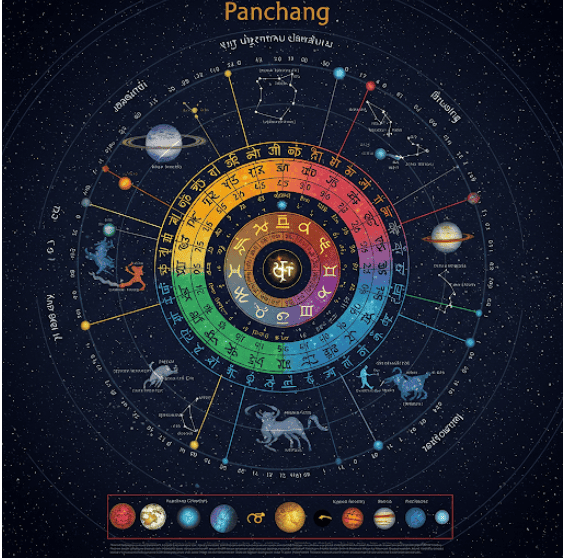
There are 27 Nakshatras (Lunar Constellations) that influence emotions and decision-making.
Example:
If today's Panchang shows "Rohini Nakshatra till 5:30 PM, then Mrigashira begins," it means:
- Till 5:30 PM, activities related to creativity, love, and beauty are favored (Rohini Nakshatra).
- After 5:30 PM, new journeys or research work will be more beneficial (Mrigashira Nakshatra).
Key Nakshatras & Their Best Uses:
- Ashwini – Best for starting new projects.
- Rohini – Good for relationships, beauty, and creativity.
- Mrigashira – Ideal for travel and research.
- Pushya – Highly auspicious for wealth and education.
Step 5: Check the Yoga (Auspicious or Inauspicious Period)
The Yoga is calculated based on the Sun and Moon's positions, impacting the general energy of the day. There are 27 Yogas, some bringing luck and others caution.
Example:
If the Panchang says "Amrita Yoga present today," it means:
- Any new venture or spiritual activity started today will have a higher chance of success.
Some important Yogas:
- Amrita Yoga – Highly auspicious (best for new beginnings).
- Siddha Yoga – Good for achieving success.
- Vishkumbha Yoga – Favorable for financial matters.
- Vyaghata Yoga – Considered inauspicious; avoid major decisions.
Step 6: Check the Karana (Half of a Tithi)
Each Tithi (Lunar Day) is divided into two Karanas. There are 11 Karanas, classified as favorable or unfavorable.
Example:
If today's Panchang mentions "Bava Karana till 1:45 PM, then Balava begins," it means:
- Bava Karana (good for business deals) is present till 1:45 PM.
- After 1:45 PM, Balava Karana (suitable for creativity and art) starts.
Key Karana Interpretations:
- Bava Karana – Best for starting new work.
- Vishti Karana (Bhadra) – Avoid important activities.
- Garaja Karana – Good for legal matters.
How to Use Panchang for Auspicious Timings (Muhurta)
To plan an event, check all five Panchang elements and ensure they align with your goal.
Example: Planning a Wedding
- Check the Date and Location – Panchang calculations depend on your geographical location.
- Identify the Tithi – Choose an auspicious Tithi aligned with teh wedding.
- Analyze the Nakshatra – Ensure the Nakshatra is favorable for your purpose.
- Consider the Vara (Weekday) – Align wedding activities with planetary influences.
- Evaluate Yoga and Karana – These elements refine the day's energy for better decision-making.
Conclusion
The Panchang is more than just a calendar—it is a guide to aligning your life with cosmic rhythms for success and harmony. By understanding its five elements—Tithi, Vaar, Nakshatra, Yoga, and Karana—you can make informed decisions for important events.
With the Dharmayana App, you can easily check today’s Panchang, track auspicious timings, and consult expert astrologers for personalized guidance. Whether you are deeply rooted in Hindu traditions or just starting, let Dharmayana help you navigate life with the wisdom of the stars.
Download the Dharmayana App today and align your actions with cosmic energies!

Related Articles
Try a fuller and better experience on the
Dharmayana App