
Yoga Nidra and Shavasana: The Meaning of Conscious Rest
Guided relaxation, rooted in yoga's science of sleep

Sunil Chaurasia
08 Nov 2026 • 8min
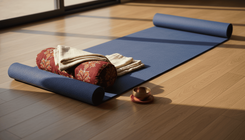
Yoga nidra means "yogic sleep", and it is a state of conscious relaxation where your mind is awake while your body completely lets go. Unlike regular sleep, where awareness fades, yoga nidra keeps you aware and present throughout. This is why it is sometimes called the doorway between waking and sleep—you stay alert enough to sense and follow guidance, yet relaxed enough for deep healing to occur. Many people find that fifteen minutes of yoga nidra feels as restorative as an hour of ordinary sleep, and it is one of the oldest practices for moving stress and tension from the nervous system.
Yoga nidra is often taught as a guided meditation that takes you through the body systematically, helping you release held tension and enter a state of natural rest. It has roots in tantric philosophy and is woven through traditional yoga teachings, though it became widely known through the codified form developed in the 20th century. If you are new to yoga or to relaxation practices, yoga nidra is one of the most accessible ways to experience what a truly calm body and mind feel like.



How Yoga Nidra Differs from Ordinary Sleep
Ordinary sleep is necessary—your brain consolidates memories, your body repairs itself—but you have no awareness during deep sleep. You cannot watch the process or guide it. In yoga nidra, your conscious mind remains present and responsive. You lie in a comfortable position and follow a guide's voice through instructions to relax your body and settle your awareness. This conscious relaxation creates a specific brain state that is genuinely different from sleep, even though it is deeply restful. Some practitioners describe it as the mind being at a dinner table while the body is in bed.
This wakefulness matters. While ordinary sleep repairs the body, yoga nidra appears to work directly on the nervous system and on how you hold tension. When you are awake and consciously observing your own relaxation, your body releases patterns of tightness that it might not release in sleep. You finish yoga nidra feeling both refreshed and alert, not groggy. This is why it is often taught in the evening or afternoon, when you need to rest without losing the day.
Shavasana: The Corpse Pose
Shavasana, or corpse pose, is the physical foundation for both traditional yoga practice and yoga nidra. The name comes from shava, meaning corpse, because the pose mirrors the stillness and surrender of death. You lie on your back with your legs extended, your arms by your sides with palms facing up, your feet falling open naturally, and your head in a neutral position. Your eyes are closed. The pose is simple, but the stillness it demands is not.
In a yoga class, shavasana at the end of practice (called final relaxation) typically lasts five to fifteen minutes. Your body, already tired from practice, relaxes completely. This is where the work of your asanas—the physical poses—is integrated. In this context, shavasana is a pose like any other, held consciously and deliberately.
When shavasana becomes the vehicle for yoga nidra, the guidance takes over. You may rest for thirty to forty minutes, lying in the same position while a teacher or recording systematically moves your attention through your body. Shavasana is the stage; yoga nidra is the play performed on it. You are not sleeping, but you are not doing anything either. This combination—the familiar shape of shavasana plus guided awareness—is what makes yoga nidra so effective for people who find meditation difficult or find it hard to stop doing and simply be.
The Practice and Its Effects
A typical yoga nidra session begins with you lying in shavasana while a guide talks you through a body scan, often starting at your toes and moving slowly toward your head. The guide might ask you to notice sensations without trying to change them, or to tense and release groups of muscles gently, or to follow the natural movement of your breath. Some traditions use a sankalpa, which is a personal intention or affirmation spoken at the beginning and end. The guide's voice creates a thread that keeps your mind engaged just enough to stay present, but not so much that you remain tense.
The effects are well-documented in people's lived experience. Many describe feeling deeply rested after a short session. Others notice their mind becoming quieter, their shoulders dropping, their jaw unclenching. Some find that worries seem smaller afterward. Over time, regular practice can shift how reactive your nervous system is to stress. Your body learns what real rest feels like, and this memory can be carried into daily life.
Yoga nidra is sometimes recommended for anxiety, insomnia, chronic pain, and trauma recovery, though it is not a replacement for medical care. For someone new to meditation, or for someone whose mind is naturally busy, yoga nidra feels more accessible than sitting in silence because there is always something to do: follow the guide's voice, notice the sensations, breathe, surrender. It is meditation through doing rather than through being still.
When and Where to Practice
Yoga nidra can be done almost anywhere and at almost any time, though afternoon or evening is traditional because it is designed to rest rather than energize. Many yoga studios offer yoga nidra classes, either as a standalone session or as the final part of a longer class. You can also practice at home using recordings or apps, which makes it accessible whenever you need it. Some people keep a regular practice, doing it three or four times a week, while others turn to it only when they are stressed or sleep-deprived.
If you are new to the practice, a live teacher or a clear recording is worth seeking out, because the quality of the guide's voice and pacing shapes the experience. Your environment matters too: a quiet room, a mat or blanket, a place where you will not be interrupted for thirty or forty minutes. Some people benefit from covering themselves with a blanket, as the body temperature naturally drops during deep relaxation.
There is no right way to practice yoga nidra. If you feel sleepy and drift off, that is fine—your body is getting what it needs. If you stay fully conscious the whole time, that is also fine. The practice does not require effort or achievement. This is often the hardest part to accept: there is nothing to do, nowhere to get to, no way to do it wrong. The invitation is simply to lie down and let your nervous system learn to rest.
How to practice yoga nidra
- Find a quiet, comfortable space Choose a room where you will not be interrupted for thirty to forty minutes. Lie on a yoga mat, carpet or blanket in shavasana: on your back with legs extended, arms by your sides with palms up, feet falling open naturally.
- Cover yourself if needed Your body temperature naturally drops during deep relaxation, so many people cover themselves with a blanket. This keeps you warm and signals to your nervous system that it is safe to let go.
- Follow a guide or recording Play a yoga nidra recording or join a guided session. Close your eyes and simply listen to the guide's voice as they walk you through the practice, following their instructions to notice sensations or release tension.
- Let go of effort There is nothing to achieve or perfect. If your mind wanders, gently return it to the guide's voice. If you fall asleep or stay completely awake, both are fine. Your only task is to remain open to rest.
Common questions
How long does a typical yoga nidra session last?
A guided yoga nidra session usually lasts thirty to forty-five minutes, though some teachers offer shorter twenty-minute versions. Even a fifteen-minute session can leave you feeling significantly rested.
Can you fall asleep during yoga nidra?
Yes, and it is completely normal. If you drift into sleep, your body is taking what it needs. The practice works whether you stay conscious throughout or sleep partway through, so there is no way to do it wrong.
Is yoga nidra a substitute for regular sleep?
No, yoga nidra complements sleep but does not replace it. The practice is restorative and restful, but your body still needs ordinary sleep for memory consolidation and physical repair. Use yoga nidra as a tool for stress relief and rest within a regular sleep schedule.

Related Articles


