
Ya Devi Sarvabhuteshu: Understanding the Devi Stuti
The universal mother in every form of life

Aditya Pandey
18 Nov 2026 • 7min
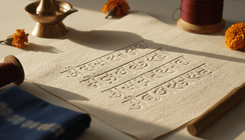
Ya devi sarvabhuteshu is the opening line of a Sanskrit invocation to the divine feminine. It appears in the Devi Mahatmya, the most celebrated text dedicated to the Goddess, and is chanted in homes and temples across India. If you have heard a priest or devotee recite these words, you were hearing a salutation to Devi—the divine mother—who dwells in every living being.
The words mean: "O Devi, you who reside in all beings." In that single line is the core belief of Devi worship: that the feminine divine is not remote or abstract, but present in every form of life, in every creature and every person. The verse continues to name her as the one who gives strength to the universe, who sustains it, and who will eventually dissolve it. She is the energy—called Shakti—that underlies all existence.



The Text and Its Place in Worship
The ya devi sarvabhuteshu verse is part of a longer devotional hymn called the Devi Stuti, which means "praise of the Devi." The Devi Stuti appears in the Devi Mahatmya, a Sanskrit scripture that forms part of the Markandeya Purana. This text is read aloud during the Navratri festival, which honours the Goddess over nine nights in the autumn.
The Devi Mahatmya tells of the Devi's many battles against demons and her role in maintaining cosmic order. Rather than a single narrative, it is a collection of stories showing different faces of the divine feminine—her compassion, her fierceness, her wisdom. The ya devi sarvabhuteshu verse sits within this context, not as abstract philosophy but as a living form of address: you can speak these words yourself as a prayer.
Many temples have the verse inscribed on walls or in prayer books. It is recited before larger rituals, sung during group devotions, and murmured by individual worshippers. The melody used to chant it varies by region and by the style of the temple, but the meaning remains constant.
The Names of Devi in the Verse
The ya devi sarvabhuteshu verse goes on to list many names and attributes of the Devi. After the opening line, the verse calls her Shakti—the primordial energy that activates the cosmos. It names her as the dwelling place of all knowledge, the root of compassion, the destroyer of suffering.
Each name carries a layer of meaning that shapes how a worshipper approaches her. To call her Shakti is to recognise her as active power, not passive. To call her Maya is to acknowledge her role in the mystery and illusion of the physical world. To call her Devi is to show respect and reverence. A single verse can hold many names because the divine feminine is understood to be all of these at once.
The verse also emphasises that she is not confined to heaven or one sacred place. She is in women and men, in animals and plants, in water and earth. She is the consciousness that watches through your eyes and the strength that moves your body. This makes the invocation not only religious but also deeply practical: when you chant ya devi sarvabhuteshu, you are calling upon what is already within you and around you.
How the Verse Is Used in Practice
Ya devi sarvabhuteshu is chanted at different times and in different contexts, depending on the region and the community. During Navratri, it is recited as part of the Devi Mahatmya reading, which many households do daily during the festival. Some communities recite it during morning or evening prayers as part of their regular sadhana, or spiritual practice.
The verse can be spoken or sung, silently or aloud. Some chant it as meditation, repeating the words slowly and feeling their meaning with each repetition. Others use it as an invocation before a ritual—a way of calling the divine presence before performing puja, or worship. In temples, the priest may recite it to open a ceremony or to mark a transition between different parts of a ritual.
When chanted in a group, ya devi sarvabhuteshu creates a collective energy and intention. The sound of many voices together is believed to strengthen the prayer and to connect all present to something larger than themselves. But it is equally powerful when recited alone, in the privacy of a home shrine or in the quiet of early morning.
The verse is also written down and kept in homes as a source of spiritual strength. Some people copy it by hand as a form of devotion. Others wear it as a written amulet or keep a printed copy on a shelf near their altar. The act of writing, reading, hearing or speaking the words is considered a form of meditation and connection.
The Deeper Philosophy
The ya devi sarvabhuteshu verse sits within a larger philosophical framework that has been unfolding in Hindu and Tantric thought for thousands of years. At its heart is the idea that the divine is not masculine alone, but has both masculine and feminine aspects. Brahman—the ultimate reality—is often approached through the feminine principle of Shakti.
This does not mean that Shakti is secondary to a male principle. Rather, she is the active force that gives form and substance to all existence. Without Shakti, nothing would move, nothing would change, nothing would be created. In this understanding, the feminine is the very engine of the universe.
The verse also challenges a common misunderstanding: that spirituality is about escaping the world or becoming detached from it. Instead, the ya devi sarvabhuteshu verse teaches that the sacred is woven into the material world, into bodies and nature and daily life. The Devi is not separate from this world; she is its beating heart.
This philosophy has practical consequences. It means that caring for your body is a form of worship. That treating others with respect is a form of honoring the divine. That working with full presence and compassion is a way of serving. The verse invites you to see divinity not as something distant but as something present in every moment and in every being you encounter.
When you chant ya devi sarvabhuteshu, you are not asking for the Devi to come from somewhere else. You are awakening to her presence where she has always been—in yourself and in the world around you.
Common questions
Is ya devi sarvabhuteshu found in the Vedas?
No. The verse appears in the Devi Mahatmya, which is part of the Markandeya Purana, a text composed after the Vedas. It is one of the most important scriptures devoted specifically to worship of the Goddess, but it belongs to the Purana tradition rather than the Vedic texts.
Can anyone chant ya devi sarvabhuteshu or are there rules about who should?
There are no strict restrictions on who can chant this verse. It is commonly chanted by people of all ages, genders and backgrounds in homes and temples. Some families teach it to children as part of their spiritual upbringing, while others learn it as adults. Different communities may have their own traditions about when and how it is chanted.
What is the difference between ya devi sarvabhuteshu and other Devi prayers?
Ya devi sarvabhuteshu is one specific verse from the Devi Mahatmya and functions as a general invocation of the Goddess's universal presence. Other Devi prayers may address specific forms of the Goddess—like Durga, Lakshmi or Saraswati—or may have a narrower purpose, such as requesting protection or blessing. This verse is broad in scope and emphasises the Devi's presence in all beings.

Related Articles


