
Why We Worship Ganesha First in Every Ritual
The remover of obstacles comes before all else

Sunil Chaurasia
07 Nov 2026 • 7min
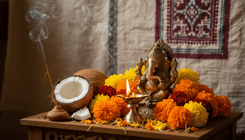
When you light a lamp to begin a puja, perform a havan, mark a birthday, or welcome a newborn, the first invocation is always to Ganesha. The practice of worshipping Ganesha first—before any other deity, before the main ritual, even before the purpose of the gathering—is so deeply woven into Hindu practice that it is simply how things are done. But the reason goes beyond habit. It reflects a particular understanding of how obstacles arise, who removes them, and why you need that clearance before anything else can begin.
Ganesha is known as Vighnaharta—the remover or destroyer of obstacles. The term vighna means barrier or hindrance, and harta means one who takes away. But this is not merely poetic. In the understanding that underlies the practice, obstacles are not just external blocks; they are misalignments, confusions and wrong turns that prevent clarity and successful action. Before you set your intention or begin your worship, you must clear the space—both physical and spiritual—of the confusion that might thwart you.



The Meaning of Vighnaharta
To understand why Ganesha is worshipped first, you need to grasp what vighnaharta actually means in practice. Vighnas are not punishments, and they are not always external. A vighna might be your own doubt about whether the puja is the right choice, an auspicious moment you have miscalculated, or a distraction that scatters your focus before you begin. It might be an actual practical obstacle—a lamp that will not light, someone arriving late—or an invisible one: unclear intention, inner division, the absence of consent from the cosmos for this action right now.
Ganesha's role is to recognise and clear these impediments. In some stories, Ganesha himself creates obstacles to test a devotee's readiness. In others, he removes them as an act of grace. What matters for the practitioner is that the first act is to turn to him and say: clear my path. Only then are you truly prepared to proceed. The worship is an acknowledgement that you do not control whether conditions align, and a request for that alignment.
Ganesha in Worship Before the Main Ritual
In most home pujas and temple ceremonies, the sequence is the same. You begin by invoking Ganesha—with a mantra, a gesture, an offering of flowers or sweets—and you ask for his blessing on what follows. This is not a separate ritual; it is a brief opening, sometimes only a few words. In a longer ceremony, you might offer flowers, incense and a small portion of prasad (blessed food) to Ganesha before turning to the main deity or purpose of the gathering.
This placement at the beginning is universal across sampraday (schools of practice). Whether you are following a Shaivite tradition that centres on Shiva, a Vaishnavaite one devoted to Vishnu, or any other path, Ganesha comes first. In temple pratima (worship), the sanctum may hold a different deity, but if there is a separate shrine to Ganesha, the priest worships there before entering the main sanctuary. In many temples, Ganesha's image is placed near the entrance, so the first encounter is with him.
The Symbolic and Practical Layer
Some people describe Ganesha's role only in psychological terms: he represents the removal of mental obstacles, the clearing of ignorance, the ability to solve problems. This is true, but it misses half the point. The practice assumes that obstacles exist on both planes—outer and inner—and that the two affect each other. When you invoke Ganesha first, you are not just preparing your mind. You are signalling an alignment: you are saying that this action, this moment, this gathering is aligned with the natural order, and that the cosmos is invited to support it.
The iconography reinforces this. Ganesha is often shown with four arms, one holding a goad (a prod used to direct elephants), another a noose or lasso, and a third raised in blessing. The noose catches obstacles; the goad directs them away. These are active, purposeful gestures. He is not passively blessing; he is actively clearing the way. His large ears are said to symbolise listening—he hears your request and acts on it.
When and How Ganesha is Worshipped First
The practice holds across all occasions. A bride and groom invoke Ganesha before the wedding ceremony. A business owner performs a puja for a new shop or venture, and Ganesha is the first invocation. A family beginning a yajna (fire ritual), a student starting a course of study, a child receiving their first learning—all begin with Ganesha. The ritual is the same whether the main purpose is to honour a deity, mark a passage, request blessing for an undertaking, or mark the start of a new phase.
In some traditions, Ganesha is worshipped throughout Bhadrapad (the lunar month falling around August and September), with particular emphasis on Ganesh Chaturthi, the day believed to mark his birth. On this day, many homes and temples perform a more elaborate puja to Ganesha. But outside these special days, the daily acknowledgement of Ganesha at the start of any act of worship is simply practice.
What It Means for Your Own Practice
If you perform puja at home, you need not wait for a festival or an auspicious day to begin with Ganesha. You can do it at any time—in the morning as part of your daily routine, before starting a new venture, or whenever you light a lamp. The form does not need to be elaborate. You can speak to him aloud or silently, offer water, flowers, or food, or simply turn towards his image (if you have one) and acknowledge him. The words matter less than the direction of your intention: you are clearing the space and asking for his help.
The practice teaches something deeper than ritual etiquette. It embeds into your day the recognition that success depends on alignment, not just effort; on removing confusion, not just adding more action; and on inviting grace into what you do. When you worship Ganesha first, you are admitting that you do not control all the conditions, and asking for them to be favourable. That humility and that request are themselves the beginning of clarity.
Common questions
Can I start a puja without invoking Ganesha?
It is possible, but not customary. In all sampraday and schools of practice, Ganesha is invoked first as a matter of course. The practice is so universal that omitting it would be considered incomplete. If you are following a specific tradition or guru's instruction that differs, follow that; otherwise, begin with Ganesha.
What should I offer to Ganesha when I worship him first?
Common offerings are flowers (especially marigolds), sweets (especially modak, a steamed dumpling traditionally associated with him), fruit, coconut, or incense. You can also offer water for washing his feet or hands, and a small portion of any prasad you will distribute later. Even a simple bow and spoken intention is a valid offering if material items are not available.
Does the order matter if I am worshipping multiple deities?
Yes. Ganesha is always invoked first, and then you worship the main deity or purpose of your gathering. If you are honouring other deities as well, they follow Ganesha but may be ordered according to tradition or your personal practice. The principle is: Ganesha first clears the way for everything that follows.

Related Articles


