
Why Til and Jaggery Are Given at Sankranti
Sweetness and warmth for the turning year

Abhilash Ramakrishna
21 Nov 2026 • 6min
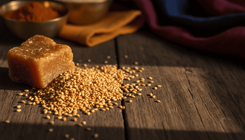
At Sankranti, when the sun moves into a new zodiacal sign and the year turns toward longer days, til (sesame seeds) and gud (jaggery) are shared across India as gifts and as food. The combination appears on every table—pressed into brittle shapes, rolled into balls, mixed into sweets—and the greeting itself has become inseparable from the festival: "Til-gud ghya, god bola" ("Take sesame and jaggery, and speak sweetly"). But why these two things, and why together?
The answer lies in season, in nourishment, and in the symbolic language of food that runs through Indian traditions.



Til in Winter: Warmth and Oil
Sesame seed is a winter crop, ripening as the cold months arrive. In Ayurveda, til is warming and calming: it has a grounding quality that counters the rawness of winter air. The seeds are rich in oil, and oil itself is considered nourishing and protective in the cold. When you eat til—whether raw, roasted, or as part of a sweet—you are taking in warmth in a form your body recognizes.
This is not mystical but practical. The oil in sesame seeds provides fat-soluble vitamins and sustained energy at a time of year when the body needs it. The warmth associated with it in Ayurvedic practice reflects what many food traditions recognize: that warming foods support the body through winter months. Eating til at Sankranti is a way of aligning your food with the season and with what the earth is offering.
Gud for Sustained Energy
Jaggery—unrefined cane sugar, golden or brown, made by reducing and setting sugarcane juice—is another winter harvest. Where refined sugar passes through the body quickly, jaggery provides a more complex sweetness and is traditionally thought to carry minerals from the cane. In winter, when the body's metabolism changes, the warmth of jaggery (in Ayurvedic terms) helps maintain steady energy through the cold season.
Til and gud eaten together create a complete sustenance: the nourishing oil of sesame and the energy of jaggery. This is why the combination has endured. It is not arbitrary but rooted in what the winter season provides and what the body needs.
Sweetness as Right Speech
The greeting "Til-gud ghya, god bola" connects the offering of these foods with kindness: take sweetness, and speak sweetly. This reflects a broader principle in Indian thought: that how we speak and treat each other should be seasoned with warmth and gentleness. Sankranti marks a turn in the year, and the offering of til and gud is an invitation to begin that new season with sweetness in both speech and action.
This is not a magical transaction but a communal intention. When you offer til and gud to a neighbor, a friend, or a stranger, you are saying something without words: may we move through this time with kindness. That intention, shared across families and communities, builds something real.
Regional Variations
The form of til and gud varies widely. In Maharashtra, til-gud is shaped into a hard brittle (chikhalwali) that breaks easily into pieces meant for sharing. In Gujarat, it is rolled into balls with ghee and coconut. In Karnataka, the festival takes the name Makar Sankranti, and here too til and gud are shared, often in balls or mixed into sweet rice. In North India, the combination appears as rewri (brittle with sesame and jaggery), or simply as loose seeds and jaggery offered to visitors.
What remains constant across these variations is the core: sesame and jaggery, shared at the turn of the season, carrying both nourishment and intention.
Beyond Sweets
Til and gud are not always eaten as sweets. In many households, the seeds are roasted and eaten plain, or mixed into savory dishes, or pressed into jaggery without additional refinement. Some people simply exchange the two substances as they are—a plate of sesame seeds and a piece of jaggery—without any further cooking. The sweetness can be simple and direct.
What matters is the exchange itself and the two ingredients together. Whether they are elaborately prepared or plainly offered, they carry the same meaning: that winter has a gift to offer, that the season has need, and that community happens through sharing what sustains us.
Why These and Not Others?
Other seeds and grains are also harvested in winter, but til and gud have become the established offerings at Sankranti across most of India. This may be simply that they grow well across diverse climates and regions, and that their combination was discovered long ago to be nourishing and satisfying. The tradition, once established, has been maintained not because it was commanded from above but because it makes sense to the people who practice it: the foods are seasonally available, pleasurable to eat, meaningful to share, and connected to the body's real need for warmth and energy at that time of year.
The exchange of til and gud at Sankranti is thus neither purely symbolic nor purely practical, but both at once. It is grounded in the seasons and in the body, and it carries intention and community. To participate in it is to align yourself with the turning year, with what the earth offers, and with the people around you.
Common questions
Is the greeting 'Til-gud ghya, god bola' said at every Sankranti celebration?
The greeting is traditional and widely used, particularly in regions like Maharashtra and parts of North India. However, the exact phrase and its usage vary by region and family custom. The core practice of exchanging til and gud is universal, but the greeting itself is not always spoken.
Can I give til and jaggery without making them into sweets?
Yes. Many households exchange raw sesame seeds and jaggery as they are, or roasted seeds mixed with plain jaggery. The form does not matter—what matters is the exchange of these two ingredients at Sankranti, whether they are elaborately prepared or simply offered.
If sesame and jaggery are warming, should I avoid them in summer?
In Ayurvedic practice, yes. These warming foods are recommended during winter and the colder months. In summer, cooling foods and ingredients are preferred. Sankranti falls during the cooler season, so the timing of this offering aligns with the body's actual needs through the year.

Related Articles


