
Why the Kartik Snan Pre-Dawn Bath Is Sacred in Hinduism
Immerse in Tradition, Rise in Grace

Abhilash Ramakrishna
21 Oct 2026 • 6min
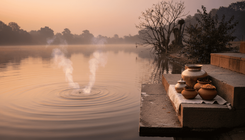
Kartik Snan is a daily pre-dawn bath taken during the month of Kartik Maas (October-November in the Gregorian calendar, depending on the lunar cycle). For thousands of years, practitioners have emerged from their homes before sunrise to bathe in rivers, tanks or wells, treating this simple act as one of the most powerful rituals in Hindu practice. The significance of Kartik Snan lies not only in its spiritual power but also in its connection to cosmic energies, scriptures and the rhythms that order the Hindu calendar.
During Kartik Maas—the eighth month of the lunar year—the morning bath is believed to carry exceptional merit. Hindu philosophy teaches that the pre-dawn hours, called brahma muhurta, hold a special place in the day. The air is still, the mind is clearer, and the connection between the individual and the divine feels closest. When you bathe during these hours in Kartik Maas, you are said to align yourself with forces that nurture health, spiritual growth and inner peace.



The Cosmic Significance of Kartik Maas
Kartik Maas holds a unique place in the Hindu lunar calendar. It arrives as the year moves toward its stillness—as harvests are gathered, daylight shortens, and the natural world prepares for rest. Many texts teach that this month is especially blessed. The Bhagavad Gita mentions Kartik among the months most favourable for spiritual practice. During this time, the veil between material and spiritual worlds is said to grow thin, making practices more potent.
The pre-dawn hours during Kartik are considered doubly auspicious. Brahma muhurta—the time of Brahma, the creator—falls roughly an hour and a half before sunrise. Hindu tradition teaches that this is when the mind naturally awakens to subtler dimensions of existence. Combining this sacred time with Kartik Maas creates what many call the most fertile ground for spiritual work. The bath itself becomes a gateway, washing away not just physical impurity but also negative thought patterns and emotional blockages that cloud your connection to the divine.
Why the Pre-Dawn Bath Cleanses More Than the Body
In Hindu thought, ritual cleansing operates on multiple levels. A pre-dawn bath during Kartik is not simply hygiene. The water is understood as a conductor of cosmic energy and divine grace. Many practitioners report that the act of waking before dawn, stepping into cold water and dedicating the moment to God creates a shift in consciousness—a lightness and clarity that carries through the day.
The physical cold of the water is also significant. In Ayurveda and yogic traditions, cold water enlivens the nervous system and awakens the energy channels called nadis. Bathing in pre-dawn darkness, under open sky, you are engaging with the elements themselves: water, air, earth and the first light of dawn. This is direct contact with nature as sacred, not something separate from spiritual practice.
The month of Kartik amplifies this effect. Practitioners describe their daily dip as rejuvenating—each bath feeling like a fresh beginning. Many say that consistency matters: the ritual works best when practiced daily throughout the month, each morning renewing intention and faith. Over weeks, practitioners often report a shift in their meditation, a deepening of focus and a sense that obstacles are lifting.
How Kartik Snan Differs Across Regions and Traditions
While the essence of Kartik Snan is consistent across Hindu communities, practice varies by geography and sampradaya (school of thought). In North India, many families bathe in rivers, tanks or purpose-built ghats, often in groups. The collective experience strengthens the practice. In South India, the ritual is equally revered but may take place at home or at local temples. Many bathe in their own wells or water stores blessed for the purpose.
Some regions have specific traditions attached to Kartik bathing. In certain parts of Maharashtra and Gujarat, practitioners combine the morning dip with offerings to Tulsi (holy basil), which flourishes during this month. In Vrindavan and other Krishna-centric communities, the bath is often followed by chanting the Mahamantra or visiting temples. The core principle remains the same everywhere: the pre-dawn bath during Kartik Maas is an offering to God and a means of self-purification.
Hindus of all backgrounds recognize Kartik Snan as a practice open to anyone with faith and commitment. You need not follow a particular lineage or sect. The ritual asks only that you wake, bathe before sunrise with intention, and dedicate the act to the divine. This universality is one reason Kartik Snan has endured across centuries and geographies.
Preparing Yourself for the Practice
Beginning Kartik Snan requires more than waking early. It calls for intention and small preparations that honour the sacred nature of what you are doing. Many practitioners begin by deciding to observe the full month, understanding that consistency builds momentum. Some set an alarm for brahma muhurta or wake naturally as the body adjusts to the early hour.
Having a place in mind helps. Whether a river, tank, well, or a prepared space at home, knowing where you will bathe removes last-minute hesitation. Many find that bathing outdoors—even in a courtyard under open sky—connects the practice more deeply to nature and cosmos. If outdoor bathing is not possible, a home bath taken before sunrise with full attention can be equally valid.
Before stepping into the water, many practitioners pause to set intention. A simple statement—"I offer this bath to the divine" or "I cleanse myself of all that obscures my true nature"—anchors the practice in meaning. Some recite a simple mantra or prayer. Others remain silent. The key is presence: knowing that this moment matters.
Many texts suggest that after the bath, some form of spiritual practice follows naturally—meditation, mantra repetition, study of scripture or a visit to a temple. The cold, clear mind from pre-dawn bathing becomes fertile ground for these practices. Over a month of Kartik Snan, practitioners often find their meditation deepens and their connection to daily spiritual practice strengthens.
Common questions
What time should I bathe for Kartik Snan?
Bathe before sunrise, ideally during brahma muhurta (roughly 90 minutes to one hour before sunrise). The exact time depends on your location and the season; your local calendar or panchanga can give you the precise time for your area.
Can I do Kartik Snan at home instead of at a river or tank?
Yes. While bathing in a river or natural water source is traditional and preferred by many, a home bath taken before sunrise with full intention is equally valid. Some practitioners who live far from water sources or have mobility challenges observe Kartik Snan at home and find it deeply effective.
Do I need to follow a specific ritual or mantra during the bath?
No prescribed ritual is universal across all traditions. Many practitioners simply approach the bath with reverence and the intention to purify body and mind. Some recite a mantra or prayer beforehand; others remain silent. What matters is presence and genuine dedication to the practice.

Related Articles


