
Why Some Communities Celebrate Diwali with Kali Worship
When light meets power in different devotional paths

Abhilash Ramakrishna
03 Nov 2026 • 6min
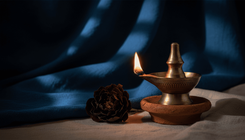
Not all Diwali celebrations look the same. While many communities mark the festival with lamps lit to celebrate the triumph of light over darkness and good over evil, some regions—particularly in eastern and northeastern India—centre their Diwali observance on worship of Goddess Kali. Understanding these regional differences shows how a single festival takes on distinct meanings depending on where and how it is practiced, and which deity the community holds closest.



The Broader Meaning of Diwali
Diwali is celebrated across India and the diaspora, but its significance varies by region and tradition. In many places, the festival marks the return of Rama to Ayodhya after his victory over Ravana, making it fundamentally a story of light triumphing over darkness. In other regions, especially Bengal and Assam, Diwali is known as Kali Puja—a festival centred not on this particular narrative but on direct worship of the fierce goddess Kali. For these communities, the festival's essence is different, even if the date falls within the same lunar period. Both celebrate victory and auspiciousness, but through different devotional lenses.
Who is Goddess Kali in These Traditions
Kali represents a specific and necessary form of divine power. She is not worshipped despite her fierce appearance, but because of what that appearance means: the destruction of ego, ignorance and evil. In traditions that centre Kali worship during Diwali, she is understood as Shakti—the ultimate feminine energy of the universe—in her most dynamic and transformative aspect. She wears a skirt of severed arms and a garland of severed heads, but these are not symbols of random violence; they represent the annihilation of the separate self and the illusions that bind us. To her devotees, Kali is the most compassionate mother, and her fierce form is an expression of her love for her children in their struggle against ignorance. When communities worship Kali at Diwali, they are calling on her power to destroy what must be destroyed so that renewal can occur.
Bengal and Assam: Where Diwali Means Kali Puja
In Bengal, Kali Puja is the central observance of Diwali. The festival is called Kali Puja or sometimes Shyama Puja (Shyama is another name for Kali). On the new moon night of the month of Kartik (the same lunar moment when many other parts of India celebrate Rama's return), families and communities gather at temples or make offerings at home. The worship often takes place late at night, and the mood is one of reverence and direct invocation rather than the celebratory atmosphere found in Rama-centred observances. In Assam, while the festival is also called Diwali, Kali worship plays an equally significant role, reflecting the historical and cultural prominence of Shakti worship in the region. Similar observances occur in parts of Odisha and among communities in the Northeast.
Why This Regional Difference Exists
These regional variations have roots in how the Mahabharata and the Ramayana were received and interpreted in different parts of India, and in the particular forms of Shakti worship that developed in eastern regions. Bengal in particular has a very strong Tantric and Sakta tradition—one that places the feminine divine principle at the centre of spiritual practice. Major temples like Kalighat in Kolkata have been pilgrimage sites for many centuries, making Kali worship central to Bengali religious life. The Devi Mahatmya, a core text for Shakti-centred practice, describes the goddess defeating demons that threaten the cosmos, a victory that is celebrated during Diwali in communities where this text holds special authority. Over centuries, these traditions became woven into the fabric of how Diwali itself is observed in these regions. A Bengali family's Diwali is inseparable from their practice of Kali worship; for them, the two are not separate observances that happen to fall on the same day, but parts of a single spiritual moment.
How the Worship is Practiced
In homes and temples where Kali Puja forms the centre of Diwali, the ritual typically involves offerings of flowers, incense, and food to the deity. The goddess is invoked through mantras and chanting, and devotees seek her blessings for protection, wisdom and the destruction of inner obstacles. Some communities offer bhaang (a drink made from cannabis leaves and other ingredients) as part of the worship, a practice mentioned in texts as an offering to Kali. Animal sacrifice was historically part of some Kali Puja observances, though this is now less common and many communities have moved toward vegetarian offerings. The worship is more focused and intense than some other Diwali celebrations, and it often includes personal prayer for strength and courage—qualities associated with Kali's power. The night is spent in devotion, and many people maintain a meditative or introspective mood throughout.
Living with Both Traditions
In modern India, these traditions coexist and often overlap. Many Bengali families light Diwali lamps alongside their Kali Puja, incorporating both symbolic elements. In cities with mixed populations, individuals may be exposed to multiple ways of celebrating Diwali. This is not a conflict but a reflection of how Indian spirituality holds multiple truths at once. The light that symbolises good's victory over evil, and the fierce power that destroys ignorance and ego, are not opposed—they are different dimensions of how the sacred moves through the world and through human practice. Understanding this helps explain why Diwali can look different from one home or region to another, and why that diversity is not a departure from the festival's meaning but an expression of its depth.
Common questions
Is Kali Puja the same date as Diwali in other parts of India?
Yes—Kali Puja in Bengal takes place on the new moon night of the month of Kartik, which is the same date as Diwali celebrations elsewhere in India. The date shifts with the lunar calendar each year, but the two observances always fall on the same night.
Do people celebrate both Kali Puja and Diwali at the same time?
In Bengal and parts of the Northeast, Kali Puja is the primary observance, but many families also light lamps and incorporate other Diwali customs. In other regions, Kali worship may occur at different times of the year, most commonly during Kali Puja in spring or at other auspicious moments in the lunar calendar.
Is Kali worship only part of Diwali in certain regions?
Kali worship is central to Diwali in Bengal, Assam, parts of Odisha, and the Northeast. In other regions of India, Diwali is celebrated differently, often centred on the Rama narrative or other regional stories, though Kali worship exists as a separate practice throughout India at other times of the year.

Related Articles


