
Why Sesame Oil Is Central to Ayurveda Practice
Warmth, Healing, and Balance in Every Drop

Kushal K
18 Nov 2026 • 6min
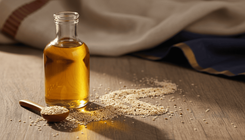
Sesame oil, called til taila in Sanskrit, holds one of the most important places in Ayurvedic medicine and daily wellness practice. When an Ayurvedic doctor recommends oil massage, or abhyanga, they most often mean sesame oil, particularly for its warming properties and its ability to work with the body's fundamental energies, or doshas. Understanding why til taila is prized starts with understanding how Ayurveda sees the body and what keeps it in balance.



The Three Doshas and Sesame Oil
Ayurveda understands health through three doshas: Vata, the principle of movement and space; Pitta, the principle of heat and transformation; and Kapha, the principle of structure and stability. These three energies move through everyone, though in different proportions, and imbalance in any one of them shows up as illness or discomfort. Sesame oil is warming by nature—it has what Ayurveda calls an ushna virya, a heating potency—which means it naturally helps calm Vata, the cold and drying dosha that becomes easily imbalanced in daily life. This warming quality also strengthens digestion and supports circulation. For people with high Pitta, where excess heat already lives in the body, lighter oils like coconut are often preferred instead. For Kapha, which is heavy and sluggish by nature, sesame oil's warmth and penetrating quality offer balance. This is why the choice of oil matters: one oil does not suit everyone equally, and til taila shines most for those needing its particular warmth.
How Sesame Oil Enters the Tissue Layers
One reason Ayurveda ranks sesame oil so highly is its ability to penetrate deep into the body's tissues. Ayurvedic anatomy describes seven layers of tissue, called dhatus, that build on one another: plasma, blood, muscle, fat, bone, nerve and reproductive tissue. For healing to take place, medicine must reach into these layers rather than sitting on the surface. Sesame oil's molecular weight and the sticky quality it carries—what Ayurveda calls its sneha, or oleating property—allow it to travel through the skin and enter the deeper dhatus. When you massage with til taila, you are not simply lubricating the skin; you are beginning a process of nourishment that reaches bone and nerve. This is why abhyanga with sesame oil was traditionally performed before many seasonal transitions and before periods of fasting or cleansing: it prepared the body by feeding its deepest layers.
The Role of Til Taila in Daily Routine
In Ayurvedic texts, particularly the Charaka Samhita, oil massage with sesame oil is counted among the practices that keep a healthy person healthy. This practice, called dinacharya or daily routine, is foundational to Ayurvedic living. A morning massage with warm til taila—as little as 10 to 15 minutes on the body, or on the feet, scalp and ears if time is short—is said to strengthen the immune system, improve sleep, calm the nervous system and restore lustre to the skin. Unlike medicine that you take when you are ill, these daily practices prevent illness from taking hold. In regions where Ayurveda has remained woven into family life, sesame oil massage was never a luxury; it was maintenance, as ordinary as washing. For someone new to the practice, beginning with the feet and scalp is often simpler than a full-body massage, and it carries similar benefits.
What Makes Sesame Oil Stand Apart
Sesame oil is far from the only oil used in Ayurvedic practice. Coconut oil cools and nourishes, particularly during summer months and for Pitta constitutions. Brahmi oil and bhringraj oil carry intelligence into the nervous system and are especially valued for the head and scalp. Neem oil has powerful cleansing properties. Each oil was chosen by Ayurvedic practitioners for specific qualities and specific bodies. Yet til taila remains the default in most classical Ayurvedic texts, the oil that works across more seasons and more people than any other. Its warmth, its penetrating quality, its stability in storage, and the ease with which it was historically sourced in India all contributed to its place in the tradition. It is the oil most often named when Ayurvedic texts speak of oil massage without specifying which oil, which itself tells you something about its centrality.
Til Taila and the Seasons
Sesame oil's warming nature makes it most naturally suited to autumn and winter, when Vata naturally rises in the world and in the body. In these months, a regular massage with warm sesame oil becomes especially protective: the oil's heat counters the season's cold dryness, and the ritual itself grounds and stabilises. During summer, when Pitta is high and the world is already warm, many Ayurvedic practitioners suggest switching to coconut oil or simply using less oil more selectively. Spring, when Kapha rises, calls for oils with more warming and stimulating power, which til taila provides well. This is not a rigid rule—your own constitution and current state of balance matter more than the calendar—but it reflects an understanding that Ayurveda is not one-size-fits-all. The same oil at the wrong season or for the wrong person can do harm rather than help, which is why receiving guidance from an Ayurvedic practitioner is valuable if you are new to the practice.
Quality and Preparation Matter
Not all sesame oil is equal in Ayurvedic use. For therapeutic massage, you want oil that is cold-pressed and unrefined, without additives or fragrance. Many oils sold as sesame oil have been processed with heat, bleached or refined, which damages the subtle properties Ayurveda depends on. The traditional way to prepare sesame oil for massage involves gently warming it and sometimes infusing it with specific herbs, depending on what you need the massage to accomplish. If you are using sesame oil at home, warming it to just above body temperature—so that it feels comfortably warm on the skin—is important: cold oil does not penetrate as effectively, and oil that is too hot can burn. Many people find that a simple ritual of warming the oil in warm water, testing it on the inner wrist first, and then taking time to massage it mindfully into the skin makes the practice itself more nourishing. The attention you bring to the act of massage matters as much as the oil itself.
Common questions
Is sesame oil the same as regular cooking oil?
For Ayurvedic use, you need cold-pressed, unrefined sesame oil without additives—not the roasted cooking oil sold for kitchen use. The roasted oil has different properties and is not suitable for therapeutic massage or abhyanga.
Can I use sesame oil if I have Pitta imbalance?
Sesame oil is warming, so it may increase Pitta if your constitution already runs hot or you are experiencing excess heat. Coconut oil or brahmi oil are often better choices for Pitta; consult an Ayurvedic practitioner to know what suits you.
How often should I do sesame oil massage?
Daily massage is ideal, even just 10 to 15 minutes on the feet, scalp or ears. If daily is not possible, three to four times a week still brings benefit. Consistency matters more than duration.

Related Articles


