
Why People Build Diwali Forts and Clay Models in Maharashtra
Ancient tradition meets festive craft in clay.

Abhilash Ramakrishna
03 Nov 2026 • 6min
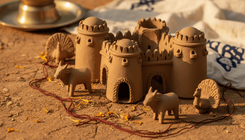
Diwali brings many traditions to Indian homes, but few are as distinctly Maharashtrian as building clay forts and models during the festival. In villages and cities across Maharashtra, families craft miniature mud forts called balikals or deshkals, along with clay cows, peacocks, and household scenes. This practice connects Diwali to a deeper story about courage, victory and the protection of one's home and family.



The Connection to Shivaji and History
The tradition of making clay forts at Diwali is rooted in Maratha history, particularly the reign of Chhatrapati Shivaji Maharaj. According to popular understanding in Maharashtra, Shivaji strengthened forts throughout the region as part of his strategy to defend against the Mughal empire. These forts became symbols of Marathi pride and regional independence. When Diwali arrived, people began crafting small clay replicas of famous forts like Raigad, Sindhudurg and Pratapgad as a way to honour this history and remember Shivaji's legacy. The practice honours both military strategy and territorial identity.
Making forts during Diwali became a way for ordinary people to participate in this pride. Children especially were encouraged to build them, learning about their region's past through play and craft. Over generations, what began as a historical remembrance became embedded in the festival itself. Visiting older family members and discussing which fort one had built became part of the Diwali ritual.
The Ritual and Spiritual Significance
Beyond history, the practice carries ritual meaning. In Hindu tradition, clay is considered a pure medium for creating sacred objects and offerings. Building something by hand during a festival is a form of seva (service) and a way of focusing intention. When families shape clay forts during Diwali, they are engaging in a creative act that is both meditative and devotional.
The forts are often built from earth gathered from one's own fields or surroundings, which deepens the connection between the maker, the land and the community. This act of creating from natural materials also reflects the agricultural roots of Diwali itself. The festival marks the end of the monsoon and the beginning of the harvest season, when farmers return to their fields. Building with clay is a way of honouring that connection to the earth.
Many families keep their clay forts in their homes for days after Diwali, displaying them alongside other festival decorations. Some place them near the entrance as a form of protection for the household. The symbolic act of building a fort—a place of safety—aligns with Diwali's broader theme of light overcoming darkness, order overcoming chaos, and security within one's own space.
The Craft and What Gets Made
The clay models Maharashtrians create at Diwali are not limited to forts. Artisans and families craft cows, which are sacred in Hindu tradition; peacocks, which represent beauty and pride; elephants, which carry historical and spiritual weight; and small human figures going about daily life—working in fields, cooking, playing. These models are often left unpainted, showing the natural colour of the clay, though some makers add natural dyes or paint.
The forts themselves come in various styles. Some are simple, with basic walls and towers recognisable as fort structures. Others are more elaborate, featuring detailed gateways, ramparts and small figures of soldiers or guards inside. The level of detail depends on the maker's skill and time available. In some regions, families cooperate to build larger forts together, a practice that strengthens community bonds.
The clay used is typically clay sourced locally or purchased from potters. In many parts of Maharashtra, professional potters have long been involved in making these pieces, working alongside families to create pieces that combine folk artistry with personal meaning. These craftspeople keep the tradition alive by teaching younger generations and ensuring that techniques and designs are preserved.
Regional Variations Across Maharashtra
While the practice is widespread in Maharashtra, it varies by district and community. In areas closer to historical forts like Raigad in the Raigad district, fort-building may be more elaborate and detailed. In coastal regions near Sindhudurg, the fort design reflects the architecture of that particular stronghold. In some villages in Vidarbha, the tradition emphasises clay animals and household figures over forts.
Urban areas of Maharashtra, particularly cities like Pune and Mumbai, have seen changes in how the tradition is observed. Fewer urban families make their own forts now; some purchase pre-made clay models from artisans and potters instead. However, in rural and semi-urban areas, the custom of handmade fort-building during Diwali remains strong. Schools in Maharashtra often encourage children to participate in Diwali craft projects that include making clay forts, ensuring the practice continues.
Why the Tradition Endures
The reason this tradition has lasted for centuries is that it serves multiple purposes at once. It connects people to history, allows for creative expression, involves the family in a shared task, and carries spiritual meaning. Unlike a festival decoration that is simply purchased and displayed, making clay forts requires time, thought and intention. For this reason, the practice has remained meaningful even as modern life has changed the way many other festivals are celebrated.
The tradition also reflects values central to Maharashtrian culture: self-reliance, connection to the land, pride in regional identity and the belief that what you make with your own hands carries more power than what you buy. In an age of mass production, the hand-made clay fort remains a quiet act of resistance and remembrance.
Common questions
What are clay forts called in Marathi?
Clay forts built during Diwali in Maharashtra are known as balikals or deshkals. These terms refer to the miniature mud structures that families create as part of the festival celebration. The names vary slightly by region and local dialect.
Are clay forts and models still made today in Maharashtra?
Yes, the tradition continues, particularly in rural and semi-urban areas where families still hand-craft them each Diwali. In cities, some families purchase pre-made pieces from potters rather than making their own, but the practice remains widely recognised and encouraged in schools as part of Diwali education.
What can you make besides forts?
Families craft clay cows, peacocks, elephants and small human figures depicting daily life—cooking, farming and playing. These pieces are often displayed alongside the forts. The animals and scenes carry their own symbolic meaning within Hindu tradition and regional culture.

Related Articles


