
Why Maharashtra Celebrates Diwali with Vasu Baras and Faral
Ancient wealth and prosperity customs in the Diwali fortnight

Kushal K
02 Nov 2026 • 6min
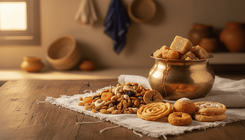
In Maharashtra, Diwali is not a single day but a season of celebration, and two customs stand at its heart: Vasu Baras and the preparation of faral. Vasu Baras, the day devoted to cattle and property, falls two days before Deepavali. Faral, the sweet offering, appears throughout the Diwali fortnight. Together they weave the practical and the sacred through Maharashtrian homes, grounding the festival in care for animals, gratitude for abundance, and the sharing of sweets with family and community.



What Vasu Baras Means in the Diwali Season
Vasu Baras is observed two days before Deepavali, in the dark fortnight of the month of Kartik. The name comes from vasu, an ancient Sanskrit term for wealth and cattle, and baras, meaning twelve. The day honours all that holds and produces wealth: animals, particularly cattle, as well as property and possessions. In a largely agrarian tradition, this made immediate sense. Cattle were not merely property—they were the foundation of prosperity. Without them, a family could not feed itself.
The ritual typically centres on the cow or buffalo, where they are bathed, fed specially and garlanded. Their horns are sometimes painted, and in many homes, their hooves are dipped in oil and pressed onto the threshold or walls to mark the beginning of the auspicious season. Some families extend the ritual to include the bull and the ox if they have them. The practice acknowledges that animals, especially cattle, are partners in survival and wellbeing, not possessions to be overlooked. The reverence shown to them on Vasu Baras stems from this understanding. A home without cattle, or without animals at all, might light a lamp or make an offering to mark the day, treating the ritual as an honoring of all forms of material sustenance.
The observance also touches on property itself. Some households make an offering to their house, their tools, or the objects by which they work. A shopkeeper might mark their counter or scales; a farmer, their plough. This custom of honouring tools and property reflects a belief that intention and care infuse the things we live by and work with, and that marking them during an auspicious season renews their virtue.
Faral: The Sweetness That Binds the Festival
Faral is the generic name for sweets and special foods prepared during the Diwali fortnight in Maharashtra. The word itself refers to offerings of food made during worship, and faral sweets are made with ingredients considered pure and auspicious: jaggery, ghee, dried fruit, nuts and special flours. Chikali, a brittle of puffed rice and jaggery, is common; so are ladoo, burfi and varieties of kheer. The preparation often begins days before Deepavali itself, filling the house with the smell of cooking ghee and jaggery, a sensory marker of the season.
Faral serves multiple purposes. First, it is an offering in the puja, the household ritual of worship. Second, it is a gift. A plate of faral is given to family members, neighbours, colleagues and friends during the Diwali season. The act of giving sweets is not incidental; it is central to how the festival is observed. To give faral is to wish abundance and sweetness on the receiver. Third, it is a repository of tradition. Recipes for faral pass from mother to daughter, from grandmother to grandchild, carrying with them the memory and practice of the family. A woman making faral is not simply cooking; she is enacting a custom that may be generations old.
In some regions of Maharashtra, certain sweets are specific to Vasu Baras itself. The preparation of these sweets often involves the whole household, particularly the women, and carries a social dimension—cousins gather in the kitchen, neighbours exchange tips, and children learn by watching and helping. The Diwali fortnight becomes a time of intentional domestic activity and female-centered knowledge sharing.
How Vasu Baras Reflects Maharashtrian Values
Vasu Baras rests on a principle that modern life sometimes obscures: that prosperity is not separate from care for what sustains us. The day insists that wealth is not an abstract number but something rooted in the material world—in the health of animals, the condition of tools, the state of a home. To mark Vasu Baras is to acknowledge gratitude for these things before they give way to the brighter joy of Deepavali itself.
The regional character of Vasu Baras in Maharashtra also reflects how the state's geography and history shaped its festivals. Maharashtra's agrarian base, the importance of cattle in both economy and ritual life, and the influence of merchant communities all shaped the form the observance took. In other regions, the equivalent festivals or preparations differ; Vasu Baras as observed in Maharashtra has a particular flavour rooted in these conditions.
The practice also marks a social boundary. While Deepavali is observed across religions and regions in India, Vasu Baras and its attendant customs are distinctly Maharashtrian. To celebrate them is, for Maharashtrian families, to mark their identity and continuity. The festival becomes a way of saying: this is who we are, this is what we value, this is how we have always done this.
The Diwali Season as a Whole
Vasu Baras and faral do not stand alone. They are woven into a broader season that includes other observances—Govardhan Puja, Bhai Dooj—and local customs that may vary by district or community. In some parts of Maharashtra, the Diwali season also includes specific rituals around the new lunar month, or the making of particular sweets tied to local history or trade.
Understanding Vasu Baras and faral together offers a window into how Maharashtrian families structure their Diwali. The season is not about a single moment of illumination, but about a series of acts: honouring cattle, making sweets, giving gifts, tending to property, and gathering with family. Each act carries its own meaning, yet all of them together form a larger narrative about abundance, gratitude, and the bonds that tie a household and a community together.
For anyone observing or learning about these traditions, the key is recognizing that Vasu Baras and faral are not merely customs to be performed but expressions of values that have held meaning for Maharashtrian communities across time. To engage with them—whether by marking the day with a cow, making sweets in the kitchen, or sharing faral with others—is to participate in that continuity.
Common questions
What animals are honoured on Vasu Baras?
Cattle are the primary focus—cows and buffaloes are typically bathed, fed specially and garlanded. Many families also include oxen and bulls if they have them. In homes without cattle, the ritual may be observed through a lamp or offering instead.
Is faral the same thing as Diwali sweets?
Faral is a Maharashtrian term for sweets and offerings made during the Diwali season. While other regions make sweets for Diwali, faral specifically refers to this tradition in Maharashtra and is often made with jaggery, ghee, nuts and dried fruits.
Can someone without cattle observe Vasu Baras?
Yes. Those without animals can mark the day by making an offering to their home, tools, possessions or property, or by lighting a lamp with intention. The principle of honouring what sustains you can be adapted to your circumstances.

Related Articles


