
Why Lord Vishnu Rests on Ananta Shesha: The Cosmic Sleep Meaning
Rest between creation and renewal

Aditya Pandey
06 Nov 2026 • 6min
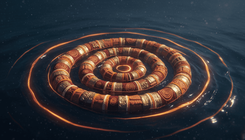
Vishnu's cosmic sleep on Ananta Shesha is not a simple rest. It is the space between one age of the world and the next, when the universe contracts to its source and waits to be born again. In Hindu philosophy, this image shows us something crucial about how reality works: creation and dissolution are not opposites but partners in an endless cycle. Understanding what Vishnu's sleep means opens a doorway to how the universe breathes.



The Cosmic Serpent as Foundation
Ananta Shesha is not merely a bed. The name itself means "the endless" or "the infinite remainder", and this infinite serpent coils in the waters of the cosmic ocean, supporting all of existence. Shesha's countless hoods shelter the worlds, and his very body is both the foundation and the boundary of creation. When Vishnu sleeps upon Shesha, he is resting on the fundamental structure of reality itself—the unstoppable force that holds all things in being.
In the Mahabharata and Puranas, Shesha is described as eternal, present at the beginning and end of all ages. He is sometimes called Adishesha, meaning "the primal serpent". His countless mouths sing the glories of Vishnu in an endless hymn. So when Vishnu reclines on Shesha's coils, the image speaks of support at the deepest level: the cosmic order resting upon the infinite principle that never abandons it.
Yoga Nidra: The Divine Sleep
Vishnu's sleep is called yoga nidra, which means divine sleep or the sleep of union. This is not unconsciousness or escape. In yoga philosophy, yoga nidra is a state of total awareness in which all tension dissolves but consciousness remains complete. Vishnu dreams the entire cosmos while appearing to sleep, just as we dream without thinking we are doing so.
During this cosmic sleep, the worlds rest. Time itself pauses. All beings return to their subtle form, dissolving back into the divine source from which they emerged. Nothing is lost; everything waits in potential. The earth does not cease to exist; it withdraws from one phase of becoming into the next. This is yoga nidra: not death but a threshold, not unconsciousness but infinite consciousness without form or boundary.
In texts like the Bhagavata Purana, it is said that Brahma, the creator, emerges from Vishnu's navel during the sleep to fashion the next cycle of worlds. Creation and rest are not separate; creation happens within rest, like flowers blooming from a dream.
The Dance of Time: Kalpas and Yugas
Vishnu's sleep governs the rhythm of cosmic time. One sleep and waking of Brahma equals one kalpa—a complete age of the universe lasting billions of years by human measurement. Each kalpa itself divides into smaller cycles called yugas: the Satya Yuga, Treta Yuga, Dvapara Yuga and Kali Yuga. These pass in order, and when the Kali Yuga ends, Vishnu withdraws the cosmos into his own being.
This rhythm is not a flaw in creation but its nature. Just as your own days divide into waking and sleep, and your life divides into seasons of growth and rest, the cosmos has its seasons too. Vishnu's cosmic sleep reminds us that dissolution is natural, necessary and followed always by renewal. Nothing ends; everything transforms.
Some traditions describe that at the end of a kalpa, Shiva performs his cosmic dance of destruction, and Vishnu withdraws into sleep as all forms return to the unmanifest. Then, when the appointed time comes, Brahma is born again from Vishnu and the cycle begins afresh. This is not catastrophe but the breathing of the infinite.
What Ananta Shesha Represents for Us
Though Ananta Shesha and Vishnu's cosmic sleep are cosmic events, they carry meaning for your own practice. The image teaches that support underlies all reality—that you rest upon infinite principles even when you do not see them. Shesha, the eternal serpent, suggests that what endures beneath all change is trustworthy and boundless.
Vishnu's sleep also reminds us that stillness and activity are not at war. The cosmos continues in its order during the sleep, just as your body repairs and integrates experience when you rest. Rest is not laziness; it is creative. Dissolution is not failure; it is the space where transformation happens. In your own meditation or in moments of true rest, you touch something of this principle—a consciousness that does not vanish when thought subsides but simply changes its nature.
The Symbolism in Daily Practice
In temples and homes, images of Vishnu sleeping on Ananta Shesha appear during certain seasons and observances, reminding worshippers of these eternal cycles. Some traditions observe Vaikuntha Ekadashi, a day connected to Vishnu, with special prayers acknowledging both his cosmic rest and his eternal watchfulness. The sleep is never final; it is punctual and purposeful, like the closing and reopening of an eye.
When you see this image, you are seeing a truth about your own existence. You live within cycles—daily, seasonal, yearly, and across lifetimes. You rest and you act. You dissolve worries into sleep and wake renewed. The infinite support that holds Vishnu also holds you. Understanding Ananta Shesha and the meaning of cosmic sleep is not scholarship about ancient cosmology; it is recognition of what you already know in your bones: that beneath all becoming, something infinite and eternal remains still, eternal and sure.
Why This Sleep Matters to Understanding Dharma
For those walking a spiritual path, Vishnu's cosmic sleep on Ananta Shesha teaches acceptance of time's flow and faith in what sustains all things. It answers the question many ask: if creation ends, what does that mean for us? The answer is that ending and beginning are the same infinite rhythm. Nothing true is lost. The worst that can happen is transformation, which is always recovery of a deeper truth.
This understanding gives practitioners freedom from fear about change, loss and dissolution. If Vishnu trusts the cosmic ocean and Ananta Shesha's infinite support, so can you trust the principles that hold your own life steady beneath all its seasons and changes.
Common questions
What does yoga nidra mean?
Yoga nidra means divine sleep or the sleep of union. It is a state of complete awareness where all tension dissolves but consciousness remains infinite. Vishnu dreams the entire cosmos in this state, much as we dream without thinking about it.
How long is one cosmic sleep of Vishnu?
One sleep and waking of Brahma equals one kalpa, a complete age of the universe. A kalpa is divided into smaller cycles called yugas, and the entire span lasts billions of years by human measurement.
Why is Shesha called the endless serpent?
Shesha's name means 'the endless' or 'the infinite remainder' because the serpent is described as eternal and infinite in the Puranas. Its countless hoods shelter the worlds, and its body never ceases to support all of existence.

Related Articles


