
Why Lord Krishna Lifted Govardhan Hill for Seven Days
The story of devotion, dharma and protection

Kushal K
04 Nov 2026 • 6min
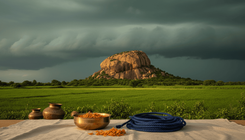
Lord Krishna lifted Govardhan Hill for seven days to protect the people of Braj from the torrential rains sent by Indra, the king of the gods. The story shows how Krishna defended his people when they faced a crisis not through force, but by taking responsibility for their safety. It is one of the most loved episodes of Krishna's childhood and illustrates what dharma means in practice.



The Conflict with Indra
The story begins with a ritual conflict. The people of Braj, including Krishna's adopted family and the cowherds, prepared to perform their yearly worship to Indra, the rain god. They believed this ritual ensured good weather and prosperity. Krishna, who was still a boy at the time, questioned this custom. He asked why they worshipped Indra rather than caring for the land and cattle that actually sustained them. The hill Govardhan, which gave them water, grazing ground and stones for shelter, seemed to Krishna more worthy of gratitude than a distant deity. He suggested they perform a sacrifice instead to Govardhan and the land itself.
The cowherds agreed and made the offering to the hill. This act of redirected worship reached Indra and angered him deeply. A king of the gods does not easily accept being superseded in the minds of mortals. Indra determined to punish the people of Braj and teach Krishna a lesson through their suffering.
The Seven Days of Rain
Indra released his power on Braj without mercy. The rains came not as the blessing Braj needed, but as a devastating deluge. Clouds gathered black and heavy. The wind howled with such force that it bent the great trees. Lightning split the sky. The earth itself seemed to flood as the rain fell without pause or mercy. Animals and people alike had nowhere to shelter. The cattle scattered in terror. Families huddled together, and even the strongest among the cowherds feared they would be washed away.
In this moment of crisis, Krishna did not hesitate. He called all the people of Braj—the cowherds, their families, and their animals—to take shelter at Govardhan Hill. When they gathered there, afraid and soaked, Krishna made an astounding gesture. He lifted the entire Govardhan Hill with his little finger and held it aloft like a great umbrella over all the people below. Under the protection of the lifted hill, the people of Braj were safe. The rain fell all around them, but they remained dry. The cattle were protected. The children were protected. For seven days and nights, Krishna held the hill.
What the Hill Symbolises
The lifting of Govardhan was not only a feat of divine power; it was a statement about Krishna's relationship with his devotees. The hill itself represents the natural world that sustains life—the source of water, shelter and livelihood. By lifting it, Krishna showed that he claims responsibility for the wellbeing of those who depend on him. He did not defeat Indra through war or magic. Instead, he protected his people with his own body, placing himself between them and harm.
The story teaches that dharma is not about following rules, but about meeting the needs of those in your care. Krishna's challenge to the worship of Indra was not rebellion, but right action. He saw that the ritual had become disconnected from its purpose—to ensure the wellbeing of Braj. By redirecting worship toward the hill and the earth, he was aligning the people's gratitude with the source of their actual sustenance.
The Breaking of Indra's Pride
On the seventh day, when the rains had lasted as long as Krishna willed them, they ceased. Indra's anger could not penetrate the faith of the people of Braj, nor could it harm the one who protected them. Indra himself appeared to Krishna and acknowledged his defeat. In some versions of the story, Indra realised that Krishna was not merely a cowherd boy, but a divine being far greater than himself. He bowed to Krishna and asked his forgiveness. The worship of Indra did not end entirely—the gods still held their place—but the power of Krishna's protection and the righteousness of his action became undeniable to all.
The incident strengthened Krishna's bond with the people of Braj. They had seen him act to save them. They had felt his presence as directly as the shelter of the hill itself. This experience shaped their devotion to him for the rest of their lives.
How the Story Lives Today
The Krishna Govardhan Hill story is remembered through the festival of Govardhan Puja, celebrated in the days following Diwali. On this day, devotees create small hills of cow dung or clay and worship them, recreating in miniature the protection Krishna offered. Many also perform parikrama—a circular walk of veneration—around Govardhan Hill itself, which still stands in the region of Braj, now in Uttar Pradesh. Pilgrims travel from across India to walk around the physical hill and remember Krishna's act of protection and care.
The story is also recited and sung in homes and temples, kept alive through the memory and devotion of believers. Each time a devotee hears or tells the story, they are reminded that Krishna's power serves a purpose: the protection and wellbeing of those who place their faith in him. The seven days have become a measure of Krishna's commitment—he did not tire, did not waver, but held firm until his people were safe.
Common questions
Why did Krishna challenge the worship of Indra?
Krishna questioned why the people directed their worship to Indra, a distant god, rather than to Govardhan Hill and the land that actually sustained them. He saw that gratitude should flow toward the source of their real sustenance—water, grazing ground and shelter.
Is Govardhan Hill a real place you can visit?
Yes. Govardhan Hill still stands in Braj, Uttar Pradesh, and is a major pilgrimage site. Devotees walk in circular veneration (parikrama) around the hill to honour Krishna's protection and remember the story.
How do people celebrate this story today?
The story is remembered through Govardhan Puja, celebrated after Diwali. Devotees create small hills from clay or cow dung and worship them, recreating Krishna's protection in miniature. Many also journey to the actual hill to perform parikrama.

Related Articles


