
Why Lord Kartikeya Is Worshipped on Skanda Sashti
Victory over darkness, celebrated in six-day devotion

Aditya Pandey
23 Oct 2026 • 6min
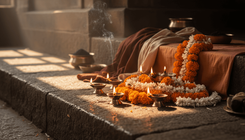
Skanda Sashti is celebrated to honour Lord Kartikeya's (also known as Murugan) victory over the demon Tarakasur. This six-day festival falls in the month of Kartik, typically between October and November. On the sixth day, known as Sashti, devotees remember the moment when Kartikeya defeated an asura who had terrorised the gods and cosmos. The festival is particularly important in South India, where Kartikeya worship is central to Tamil devotional tradition, but it is observed by communities across India and wherever people follow the Vedic calendar.



The Story of Kartikeya and Tarakasur
According to the Skanda Purana and other texts, Tarakasur was a powerful demon who had earned a boon making him nearly invincible. Because of his strength, he began to oppress the gods and cause suffering across the three worlds. The gods could not defeat him through force alone. It was foretold that only a child born of Shiva and Parvati could vanquish him. After Kartikeya was born, he grew rapidly into a warrior of great power and courage. When he met Tarakasur in battle, Kartikeya defeated him decisively, restoring peace and order to the cosmos. This victory is not merely about physical triumph; it represents the victory of dharma over adharma, of light over darkness, and of order over chaos.
The narrative appears in texts such as the Skanda Purana, which is devoted entirely to stories of Kartikeya, and in sections of the Mahabharata. In South Indian tradition, particularly in Tamil Nadu, the story of Murugan's victory is woven into daily worship and seasonal celebration. The event marks a turning point in the cosmic order, and devotees celebrate it as a moment when divine justice prevails.
How Skanda Sashti Is Observed
Devotees observe Skanda Sashti over six days, each with its own focus and spiritual significance. The practice is particularly rigorous in Tamil-speaking regions, where many follow the full six-day vrat (fast). Some devotees undertake complete fasting, while others fast partially or offer special prayers. Visiting temples dedicated to Kartikeya or Murugan is central to the observance. In major temples across South India, particularly in Tamil Nadu, special prayers and rituals called abhisekam (ritual bathing of the deity) are performed.
On the final day, the Sashti or sixth day, the observance culminates in celebrations and temple gatherings. Many people break their fast with special offerings and share prasad (blessed food) with family and community. The festival involves chanting mantras, singing devotional songs, and listening to stories of Kartikeya's deeds. In homes, people light lamps, offer flowers and incense, and spend time in prayer and reflection on the virtues Kartikeya represents: courage, wisdom, and spiritual discipline.
Regional customs add variety to the observance. In some communities, people perform elaborate pujas (worship rituals) that may last several hours. In others, the focus is on personal fasting and meditation. Tamil communities often perform a ritual called Vel Puja, honouring the spear (vel) that symbolises Kartikeya's divine power. The festival reminds devotees that victory comes not through ego or brute force, but through righteous living and spiritual strength.
Kartikeya's Role in Hindu Tradition
Kartikeya holds a distinct place in the Hindu pantheon. He is the son of Shiva and Parvati, and brother to Ganesha. In South India, particularly in Tamil Nadu and Karnataka, Kartikeya—known as Murugan—is one of the most beloved and widely worshipped deities. Temples dedicated to him dot the landscape, and some of the most important pilgrimage sites in South India are Murugan temples, such as those at Palani and Tirupparankundram.
Unlike some other festivals that celebrate seasonal cycles or agricultural harvests, Skanda Sashti focuses directly on a deity's cosmic action. Kartikeya is understood as the embodiment of divine energy directed toward righteousness. He is the commander of the gods' armies, a symbol of strength tempered by wisdom. The six-day observance allows devotees to align themselves with these qualities through focused worship and sacrifice. Young people particularly connect with Kartikeya as a symbol of courage and purpose, making Skanda Sashti an opportunity to call upon these inner strengths.
When Skanda Sashti Falls Each Year
Skanda Sashti is calculated according to the lunar calendar, so its date in the Gregorian calendar shifts from year to year. It always falls on the Sashti (sixth lunar day) in the month of Kartik, which typically corresponds to October or November. To find the exact date each year, consult a panchang (Hindu calendar) or the local temple's calendar. In 2026, observing the lunar calendar will give you the precise dates for your region.
The festival is tied to the lunar calendar because the original event—Kartikeya's victory—is marked in sacred time as a lunar date, not a solar date. This is true of most Hindu festivals and observances. The panchang records these dates according to the tithi (lunar day), which ensures that Skanda Sashti is celebrated at the same cosmic moment each year, even as it appears on different dates in the modern calendar.
Regional Variations in Celebration
The way Skanda Sashti is observed varies across India and in diaspora communities. In Tamil Nadu, the observance is particularly intense and is considered one of the major festivals. Devotees undertake multi-day fasts with great discipline, and temple celebrations are elaborate and well-attended. In Karnataka, similar practices are followed, with a strong focus on temple worship and community gathering. In North India, where Kartikeya is known as Skanda or Kartik, the observance is less widespread as a six-day festival, though Kartik month itself is considered auspicious for various spiritual practices.
Families who follow different spiritual lineages (sampradaya) may emphasise different aspects of Skanda Sashti. Some focus on the ashta-lakshmi (eight forms of prosperity) associated with Kartikeya, while others centre their worship on his role as a destroyer of ignorance. In all these variations, the core remains: honouring a deity who represents the triumph of dharma, and drawing inspiration from his victory into one's own spiritual path.
Common questions
What month does Skanda Sashti fall on in 2026?
Skanda Sashti occurs on the sixth lunar day (Sashti) in the month of Kartik. To find the exact Gregorian calendar date for 2026, consult a panchang (Hindu lunar calendar) or your local Murugan temple, as lunar dates shift each year.
Do I have to fast for all six days of Skanda Sashti?
No. While many devotees in South India undertake a complete or partial fast for all six days, others observe only the final day (Sashti) with fasting or special prayers. You can choose a practice that suits your health and spiritual capacity.
Is Skanda Sashti observed differently in North and South India?
Yes. In Tamil Nadu and South India, Skanda Sashti is a major festival with elaborate six-day observances, temple celebrations and community fasting. In North India, Kartikeya is less widely celebrated as a six-day festival, though the Kartik month itself is considered spiritually significant.

Related Articles


