
Why Light Diwali Lamps for Ancestors: The Pitru Tradition
Honouring the departed through light and remembrance.

Sunil Chaurasia
02 Nov 2026 • 7min
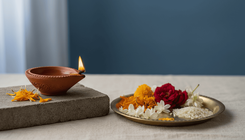
During Diwali, the festival of lights, millions of people light lamps not only to welcome prosperity and good fortune, but also to honour their ancestors and the departed. This Diwali lamps for ancestors practice is rooted in the pitru tradition—the reverence for forebears that sits at the heart of Sanatan Dharma. The light you kindle carries gratitude and recognition, affirming that those who have gone before us remain part of the family and our spiritual life.



What the Pitru Tradition Means
Pitru means ancestor or forebear in Sanskrit, and the pitru tradition acknowledges that our connection to those who came before us does not end with death. In Hindu philosophy, the relationship between the living and the departed is one of continuous exchange. The departed ancestors, known as pitris, guide and bless those living when remembered with respect and devotion. This is not about fear or appeasement, but about maintaining bonds of affection and duty across the boundary between life and what lies beyond.
Ancestors occupy an important place in the household ritual calendar. They are remembered in daily prayers, honored on annual occasions like Shradh (the fortnight dedicated to ancestral rites, observed in the lunar month of Ashwin), and invoked during major festivals. Diwali stands as one of the principal occasions when ancestors are welcomed and remembered. Lighting a lamp for them during Diwali is an act of recognition: it says, "You remain part of this family and this home."
Why Light Becomes a Symbol
Light has always held deep meaning in spiritual practice. In the context of ancestral worship, the lamp serves as a messenger and a bridge. The flame is thought to carry prayers upward, to light the way for the departed, and to symbolise the presence of the divine that exists beyond material form. When you light a lamp for your ancestors during Diwali, you are not performing magic, but you are speaking a language that the tradition recognises.
The lamp also represents consciousness itself. In philosophical terms, the light stands for the eternal, unchanging self—the atman—which the tradition teaches is beyond death. By lighting the lamp for those who have passed, you affirm that this eternal dimension of them persists. The ritual becomes a way of saying that while the body has changed form, the essential life force continues.
Different regions and families maintain different customs. In some households, a specific corner is set aside for a lamp dedicated to ancestors. In others, an extra lamp is lit as part of the main Diwali puja and a portion of offerings—such as sweets or flowers—is placed before it with the ancestors in mind. The specific practice matters less than the intention and remembrance that accompany it.
The Link Between Diwali and Ancestral Remembrance
Diwali falls during the month of Kartik, a time when the boundary between the worlds is thought to be particularly thin. This is the season when departed loved ones are believed to draw closer to the home and family. The festival's emphasis on light and renewal makes it an especially auspicious time to acknowledge them. Where Shradh offers a focused fortnight for ancestral rites, Diwali provides a moment within the household festival to include them in celebrations.
Many families also understand Diwali as a time of returning home—both in the literal sense of people traveling to be with their families, and in the deeper sense of reconnection. This return home carries the ancestors with it. The lamps lit during Diwali welcome not only prosperity but also the presence of those who have walked the path before us. The festival becomes a time when the boundaries of the household expand to include all who have been part of it.
In some traditions, the offering made with the ancestral lamp includes specific foods or flowers believed to be favored by departed ancestors, or foods associated with particular occasions when they were alive. These personal touches deepen the ritual and make it an act of intimate remembrance rather than a standardized observance.
How to Light Lamps for Your Ancestors During Diwali
If you wish to include your ancestors in your Diwali observance, the practice is straightforward and adaptable to your home and circumstances. Choose a space in your home where you can light a lamp with care—a corner of a puja room, a shelf, or a designated place on the main altar. If you have a family shrine or a space where you normally keep photographs of loved ones, that is a natural place for the ancestral lamp.
Light the lamp with the thought of your ancestors clearly in your mind. If you wish, you may speak their names, or recall specific memories of them. If you keep photographs, place the lamp before them. Some people make a simple offering—a flower, a bit of fruit, or a sweet—alongside the lamp. Others recite a prayer or mantra they know, or simply sit for a moment in quiet remembrance.
The lamp may be left to burn for as long as is safe and practical. There is no rigid rule. What matters is that the act is done with genuine feeling and respect. If you are uncertain about the right way to do this, do as feels truthful to you and to your relationship with those you remember. The tradition values the sincerity of the heart above the perfection of the form.
Some families also make a practice of sharing stories about their ancestors during Diwali—telling younger members about the people they have lost, keeping their memory and legacy alive. This too is part of honoring the pitru tradition: the lamp lights the story as well as the ritual space.
When You Have No Known Ancestors
Not everyone has a clear personal connection to a named ancestor, or the knowledge of who those people were. You may have lost touch with your family history, or you may have come to this tradition later in life. The ancestral lamp during Diwali can still be lit with meaning. You may light it for all the ancestors of your lineage, named and unnamed, for those who faced hardship so that you could exist, or for all the ancestors of humanity who have walked before us and shaped the world we inherit. The lamp becomes a gesture of gratitude to the continuity of life itself.
Common questions
Can I light an ancestral lamp if I don't know my family history?
Yes. You can light the lamp with the intention of honouring all the unnamed ancestors of your lineage, or all those whose lives led to yours. The tradition recognises that not everyone has clear genealogical knowledge, and the gesture of remembrance is what holds meaning.
How long should I leave the ancestral lamp burning during Diwali?
There is no fixed rule. You may leave it for the duration of your puja, or for the evening, or as long as it is safe and practical. Some families keep the lamp burning throughout the Diwali period. What matters is the act of lighting it with remembrance, not the exact duration.
What offering should I place with the ancestral lamp?
Simple offerings—a flower, a sweet, fruit, or a handful of grains—are traditional. In some families, the offering matches something the ancestor particularly enjoyed. If you are unsure, a flower and a moment of quiet remembrance are enough.

Related Articles


