
Why Kubera and Lakshmi Are Worshipped Together in Diwali Puja
Abundance honoured in two roles: wealth and its rightful use.

Sunil Chaurasia
02 Nov 2026 • 6min
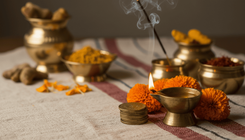
Diwali, the festival of lights, centres on welcoming Lakshmi, the goddess of wealth and prosperity. Yet in many homes and temples across India, Lakshmi is not worshipped alone. Kubera, the lord of treasures and guardian of wealth, receives offerings alongside her. This pairing might seem puzzling to someone encountering it for the first time: why invoke two deities for the same blessing? The answer lies in understanding what each one represents and how their roles complement each other in the tradition.



Who Is Kubera and What Does He Govern
Kubera is not primarily a god of wealth in the way Lakshmi is. He is the custodian and treasurer of the world, the keeper of all treasures and precious things. In Hindu cosmology, he is one of the eight Lokapalas—the guardians of the eight directions—and his post is the north. He rules Alaka, a celestial city of magnificent riches. The Ramayana and the Mahabharata mention Kubera as extraordinarily wealthy and generous, yet his riches are held in trust, not accumulated for private pleasure.
Kubera is often depicted as rotund and jolly, sometimes carrying a jewelled staff or riding a lion. His appearance is earthier, more tangible than Lakshmi's ethereal form. Where Lakshmi represents the grace and flow of prosperity itself, Kubera represents its secure storage, its proper management, and its protection from loss and theft. He is the one who ensures that what is gained is not squandered or misused.
Why Lakshmi Alone Is Not Enough
The worship of Lakshmi during Diwali invites prosperity into the home and business. Her blessing brings opportunity, sudden good fortune, and the opening of new channels of abundance. But prosperity that flows without direction can be wasted. Money earned without discipline is spent carelessly. Goods acquired without care are lost or spoiled. This is where Kubera's role becomes essential.
By honouring Kubera alongside Lakshmi, the worshipper acknowledges a truth: wealth requires both arrival and retention. Lakshmi is the mother who gives; Kubera is the guardian who protects and ensures wise use. Some traditions teach that Lakshmi's blessings alone are unstable—they can depart as swiftly as they arrive. But when you also invite the vigilance and discipline of Kubera, prosperity becomes rooted and sustainable. The two together represent the complete cycle: earning wealth with grace, and keeping it with wisdom.
Where This Pairing Is Practised
Not every Diwali puja includes Kubera, and this variation is regional and linked to different sampradayas, or traditions. In many South Indian temples and homes, the focus remains wholly on Lakshmi. But in parts of North India, especially in trading communities and business-owning families, the Kubera-Lakshmi puja has long been customary. This makes sense: merchants and traders have always understood that both blessing and protection matter, that wealth requires both invitation and careful stewardship.
In Gujarat, particularly among the Bania community and others in commerce, worshipping Kubera during Diwali is a common practice. In parts of Maharashtra and among communities across northern India that deal in wealth creation—bankers, jewellers, traders—the dual worship is prevalent. Some temples in these regions maintain separate shrines or sections for Kubera, reflecting his importance to their communities. Yet the practice is not confined to any single region or caste; many families across India have begun including Kubera in their Diwali observance, understanding that his protection complements Lakshmi's grace.
The Ritual Approach to Kubera-Lakshmi Puja
When Kubera is worshipped alongside Lakshmi during Diwali, the two are usually not conflated. They are honoured as distinct presences with distinct roles. The puja typically begins with the worship of Lakshmi in the main shrine or altar, following the traditional Diwali puja structure: offerings of flowers, incense, oil lamps, and food, along with prayers for her blessings of prosperity and good fortune.
After the main Lakshmi puja is complete, a separate veneration of Kubera follows. This may be a simpler offering or a more elaborate puja depending on the family's practice. Some households place Kubera's image in their counting house, shop, or the place where money or valuables are kept. The offering to Kubera often includes sweets and fruits, but sometimes also symbolic items like coins or gold-coloured items, reflecting his association with treasures. The prayers to Kubera typically ask for protection of wealth, wise use of resources, and freedom from loss and theft.
In some traditions, both are invoked together in a single prayer or mantra, acknowledging them as complementary forces. The specific rituals vary from family to family and region to region, but the underlying principle remains the same: both grace and protection are necessary for sustainable prosperity.
What This Teaches About Wealth Itself
The worship of Kubera and Lakshmi together carries a practical wisdom about wealth that goes beyond ritual. In the Hindu understanding, prosperity is not morally neutral. It comes with responsibility. Wealth attracts attention—sometimes positive, sometimes not. It requires protection, not just from theft, but from the misuse that comes from carelessness or greed. It must be managed with discipline to endure.
When a person or family worships both deities, they are internally accepting this understanding. Lakshmi is welcomed as the giver of opportunity and abundance. But Kubera is invited as the teacher of stewardship, the reminder that what is gained must be guarded and used wisely. This pairing reflects an older, more grounded view of wealth: not as an end in itself, but as a tool that requires both blessing and responsible care.
If you are observing Diwali and feel drawn to this practice, you can include Kubera in your puja without elaborate ritual. A simple offering at a corner of your altar, a prayer for both prosperity and protection, and the intention to use whatever wealth comes your way with wisdom and generosity—this is enough. The significance lies not in the complexity of the ritual, but in what you are acknowledging: that abundance, to last, must be both received and guarded.
Common questions
Can I worship Kubera and Lakshmi if my family has never done this before?
Yes. There is no restriction on beginning this practice. You can set up a simple altar with both, make individual offerings, and offer prayers to each. Many families have begun this practice in recent years, even without a family tradition of it.
Is worshipping Kubera during Diwali necessary, or can Lakshmi alone be enough?
Lakshmi worship alone is complete and valid for Diwali. The inclusion of Kubera is a choice that adds emphasis on protection and wise use of resources. It is not essential, but some find it meaningful to acknowledge both grace and stewardship.
What is a simple way to include Kubera in my Diwali puja if I have never done it?
After your main Lakshmi puja, light a diya (oil lamp) in a corner of your altar or near where you keep money or valuables. Offer flowers, incense and a sweet, and pray for both prosperity and the wisdom to protect and use it well. This simple act honours both deities.

Related Articles


