
Why Krishna Chose Arjuna: The Story Behind Their Friendship
When duty met devotion on the battlefield

Abhilash Ramakrishna
30 Oct 2026 • 7min
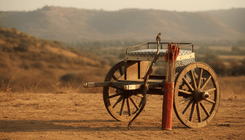
The friendship between Krishna and Arjuna stands at the heart of the Mahabharata. When the armies gathered at Kurukshetra, Krishna did not simply appear as a divine messenger; he took his place as Arjuna's charioteer and guide. This relationship was not accidental. It grew from years of trust, shared struggle and a bond that ran deeper than the bloodlines that divided Arjuna's family on the battlefield. To understand why Krishna chose Arjuna is to understand what the Mahabharata teaches about loyalty, dharma and the nature of true friendship.



A Friendship Built Through Shared Trials
Arjuna and Krishna had known each other since childhood, when the Pandavas and the Yadavas moved in overlapping circles of royal cousins. Their bond deepened through the trials that followed. When the Pandavas faced exile and loss, Krishna remained constant. He did not abandon them in their darker hours. By the time the war began, Arjuna had shown Krishna something rare: he remained loyal even when loyalty cost him. He stood by Krishna during the conflict with Jarasandha, the powerful king who had imprisoned Krishna's father. He honoured Krishna's friendship despite the dangers that followed. Krishna saw in Arjuna not just a warrior, but a man who would not turn away from those he loved, no matter the cost.
This history mattered. When Krishna chose to appear on the battlefield, he chose someone he had tested and who had tested him in return. Arjuna's courage was known, but so was his character. He had shown Krishna that he valued truth over safety, and friendship over convenience. These were the qualities Krishna needed in someone who would stand beside him at the moment when the entire universe seemed to pivot on a single choice.
Arjuna's Inner Doubt Made Him the Right Pupil
Krishna might have chosen a warrior who felt certain. Instead, he chose one who wavered. When Arjuna looked across Kurukshetra and saw his kinsmen ranged against him, he broke. He laid down his bow and wept. He asked Krishna how he could fight, how he could kill, whether any victory was worth the blood of those he loved. This moment of profound doubt was not a weakness. It was the reason Krishna needed to be there at all.
Krishna did not need to guide a man who already knew what to do. He needed to guide a man who was asking the deepest questions: What is duty? What is right? What does it mean to act without attachment to the outcome? Arjuna's confusion opened the door to teachings that might have seemed abstract to someone who felt no doubt. By choosing Arjuna, Krishna ensured that the Bhagavad Gita would speak not to the certain, but to all of us who have faced a choice and felt the weight of it.
Arjuna's willingness to listen was itself remarkable. When his doubt came, he did not suppress it or rush past it. He asked his questions aloud to Krishna, admitting his confusion to his friend. This vulnerability is what made him capable of receiving what Krishna had to teach. A warrior more trapped in certainty might have heard the words but not understood them. Arjuna's openness made him the perfect vessel for wisdom.
Krishna's Guidance Was Personal, Not Universal
Krishna did not deliver the Bhagavad Gita to the armies. He spoke it to Arjuna alone, in the moment of his deepest need. This personalness was crucial. Krishna tailored his teaching to Arjuna's nature, his doubts and his dharma as a warrior. He did not tell Arjuna to abandon action, but to act without grasping at the fruits of his action. He did not tell him that killing was good, but that his duty as a Kshatriya was to stand and fight, and that this duty did not depend on his feelings about the outcome.
Another warrior, another disciple, might have needed different teaching. A householder might have heard different words; a renunciate might have heard others still. By choosing Arjuna, Krishna was choosing to speak to a specific person facing a specific dharma. This is how Indian spiritual tradition has always worked. The guru meets the pupil where the pupil stands, with the wisdom that pupil needs to hear.
The Bhagavad Gita itself records this particularity. Krishna says to Arjuna at one point, "This wisdom is secret and sacred; I give it to you because of your love and devotion." The teaching is not presented as a universal law handed down from on high, but as a gift from a friend to a friend, born from their relationship and the specific crisis they shared.
The Charioteer as a Symbol of Guidance
When Krishna became Arjuna's charioteer, he took on a role that was both practical and deeply symbolic. The charioteer controls the horses, steadies the vehicle, and keeps the warrior moving forward. In choosing this role, Krishna was saying something about how a guide serves a disciple. He did not stand apart and preach from a distance. He placed himself at the very center of Arjuna's action, making it possible for Arjuna to move forward.
A charioteer is also a servant, and this too was significant. For all his divinity, Krishna placed himself in service to Arjuna. He held the reins of the horses of the mind—the senses that pull in different directions. He kept the chariot steady when doubt threatened to overturn it. This image has stayed with seekers across centuries: the guru as charioteer, the disciple as warrior, the battlefield as life itself.
Why This Friendship Still Speaks
The friendship between Krishna and Arjuna was not sentimental. It was forged in real struggle and tested by real choices. When Arjuna faced his moment of crisis, Krishna did not offer him escape or comfort, but the truth as Arjuna needed to hear it. This is what friendship means in the tradition: not the relief of shared burden, but the willingness to stand beside someone and help them see clearly.
Their story teaches us that the deepest bonds are those that survive hard questions. Krishna chose Arjuna because Arjuna would ask those questions, and because Krishna trusted that Arjuna had the character to hear the answers. Their friendship reminds us that guidance without relationship is hollow, and that the most important teachings often come not from those who seem most certain, but from those who have stood beside us through confusion and doubt.
Carry this forward: when you face your own moment of doubt, remember that the guidance you need often comes not from someone who has never questioned, but from someone who has questioned alongside you and knows the ground beneath your feet.
Common questions
Did Krishna serve other people as a charioteer too?
Krishna served as Arjuna's charioteer specifically during the Mahabharata war at Kurukshetra. While Krishna had many relationships and served different roles for different people, the charioteer role during this pivotal moment was unique to Arjuna, making it a singular expression of his commitment to guide his friend through his deepest crisis.
Was Arjuna the only student Krishna taught?
No. Krishna taught many people across his life, and the Bhagavad Gita itself is set up as a dialogue where Krishna's teachings could apply to others facing similar doubts. However, Arjuna was the direct recipient of these teachings at Kurukshetra, and their personal history made him the chosen disciple for this particular moment of instruction.
Did other warriors respect Arjuna as much as Krishna did?
Arjuna was widely acknowledged as the finest archer of his time, but respect for his skill as a warrior was different from the depth of personal knowledge Krishna possessed. Krishna's choice reflected not just Arjuna's abilities, but his character—his capacity for genuine questioning, his loyalty, and his willingness to remain open to truth even when it contradicted his immediate desires.

Related Articles


