
Why Kali Puja is Celebrated on Diwali Night in Bengal
Shakti descends as the night celebrates itself

Kushal K
02 Nov 2026 • 7min
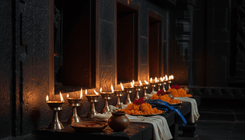
In Bengal, while much of India celebrates Diwali as a festival of light and the victory of good over evil, the night takes on a different meaning. Kali Puja, the worship of the goddess Kali, reaches its peak on Diwali night—not despite the darkness, but because of it. This is the significance of Kali Puja in Bengal: the goddess emerges as the supreme power during the time when light fades, chaos reigns, and boundaries dissolve. Understanding why this observance exists on Diwali night reveals something profound about Bengali spirituality and the many-sided nature of the divine.



The Goddess Who Works at Midnight
Kali represents the fierce, transformative power of the divine—the sakti that destroys illusion and cuts through ignorance. She is not worshipped as a gentle or benevolent deity, but as an overwhelming force of reality itself. The name Kali comes from kala, meaning time and darkness, and the goddess embodies both the passage of time that erodes all things and the liberating truth that lies beyond appearance.
In the classical texts like the Devi Mahatmya, Kali emerges from the anger of other goddesses to defeat demons that gentler forms of divine power cannot overcome. She represents the necessary destruction that precedes renewal. In Bengal, where Kali worship has been central to devotional practice for centuries, this understanding runs deep. The goddess is invoked not to punish or condemn, but to strip away the ego and reveal ultimate reality.
Diwali night—particularly the new moon night when the sky is darkest—becomes the natural occasion to honour this power. The darkness is not something to overcome but to embrace and penetrate. Where other festivals light lamps against the night, Kali Puja honours the night itself, and the goddess who dwells there.
Why Diwali Night, Not Diwali Day
Most of India celebrates Diwali during daylight and evening, lighting diyas and fireworks to mark the triumph of light. Bengal's Kali Puja, by contrast, reaches its climax after midnight, when darkness is complete. This timing is not arbitrary or contrary for its own sake. It flows from the nature of Kali worship itself.
In Hindu practice, different times of day and night hold different qualities. Night, especially the hours of deep sleep, is believed to be when the boundary between material and subtle reality grows thin. It is the time when meditation deepens and the mind moves away from outward distraction. The darkest hour—around midnight—holds particular power for rituals involving fierce or transformative deities.
Diwali itself falls on the new moon night of the Hindu month of Kartik. The combination of the new moon's darkness and the traditional Diwali date creates the perfect confluence. While families across Bengal will have lit their lamps for Diwali in the evening as they do elsewhere in India, those gathered for Kali Puja will journey to temples in the middle of the night. The contrast is deliberate: the home is warm with light; the temple is dark and alive with a different kind of power.
How Kali Puja Unfolds on Diwali Night
In temples and homes across Bengal, Kali Puja follows a distinctive pattern. Devotees assemble at night, often after other Diwali celebrations have ended. The ritual involves offerings of flowers, particularly red hibiscus; red vermilion; and animal sacrifice in some temples, though this practice has become less common in urban areas and many temples now offer other forms of oblation.
The worship includes the recitation of the Kali Kavach (the protective hymn of Kali) and passages from texts like the Devi Mahatmya. Devotees chant the mantra "Om Krim Kalikayai Namaha" and other sacred sounds associated with the goddess. The atmosphere is intense and focused: the goddess is seen not as a protector in the conventional sense, but as the ultimate reality that liberates through direct encounter.
What distinguishes Bengali Kali Puja from rituals elsewhere is the particular emphasis on immediate, unmediated experience. The goddess is not distant or veiled. She is raw, present, and demanding of complete surrender. In some temples, especially in Kolkata, the worship extends through the night, with devotees maintaining vigil until dawn.
The prakrama, or circumambulation, around the goddess's shrine happens in the depths of night. Some devotees perform prostrations and ritual bathing before the shrine. The entire observance treats the night not as a time of sleep or fear, but as a sacred space where transformation becomes possible.
The Philosophy Behind the Practice
Bengal's approach to Kali reflects a broader philosophical tradition that does not divide reality into good and evil, light and dark, in the way many other devotional practices do. Kali embodies both destruction and liberation. She is the end of all things, and therefore the doorway to the eternal.
This philosophy has deep roots in Tantra and Shakta practice, which form an important current in Bengali Hinduism. Where some traditions emphasize transcendence and escape from the world, Tantric approaches embrace the world as it is—including suffering, change and chaos—as the path to enlightenment. Kali, in this view, is not a punishment for sin but an invitation to see beyond illusion.
The choice to celebrate Kali Puja on Diwali night, then, is a statement about the nature of divine power. While the rest of India celebrates the light's victory, Bengal acknowledges that there is no light without darkness, no consciousness without the dissolution of the ego. Kali Puja on Diwali night says: true transformation requires us to face what we fear, to go into the darkness, and to meet the goddess where she truly dwells.
Kali Puja Across Bengal
Though Kali Puja reaches its peak on Diwali night, the goddess is worshipped throughout the year in Bengal. There are dedicated Kali temples—like the famous Kalighat temple in Kolkata—where people make offerings and seek the goddess's blessing. But Diwali night holds special significance across the state.
In some regions of Bengal, particularly in rural areas, the observance retains practices that have gradually faded in cities. In others, urban temples have adapted the ritual while maintaining its core elements. What remains constant is the recognition that on Diwali night, when much of India celebrates light, Bengal turns to face the darkness and the transformative power it holds.
The practice also reflects Bengali culture's particular relationship with the feminine divine. The goddess—not as mother or protector alone, but as the ultimate power of the cosmos—holds a central place in devotion. Durga, Kali, and other forms of the divine feminine are worshipped with an intensity and specificity that has shaped Bengali spirituality for centuries.
Common questions
What is the main difference between how Bengal celebrates Diwali and the rest of India?
While most of India celebrates Diwali in the evening with lights and fireworks, Bengal's Kali Puja takes place after midnight on the same new moon night, honouring the darkness rather than the light. Both observances fall on the same calendar date, but the timing and spiritual focus differ significantly.
What offerings are made during Kali Puja on Diwali night?
Offerings typically include red flowers, particularly hibiscus; red vermilion; and other ritual items. In some temples, animal sacrifice remains part of the practice, though this has become less common in urban areas, where alternative forms of oblation are now used.
Can anyone attend Kali Puja on Diwali night?
Yes, Kali temples in Bengal welcome devotees of all backgrounds on Diwali night, though specific rituals and spaces within temples may have different protocols. It is worth contacting a temple in advance if you plan to attend, as some may have particular practices or dress requirements.

Related Articles


