
Why Jagannath Leaves the Temple: The Story Behind Rath Yatra
The Divine Journey Beyond the Sanctuary

Sunil Chaurasia
27 Oct 2026 • 6min
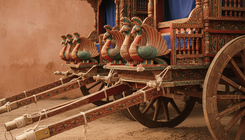
Every year, Lord Jagannath leaves the sanctuary of his temple and travels through the streets of Puri in an enormous wooden chariot. The Jagannath Rath Yatra, or chariot festival, is one of the oldest and most significant festivals in Sanatan Dharma. But this is not a procession of celebration alone—it is rooted in an ancient story about the nature of divinity and the relationship between god and devotee. Understanding why Jagannath leaves the temple is understanding what this festival truly means.



The Legend of Jagannath and His Sister Subhadra
The story behind Rath Yatra begins with Jagannath and his elder sister Subhadra. In a tale preserved in the Skanda Purana and the Odisha regional tradition, Subhadra had not seen her brother for a long time and yearned for his company. She wished to take him away from the formal constraints of temple life, even for just a few days.
Hearing his sister's longing, Jagannath agreed to leave the sanctum and travel with her through Puri. He also invited his younger brother Balabhadra to join them. This journey became the first Rath Yatra, a moment when the usually hidden deity emerged to move freely among his people and grant darshan—sacred sight—to all who wished for it, not just those who could enter the temple. The festival thus preserves a timeless story: that divinity responds to the genuine emotional connection of those who love him.
The Three Chariots and Their Sacred Purpose
During Rath Yatra, three enormous wooden chariots are built and decorated afresh each year. Jagannath travels in the largest chariot, called the Nandighosha, while Balabhadra rides in the Taladhwaja and Subhadra in the Devi Padma. Each chariot is pulled by devotees who have gathered from all over.
The construction and decoration of these chariots is itself a ritual. Artisans from the surrounding villages work throughout the year to carve the wood, paint the designs and assemble the structures. The chariots are built without nails—held together by wooden pegs and rope. This very impermanence carries meaning: these vehicles are made to be dismantled after the festival ends, rebuilt fresh each year. The journey is not about possession or permanence but about a temporary, joyful encounter.
What the Journey Means for Devotees
When Jagannath leaves the inner sanctum, it signals a break from the ordinary rules of access and ritual propriety. In his temple at other times, Jagannath is seen only by those who enter the shrine—and even then, the deity's wooden form keeps a certain distance from touch. During Rath Yatra, Jagannath travels the streets that all his people walk. He is closer to ordinary life, seen by millions, some of whom have walked for days to stand for just a moment as the chariot passes.
This reversal teaches something essential about the nature of the divine in Sanatan Dharma. The god is not imprisoned in his temple; the temple is a home, but not a cage. Jagannath moves freely and chooses to be among his devotees. The festival embodies the principle that divinity is not distant or unreachable, but willing to journey toward those who love him. For many, being touched by the chariot's rope or even its shadow during Rath Yatra is considered a profound blessing—not because the temple is less sacred, but because this moment is openly accessible to all.
The Spiritual Significance of Return
What is equally important is that Jagannath returns to the temple. After the chariots complete their journey to the Gundicha temple a short distance away, after the festival's joyful chaos subsides, the deities are brought back to their inner sanctum. This return is itself a ritual moment, called Bahuda Yatra, and it carries its own meaning.
The cycle of departure and return mirrors the spiritual journey itself. We leave behind the sacred formality and ordinary separation to encounter the divine directly. We are blessed by proximity and moved by genuine contact. But we do not remain in festival forever; we return to regular life and regular practice. The rhythm of the festival teaches that both moments are necessary—the everyday dharma of temple life and the extraordinary grace of direct encounter. This is why many Hindus say that attending Rath Yatra and witnessing Jagannath's return to the temple is considered one of the most auspicious experiences in a lifetime.
The Festival Across India and the Wider Tradition
While the Jagannath Rath Yatra at Puri in Odisha is the most famous, similar chariot processions occur in Hindu temples across India. Some are smaller in scale; others follow their own regional practices. What remains consistent is the principle: the deity emerges from the inner temple to bless the surrounding community and, in doing so, affirms that divinity belongs not only to ritual spaces but to the everyday world where devotees live and move.
The Rath Yatra also expresses a core belief of devotional Hinduism: that the god's primary interest is not in remaining aloof but in relationship with his people. The festival is not centred on priestly action or esoteric knowledge but on the direct, unmediated connection between the divine and the devotee. Whether you are a scholar or a child, wealthy or poor, you can stand in the street as the chariot passes. This democracy of blessing is woven into the festival's oldest story.
Common questions
Can anyone attend the Jagannath Rath Yatra at Puri?
Yes. Unlike the inner sanctum of the temple, which has restricted access, Rath Yatra is open to all devotees regardless of caste, creed or religion. Thousands gather from across the world to witness the procession, and there is no entry requirement to stand along the route or help pull the chariots.
How long does it take to build the Rath Yatra chariots each year?
Artisans begin work months in advance, typically starting their preparations well before the festival season begins. The exact timeline varies, but construction involves carving wood, painting intricate designs and assembling the structures with wooden pegs and rope, making it an extensive craft.
What happens to the chariots after the festival ends?
The chariots are dismantled after Rath Yatra concludes. The wood is stored and reused to build new chariots the following year, so each chariot is rebuilt fresh annually. This impermanence is intentional and carries spiritual significance.

Related Articles


