
Why Is Diwali Celebrated? Stories Across Traditions
Light Returns: The Festival's Many Meanings

Sunil Chaurasia
07 Nov 2026 • 5min
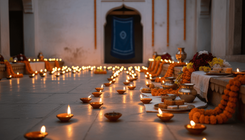
Diwali is celebrated for many reasons, and the answer depends on where you are in India and which story your family holds dear. The festival is rooted in the triumph of light over darkness and goodness over evil, but the specific events honoured vary across regions and traditions. In the north, the festival marks Lord Rama's return from exile. In the south, it recalls Lord Krishna's victory over the demon Narakasura. In western India and among many communities, it centres on Lakshmi, the goddess of prosperity and abundance. Understanding why Diwali is celebrated means understanding these different narratives and how they have shaped the festival for centuries.



The Return of Rama in North India
In much of north India, Diwali celebrates the homecoming of Lord Rama after fourteen years of exile. According to the Ramayana, Rama, his wife Sita and his brother Lakshman were exiled from their kingdom following a misunderstanding. During this time, the demon king Ravana abducted Sita. Rama defeated Ravana in a great battle, rescued Sita, and set out to return to Ayodhya. The people of Ayodhya lit lamps and decorated their homes to welcome him back, a gesture that continues in Diwali celebrations today.
This story emphasizes dharma—the principle of righteousness and duty. Rama chose exile over compromising his word to his father, and he faced hardship to uphold what was right. The festival, then, is not just about a homecoming but about celebrating the victory of dharma over adharma, of moral courage over temptation and deceit. Lighting lamps on Diwali is understood as a way of saying that light—understanding, truth, and goodness—has returned to the world.
Krishna's Triumph in South India
South Indian traditions celebrate Diwali for a different reason: Lord Krishna's victory over the demon Narakasura. According to this account, Narakasura had imprisoned sixteen thousand girls and was terrorizing the people. Krishna defeated him in battle, freeing the captives and restoring peace. The festival marks this liberation and the end of a reign of fear.
In Tamil Nadu, Karnataka and Andhra Pradesh, this narrative sits at the centre of Diwali. The festival is sometimes called Deepavali in these regions, and the mood emphasizes the slaying of evil and the restoration of justice. The celebration often includes traditional sweets and the wearing of new clothes, customs that mark not only victory but also renewal.
Lakshmi's Blessing and Prosperity
Across much of India, particularly in western and central regions, Diwali is the night of Lakshmi Puja, when the goddess of wealth and prosperity is worshipped. Many families invite Lakshmi into their homes by lighting lamps, cleaning and decorating their spaces, and leaving offerings of food and flowers. The goddess is believed to visit homes that are clean and welcoming, bringing abundance and good fortune for the year ahead.
This aspect of Diwali is less about a specific historical event and more about the cyclical nature of prosperity and the human need to cultivate it through intention and care. Diwali becomes a moment to reset: to clear away the old, invite renewal, and honour both material and spiritual well-being. The festival reminds us that prosperity is not separate from morality or devotion; it comes when we tend to our homes, our relationships and our inner lives with attention and respect.
The Cosmic Victory of Light
Beneath these different stories lies a shared truth that explains why Diwali is celebrated across such diverse communities. The festival marks the victory of light over darkness—not only literal darkness, but ignorance, suffering and disorder. Diwali falls in the month of Kartik, when the day grows shorter and the nights longer in the Northern Hemisphere. By lighting lamps and decorating homes with light, people affirm that illumination—whether divine wisdom, moral clarity or simple human goodness—will always return.
This cosmic principle is what allows north and south, east and west India to celebrate under the same umbrella despite honouring different deities and stories. The specifics change, but the underlying current remains constant: light defeats darkness, good prevails over evil, and order emerges from chaos.
Celebrating in Your Own Way
Diwali's strength lies in its flexibility. A family may celebrate because they love the Rama story, or because Krishna's courage speaks to them, or because Lakshmi Puja feels like the right way to honour their own hopes. Some people light lamps and offer prayers. Others gather with family, exchange sweets, and wear new clothes. Some clean their homes; others focus on inner reflection. All of these are ways of participating in Diwali's deeper meaning.
The festival invites each person to ask: what does light mean to me? What darkness—in my life or in the world—do I wish to see transformed? When you light a lamp on Diwali, you are joining millions of others who have asked the same question, across centuries and across India's many traditions.
Common questions
Is Diwali celebrated the same way everywhere in India?
No. North India celebrates Rama's return from exile, while south India honours Krishna's victory over Narakasura. Western and central regions emphasize Lakshmi Puja and the blessing of prosperity. Though the stories differ, all traditions share the theme of light triumphing over darkness.
Does Diwali fall on the same date every year?
No. Diwali is observed on the new moon night of the Hindu month Kartik, which typically falls between mid-October and mid-November in the Western calendar. The exact date shifts each year with the lunar calendar.
Can I celebrate Diwali if I follow a different story or belief?
Yes. Diwali's deeper meaning—the victory of light over darkness and good over evil—transcends any single narrative. Many people celebrate by lighting lamps, spending time with family, or reflecting on what light and renewal mean to them personally, regardless of which regional story they connect with most.

Related Articles


