
Why Hindu Festival Dates Change Every Year
Following the moon, not the calendar

Abhilash Ramakrishna
16 Nov 2026 • 7min
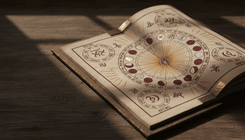
Hindu festivals move around the Gregorian calendar year after year because Hinduism follows the lunisolar calendar, which counts months by the moon's cycles rather than the sun's. This is why Diwali falls in October one year and November another, why Holi shifts across February and March, and why no festival has a fixed date on your wall calendar. Understanding why takes only a little explanation, and it opens up how the tradition has kept time for thousands of years.



How the Lunisolar Calendar Works
The lunisolar calendar measures a month as one complete cycle of the moon, from new moon to new moon. This is about 29.5 days, which is why months in the Hindu calendar have 29 or 30 days. Twelve such months add up to about 354 days—roughly 11 days short of a solar year, which is about 365 days. Without a correction, the festivals would slowly drift backwards through the seasons, and a spring festival would eventually fall in winter.
To keep festivals aligned with the seasons and the agricultural rhythms they mark, the Hindu calendar adds an extra month (a leap month, called an adhik mas) roughly every three years. This insertion keeps the calendar in sync with the earth's orbit around the sun while still counting by the moon. The result is a calendar that honors both celestial bodies and makes room for the festivals that bind the tradition to the turning of the seasons.
Why the Gregorian Calendar Seems Fixed
The Gregorian calendar, which the modern world uses, simplifies matters by tying itself to the sun alone. It has fixed-length months and adds a leap day every four years to stay accurate. This is why your birthday falls on the same calendar date every single year. But this system is disconnected from the moon, which is why the Gregorian calendar has no connection to the tides, the growing season, or the night sky as the tradition sees it.
When Hinduism uses the Gregorian calendar at all, it is mainly for practical purposes: booking trains, scheduling work, meeting people outside the tradition. The sacred calendar remains the lunisolar one, and festivals follow it.
The Tithi: How Festivals are Timed
A festival is not tied to a day of the month, but to a tithi—a lunar day, or the period during which the moon moves 12 degrees in its orbit. There are 15 tithis in a lunar fortnight (the bright fortnight, from new moon to full moon, and the dark fortnight from full moon to new moon). A tithi is about 24 hours, but this varies: sometimes it passes in less time, sometimes more.
Many festivals are named by their tithi. Ekadashi is the eleventh tithi of a lunar fortnight, and people fast on Ekadashi dates. Purnima festivals fall on the fifteenth tithi (full moon). Amavasya festivals fall on the new moon. Some festivals span multiple days. Others are observed on the exact moment—the yoga or nakshatra—that an astronomical event occurs. This means the festival begins on a different Gregorian date each year, sometimes even at a different hour.
The Panchanga: Your Map to Festival Dates
The panchanga is the Hindu calendar and astronomical almanac, traditionally consulted to determine when each festival should fall. Pan means five, and anga means part; the panchanga contains five parts: the tithi, the vara (day of the week), the nakshatra (lunar mansion or constellation), the yoga (a specific astronomical combination), and the karana (a half-tithi).
A trained astrologer or pujari consults the panchanga to determine the exact moment each festival begins. Many temples and organizations publish annual panchangas so families can see at a glance when each festival will fall. Different regions and sampradayas sometimes follow slightly different panchangas, which is why a festival might be observed on one date in the north and another in the south, or why one household celebrates a few days before another nearby. These differences are natural and accepted.
Regional Variations and Why They Matter
The Hindu calendar is not monolithic. Many sampradayas (traditions or schools of practice) have their own authority in deciding when festivals begin and end. The Shaivite calendar may place a festival on a different Gregorian date than the Vaishnava calendar. The amanta panchanga (which begins the lunar month with the new moon) differs from the purnimanta panchanga (which begins with the full moon). Some regions prioritize the rising of the full moon on the horizon; others prioritize the astronomical moment of fullness.
These variations are not confusion or contradiction. They reflect the tradition's depth and regional rooting. A temple in Tamil Nadu, a household in Punjab, and a community in Bangalore may all observe the same festival on different dates, and all are correct within their own context. This is one reason many families keep a panchanga in the home: to know when to observe according to their own sampradaya and region.
Planning Around the Shifting Dates
Because festival dates move every year, it is common to check a calendar or a panchanga at the start of each season to see when the festival falls. Many Indians plan their year around these dates: booking time off work, inviting family, preparing food, shopping for new clothes, or planning a temple visit. The calendars are not hidden: panchangas are printed and sold, published online, and often printed in temple bulletins or community newsletters.
This practice of consulting the calendar is not a burden or a quirk. It reflects a living tradition in which the timing of sacred life is determined by the sky itself, not by human convention. The moon moves, so the festivals move. The seasons turn differently each year, so the festivals turn with them. This flexibility is not a flaw—it is the calendar doing what it has always done, keeping the tradition aligned with the cosmos rather than with a human-made system.
If you are new to following the Hindu calendar, the simplest approach is to keep a panchanga for your region and consult it each year. Temples usually announce festival dates well in advance. Online resources and apps now make checking these dates easy. Over time, the pattern becomes familiar: you begin to know roughly when each festival falls, even if the exact date shifts.
Common questions
Why do Hindu festivals not fall on the same date every year?
Hindu festivals are timed by the lunisolar calendar, which counts months by the moon's cycles rather than the sun's position. Since a lunar month is about 29.5 days and a solar year is about 365 days, an extra month is added roughly every three years to keep festivals aligned with the seasons. This means each festival falls on a different Gregorian date each year.
Can different parts of India celebrate a festival on different dates?
Yes. Different regions and sampradayas follow different panchangas, and some prioritize different astronomical moments or calendar systems. A festival observed in one state may fall on a different Gregorian date in another state. All are correct within their own tradition and context.
How do I find out when a festival falls this year?
Consult a panchanga (printed or online) for your region, check your temple's announcements, or use a Hindu calendar app. Many temples and organizations publish annual panchangas so families can see festival dates in advance. Panchangas are widely available and checking one is the standard practice for planning around festival dates.

Related Articles


