Why Ganesha Is Worshipped First in Every Ritual
The remover of obstacles comes before all else

Kushal K
09 Nov 2026 • 7min
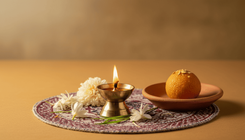
Ganesha is worshipped first in virtually every Hindu ritual, from daily household puja to elaborate temple ceremonies. This is not superstition or custom without reason: it is rooted in an understanding of how obstacles work, and what spiritual intelligence can remove them. When you understand why this practice exists, it changes what it means to call on Ganesha at the start of any undertaking.



The Remover of Obstacles
Ganesha carries the name Vighnaharta - the one who removes obstacles. Vighna means an obstacle or barrier, and harta means to take away or dispel. In the tradition, the sense of this is precise: a vighna is not just any difficulty, but a specific kind - an obstacle that appears when you step toward something meaningful. It is the invisible thing that blocks the path when you are trying to act with intention.
Because any true ritual or spiritual work involves a deliberate step toward something sacred, it is thought to carry its own shadow of obstacles. These may be external: interruptions, confusion about timing, loss of focus. They may be inner: doubt, scattered attention, a mind so restless it cannot hold the intention steady. The tradition says that a human being working alone cannot necessarily see or clear these hindrances in advance. So the first act is to ask Ganesha to remove them, turning to the one whose nature it is to know where these barriers lie and how to dissolve them.
This is why Ganesha comes first. It is not because he is more powerful than other deities, or more important in some cosmic ranking. It is practical: you make clear the path before you walk it.
The Gateway Deity
In many temples and homes, Ganesha is installed at the threshold or entrance. This physical placement carries meaning. A threshold is a place of transition - between the outer world and the sacred space, between the everyday mind and the mind that can receive what is sacred. Ganesha guards this passage.
When you begin a puja, you are crossing a threshold: from ordinary time into sacred time, from the scattered attention of daily life into focus and intention. The tradition holds that Ganesha oversees this crossing. He is the one who permits entry into what lies beyond, and he does this by removing what would prevent you from entering with a clear mind and clean heart.
Some regional traditions place a Ganesha murti at the eastern corner of the altar, or at the northwest corner of the home, each placement based on principles of sacred geometry and the direction of auspicious energy. But whether Ganesha is physically present in the ritual space or invoked in the mind, his function is the same: to keep watch at the threshold and ensure that what enters is what truly serves the purpose ahead.
What Worship of Ganesha Looks Like
The worship of Ganesha before other rituals is usually brief and purposeful. In many homes and temples, it begins with an invocation: words that acknowledge him, often calling him by one or more of his names - Ganesh, Ganapati, Vighnaharta, or Lambodara (the pot-bellied one). Some offer flowers, incense or a small sweetmeat; others simply bow or sit for a moment of intention.
The offering need not be elaborate. What matters is the attention: the clear statement that you are asking for his help to remove whatever stands between you and the work ahead. Some people offer durva grass (a three-bladed grass) or red flowers, both associated with Ganesha in tradition, but these are particular preferences, not requirements. The essence is the acknowledgment itself.
In many temples, before a major ceremony begins, the priest will perform a brief Ganesha puja. He may chant the Ganesha Atharvashirsha (a prayer from the Atharva Veda), or simply recite the Ganesha Mantra - Om Gam Ganapataye Namah - which translates roughly to "I bow to the one who removes obstacles." The exact form varies by region and sampradaya (tradition), but the principle is the same: address Ganesha with focus, ask for his blessing, and then proceed to the main work.
Different Traditions, Same Beginning
Across India, whether in a Shaivite temple, a Vaishnavite shrine, or a household altar following no particular school, Ganesha comes first. Shaiva temples may emphasize his role as the attendant and son of Shiva. Vaishnavite temples may understand him through different theological lenses. But all begin the same way.
In some sampradayas, the worship of Ganesha is minimal - a bow and a word. In others, particularly in Maharashtra and parts of South India, Ganesha puja is elaborate, with full rituals and lengthy invocations. In some regions, devotion to Ganesha as a primary deity is itself central to the practice. The scale and style vary, but the principle does not: when you are stepping into sacred work, you invite Ganesha to make the way clear.
This unity across different schools and regions points to something important. The placing of Ganesha first is not doctrinal argument or sectarian preference. It is practical wisdom about how the mind and spirit work, and what helps them work well. It is an acknowledgment that obstacles exist, that they can be seen and removed by one who knows how, and that asking for this help is not a sign of weakness but of clarity.
How to Carry This Forward
The lesson from this practice is not limited to formal ritual. Many practitioners find it useful to invoke Ganesha before any significant undertaking - before an important conversation, before sitting down to study or creative work, before making a difficult decision. The principle is the same: acknowledge that obstacles exist, ask for clarity to see them and courage to move past them, and then proceed with a mind that is cleaner and more focused for having done so.
Whether you call this prayer, or psychology, or simply the mind settling itself through intention, the effect is real. When you pause to ask Ganesha to remove what blocks the path, you are not just making a gesture. You are aligning yourself with the work ahead, acknowledging its importance, and gathering the inner resources to meet it well.
Common questions
Do I need to offer flowers and incense when I worship Ganesha first?
No. While flowers, incense or sweets are traditional offerings in temples and formal rituals, what matters is your attention and intention. A simple bow, spoken acknowledgment, or moment of focus is enough, especially in daily practice or before routine activities.
What should I say when I worship Ganesha before starting a puja?
Many people recite Om Gam Ganapataye Namah, or simply call Ganesha by name and ask for obstacles to be removed. Some use longer prayers like the Ganesha Atharvashirsha. The exact words matter less than the clarity of your intention - you can speak in your own language and in your own words.
Is Ganesha worship different in different regions?
The principle is universal across India - Ganesha comes first - but the scale and style vary. In Maharashtra and parts of South India, Ganesha puja can be elaborate with full rituals. In other regions, it may be a brief invocation. Both approaches follow the same tradition of removing obstacles before the main work begins.

Related Articles