
Why Ganesha Has the Mouse as His Vehicle
Wisdom Rides on the Smallest Creature

Sunil Chaurasia
31 Oct 2026 • 6min
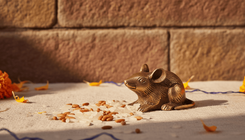
Ganesha travels on a mouse, which seems odd at first: the large-bodied, elephant-headed deity rides upon a creature so small it could nestle in his palm. Yet this pairing makes profound sense in Hindu philosophy. The mouse, called a mushak or mushika, is no mere mount but an expression of spiritual truth—a teaching woven into the image itself. When you understand why Ganesha has the mouse as his vehicle, you glimpse how the tradition sees obstacles, appetite and humble strength working together.



The Story of How the Mouse Became Ganesha's Vahana
The mouse became Ganesha's vehicle through a transformation told in several Hindu texts and regional stories. In one account, a powerful asura (demon) named Krauncha threatened the heavens and the earth. The gods, unable to defeat him through force, sought help. Ganesha intervened and subdued the demon—but instead of destroying him outright, Ganesha freed him from his demonic nature and transformed him into a mouse. This mouse, now humbled and devoted, became Ganesha's eternal vahana (vehicle or mount), serving as a constant reminder of redemption and the power of wisdom to transform even the most troublesome forces.
Other tellings describe Ganesha finding a young mouse and offering it shelter, or show the mouse approaching Ganesha willingly, drawn by his compassion. In some regional traditions, the mouse is associated with wealth (because rats and mice are said to hoard grain and valuables), making it a fitting companion for the remover of obstacles and bringer of prosperity. Across these variations, a single theme persists: the mouse is not random but chosen, transformed, and devoted.
What the Mouse Symbolizes in Hindu Philosophy
In the symbolism of Sanatan Dharma, the mouse represents several profound truths. First, it embodies humility. No creature is smaller or more easily overlooked. Yet the mouse is quick, intelligent and able to navigate tight spaces—it can go where larger beings cannot. This mirrors Ganesha's role: he removes obstacles not through brute force but through wisdom and adaptability. He finds the way where others see only walls.
The mouse also symbolises appetite and desire (kama). Mice are known for consuming grain stores, always seeking food—an image of uncontrolled want and craving. By riding upon the mouse, Ganesha shows mastery over appetite itself. His presence transforms the mouse from an image of blind hunger into a servant of his will. For the devotee, this is a teaching: desire is not evil, but it must be guided by wisdom and restraint.
Finally, the mouse represents the mind itself. The mind, like a mouse, is restless, always darting about, easily distracted, quick to nibble at any passing thought. Ganesha's command over the mouse teaches us that the mind must be governed—tamed through meditation, mantra and devotion. Only then does it serve us rather than scatter our energy.
The Meaning of Mushak Vahana in Daily Devotion
The term mushak vahana—"one who has the mouse as vehicle"—is not merely descriptive but an invitation to understanding. When you see Ganesha with his mouse, you are not looking at a historical fact or a whimsical detail. You are witnessing a teaching about transformation, control and the sacred relationship between wisdom and the forces it masters.
In daily practice, remembering this symbolism changes how a devotee approaches Ganesha. When you offer flowers or incense to Ganesha and his mouse, you are not simply honouring a deity and his pet. You are acknowledging that the obstacles in your own life—your fears, your restlessness, your hunger for things that do not serve you—can be transformed and placed in service of your higher purpose. The mouse at Ganesha's feet becomes a mirror for the devotee's own inner forces.
This is why the image appears in homes, temples and on altars across India and beyond. The mouse grounding the image reminds the devotee that Ganesha is not distant or abstract, but present in the very stuff of ordinary life: in appetite, in restlessness, in the small and overlooked. He dwells there, master and transformer.
Regional Variations and Deeper Meanings
The significance of the mouse as Ganesha's vahana varies subtly across India's regions and traditions. In South Indian temples, the mouse is often depicted in more elaborate detail, sometimes shown in an attitude of devotion or service. In North Indian iconography, the emphasis falls more on the size contrast—the vast body of Ganesha balanced impossibly on the tiny frame of the mouse, a visual koan about paradox and divine play.
In some texts, the mouse is linked to the earth itself: small, dwelling close to the ground, connected to the material realm. This reinforces Ganesha's role as the deity who brings divine wisdom into the practical world, who helps us accomplish tasks and fulfil dharma (righteous duty) in material life. In other traditions, the mouse carries associations with secrecy and stealth, qualities that Ganesha—remover of hidden obstacles—must possess to work on our behalf.
Bengali tradition sometimes emphasises the mouse's intelligence and adaptability, bringing out the teaching that obstacle removal is not always direct or obvious. In temple worship across regions, the mouse (sometimes called Mushakraj, the king of mice) is offered prayers and food alongside Ganesha, treated not as a subordinate accessory but as an intrinsic part of the deity's complete form. Honouring one is honouring the other.
Ganesha's Mouse in Modern Understanding
Today, reflecting on why Ganesha has the mouse as his vehicle can ground modern practice in living principles. In a time of overstimulation and scattered attention, the image of Ganesha commanding the restless mouse speaks directly to the need for mental discipline and focus. In an age of unexamined desire and consumption, the symbolism of appetite transformed by wisdom offers guidance.
The relationship also teaches something important about scale and worthiness. The mouse is not rejected as too small or insignificant. On the contrary, it is chosen, honoured and placed close to Ganesha's feet. This reflects a vision of the divine that does not dismiss the humble or the marginal but finds meaning and purpose everywhere. There are no worthless creatures, no wasted moments, no obstacles that cannot ultimately serve the journey.
Whether you approach this as mythology, symbolism or lived spiritual practice, the mouse beneath Ganesha remains a powerful reminder: that mastery comes not from denying the small and restless within us, but from understanding, transforming and directing it toward wisdom and purpose.
Common questions
What is the difference between mushak and mushika?
Both terms refer to the mouse in Sanskrit. Mushaka and mushika are variants of the same word, used interchangeably in different texts and regions. The form used depends on the grammatical case and the regional or textual tradition in use.
Can you feed the mouse at a Ganesha temple?
Many temples welcome offerings of grain or seeds left near Ganesha's image for the mice. Some temples actively protect mice on their grounds as sacred creatures. Always ask the priest or caretaker first; practices vary by temple and region.
Is the mouse ever depicted separately from Ganesha?
Yes, in some South Indian temples and homes, the mouse is worshipped as a standalone figure (Mushakraj) or appears in separate stories. However, the most common practice joins them in a single image, emphasising their inseparable spiritual relationship.

Related Articles


