
Why Diyas Are Placed at Doorways and Windows During Diwali
Light at the threshold, welcome within

Abhilash Ramakrishna
03 Nov 2026 • 8min
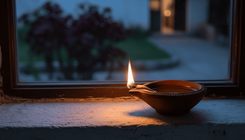
When you place a diya at a doorway or window during Diwali, you are placing more than a lamp. You are marking a threshold—the place between outside and inside, darkness and light, the known world and the home you are inviting others into. The diya at the doorway and window holds significance that runs through centuries of practice, and understanding it transforms Diwali from a custom you follow into something that makes sense in your hands.



The meaning of the threshold
In Hindu tradition, doorways and windows are liminal spaces: they belong neither fully to the house nor fully to the street. They are places of transition. The diya placed here is a greeting. It says to anyone who approaches—whether a guest, a stranger, or an unseen presence—that this is a house of light, a house of welcome. In older homes, this practical kindness was also spiritual: the lamp burned through the darkness to guide those walking at night, and the light itself was understood as a beacon for auspicious energies and the favour of Lakshmi, the deity of prosperity and good fortune.
The doorway is where the boundary between inner and outer worlds becomes visible. By placing a diya there, you consecrate that boundary. You acknowledge that what lies inside matters, and that passage into it is not neutral. This is why in many homes, the principal doorway of the house receives particular attention during Diwali.
Light as purification and invitation
In the Vedic tradition, agni (fire) purifies. The flame of a diya is not merely a light source; it is an active agent of purification. When you light a diya and place it at a threshold, the fire burns away impurities—not only in the material sense of smoke carrying away dust, but in the subtle sense of dispelling negativity and ill-will. This is why diyas are lit at thresholds even on ordinary days in many Hindu homes, not only during festivals.
During Diwali specifically, the diya becomes an invitation. Lakshmi is said to visit homes during the festival, drawn by light and cleanliness and the sound of worship. A diya burning at your doorway or window sends the message outward: this threshold is lit, this house is ready. In some regions, the lights are deliberately kept on through the night so that Lakshmi, moving from house to house, will not pass by in darkness.
The window, in this understanding, has its own role. It is an opening that looks outward. The diya placed in a window speaks not only to those who enter the home but also to the wider world—affirming that this is a house of light and goodness.
Regional and family variations
The practice of placing diyas at doorways and windows during Diwali is nearly universal across Hindu households, but how it is done varies widely. In many South Indian homes, diyas are placed not only at the main entrance but also around the perimeter of the house, creating a line of light that defines and protects the boundary of the home. In North Indian practice, the emphasis is often on the main doorway and the courtyard entrance. Some families light diyas at every window, while others focus on the most visible ones—those that face the street or the direction from which guests approach.
The type of diya used also varies: in some homes, small clay lamps filled with oil and a cotton wick are traditional. In others, brass or metal lamps are passed down through generations. Some households now use electric lights shaped like diyas, preserving the practice while adapting to modern living. What remains constant is the intention: light at the threshold as greeting, purification and blessing.
The number of diyas also differs by custom and region. Some families light two diyas at the main entrance, representing opposing forces in balance—light and shadow, order and chaos, abundance and restraint. Others light as many as the house has entry points, or follow a number determined by older family practice.
Why doorways and windows specifically
Doorways and windows are permeable boundaries. Unlike a wall, which is solid and opaque, a door can open and close, and a window can frame a view. They are the points at which the inside of the home meets the outside world most directly. Placing a diya here acknowledges this permeability and marks it as deliberate and auspicious.
The doorway is where you greet visitors. The diya ensures that greeting is warm and visible. It also serves a practical purpose in older times when streets had no other lighting: the home's diya helped people find their way and recognise which house they had reached. But beyond the practical, the doorway is philosophically significant. In Hindu thought, the threshold is a sacred space—the place where protection begins, where the family's territory starts, where you transition from the role of outsider to the role of guest or family member.
Windows carry a different meaning. They allow light to enter the home during the day and allow the home's light to be seen from outside at night. A diya in the window is almost a declaration: this is a house that does not hide its light. It is a house that shares brightness with the world around it. In many South Indian homes, small oil lamps are placed on the window sills facing the street, and this practice is specifically said to invite Lakshmi and to ensure that the light of the home reaches outward as well as inward.
Preparing and placing diyas
The diyas themselves are usually clay lamps, simple in form: a small bowl for oil, a spout to hold the wick, nothing ornate. This simplicity is part of their power. Before lighting, the lamp is often cleaned and, in some homes, treated with a tilak (a mark of auspiciousness). Oil—traditionally sesame or mustard oil, or ghee—is poured into the bowl, and a cotton wick is placed in the spout. The wick is lit just before sunset or in the evening as darkness falls.
The placement matters. The diya should be stable and away from wind or drafts that might blow it out—a window sill inside the window rather than outside, or a doorway that is sheltered. In some homes, multiple diyas are arranged symmetrically around the entrance, while in others, a single prominent lamp holds the central role.
In modern homes, where safety is a concern or where traditional clay diyas are difficult to maintain, electric lights shaped and coloured like diyas have become common. While the form has changed, the intention remains: light at the threshold as a marker of welcome and auspiciousness. Some families combine both, lighting a single traditional diya for its symbolism and its warmth, while using electric lights for practical illumination.
Place a diya at your doorway during Diwali
- Gather your materials Collect a clay diya (or oil lamp), oil such as sesame or mustard oil, a cotton wick, and matches or a lighter. If using multiple diyas, ensure you have enough for each doorway and window you wish to illuminate.
- Clean the diya Wipe the clay lamp with a damp cloth to remove dust. Some families apply a small tilak (mark) of turmeric or vermillion to the diya to sanctify it, though this step is optional.
- Fill with oil Pour oil into the shallow bowl of the diya until nearly full, leaving just enough space to prevent overflow. Traditionally, sesame oil or mustard oil is used, but any pure oil will work.
- Place the wick Carefully twist the cotton wick and place one end in the spout of the diya, leaving the other end exposed to be lit. The wick should sit comfortably without bending at a sharp angle.
- Choose a stable location Select a sheltered spot at your doorway or on a window sill inside the window, away from drafts, curtains and anything flammable. If placing multiple diyas, arrange them symmetrically or according to your family tradition.
- Light as evening falls Light the wick as the sun sets or as darkness begins. The diya will burn for several hours as the oil is consumed. In some homes, it is lit again in the morning and tended throughout Diwali.
Common questions
Is it better to use clay diyas or electric lights at the doorway?
Both are acceptable. Clay diyas are traditional and carry deep symbolic meaning through their fire and natural materials. Electric lights shaped like diyas are practical alternatives that burn safely all night and are easier to maintain, especially in modern homes. Many families use both—a single traditional diya for its warmth and symbolism, and electric lights for practical, continuous illumination.
What type of oil should I use in a diya?
Sesame oil and mustard oil are traditional choices in most regions. Ghee is also used and considered particularly auspicious. Any pure vegetable oil will work if you do not have these on hand, though traditional oils are preferred for their connection to the practice.
How long should diyas burn each night?
A typical clay diya will burn for 2 to 4 hours on a single filling of oil, depending on the wick size and oil quality. Many families light diyas in the evening as darkness falls and let them burn naturally until they extinguish. Some relight them the following evening through the Diwali festival period.

Related Articles


