
Why Diwali Falls on Amavasya: The New Moon Night
Light Returns When Darkness is Deepest

Abhilash Ramakrishna
21 Nov 2026 • 6min
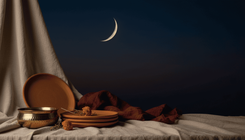
Diwali falls on amavasya, the new moon night, and this is not a coincidence of the calendar. The alignment of Diwali with the darkest night of the lunar month carries meaning that shaped why this festival is celebrated when it is. To understand diwali amavasya meaning, you need to see what the new moon represents in Hindu philosophy and why light is kindled precisely when darkness peaks.
The lunar calendar that governs Hindu festivals divides each month into two phases. The bright half, shukla paksha, runs from new moon to full moon. The dark half, krishna paksha, runs from full moon back to new moon. Amavasya is the last night of krishna paksha—the moment when the moon is invisible and the sky is darkest. Diwali is observed on this night, and the festival's meaning rests on this timing.



The Symbolism of Light Meeting Darkness
Diwali's central image is light: oil lamps, lanterns, fireworks breaking through the night. But the festival makes sense only because it is lit on the darkest night of the month. If Diwali were held during daylight or on a bright moonlit night, its symbolic power would dissolve. The lamps kindle because the darkness is complete. This is the moment when illumination has the most meaning.
The new moon is not simply an astronomical event. In Hindu philosophy, amavasya represents the potential moment—when one cycle has ended and another is about to begin. The moon is invisible, yet it is about to wax again and grow full. This rhythm maps onto the festival's themes. Diwali celebrates the victory of light over darkness, but also renewal, the return of prosperity after challenge, the rising of what has been hidden. The amavasya timing makes each of these meanings tangible.
Why Amavasya and Not Another Date
The Hindu lunar calendar places each festival on a specific tithi, or lunar date. A tithi is a phase of the moon marked by its distance from the sun, and it can last 19 to 26 hours depending on the moon's orbital speed. This is why Diwali does not fall on the same day of the Gregorian calendar each year—the lunar month and the solar calendar are misaligned.
Diwali is observed during the month of Kartik, which usually falls in October or November by the solar calendar. Within Kartik, the festival occurs on Kartik Amavasya—the new moon night of that month. The choice is deliberate. Other festivals align with full moons, bright halves of the month, or auspicious moments within the month, but Diwali is claimed by the darkest night. This makes Diwali structurally different from many other Hindu festivals, and that difference is the point.
Some regions and traditions observe additional Diwali practices on the days immediately before or after amavasya—the day of Govardhan Puja, the day of Bhai Dooj—but the main festival, the night of lamps and prayers to Lakshmi, falls precisely on amavasya. This consistency across regions and sampradayas, the different schools of Hindu practice, speaks to how central the amavasya timing is.
Amavasya in Hindu Philosophy
Amavasya holds particular significance in Hindu thought beyond the calendar. It is associated with ancestors and with introspection, a time when the veil between worlds is thought to be thin. Prayers offered on amavasya reach farther, some traditions hold, and rituals performed on this night carry weight.
Yet Diwali is not a solemn festival of ancestors alone. Instead, it takes this sacred potential and transforms it into celebration. The darkness of amavasya is not feared; it is the canvas on which light is painted most vividly. This reversal—taking the most inauspicious-seeming night and making it the occasion for the festival of light—is part of Diwali's spiritual architecture.
Different sampradayas understand this amavasya meaning differently. Some emphasize the story of Rama's return from exile on this darkest night, lighting the city with lamps. Others focus on Lakshmi, the goddess of prosperity, emerging during the new moon phase to bless homes. Both narratives rest on the same calendar fact: amavasya is when Diwali is lit.
The Panchanga and Ritual Timing
The panchanga, the Hindu calendar, is built from five elements: tithi (lunar date), vara (day of the week), nakshatra (lunar mansion), yoga (a proportional relationship between sun and moon), and karana (half a tithi). Festivals are fixed not by a single element but by combinations of these. Diwali is determined primarily by the tithi—Kartik Amavasya.
This method of dating is precise despite seeming obscure. An astrologer or panchanga keeper can calculate Kartik Amavasya years into the future, accounting for the moon's actual orbital speed, and can tell you not just the date but the precise hours when the festival should be observed. For rituals, the amavasya timing is not approximate. It is verifiable.
Because the amavasya moment can last into the early hours of the following day by the Gregorian calendar, the exact timing of Diwali can shift depending on your location and how your local panchanga is calculated. But the underlying principle remains: Diwali is the festival of Kartik Amavasya, no other night.
Why This Matters Now
Understanding the amavasya timing of Diwali transforms how you might observe the festival. It is not simply a date on the calendar to be noted. It is an alignment between cosmic cycles and human celebration—the darkest night chosen as the occasion for the greatest outpouring of light. When you light a lamp on Diwali, you are not fighting back against arbitrary darkness. You are participating in a rhythm that connects earth, moon, sun, and human intention in a single gesture.
This is why diwali amavasya meaning runs deeper than mere timing. The new moon night is when Diwali belongs, and understanding why helps you feel the weight of the festival beyond its festive surface.
Common questions
Is Diwali always on the same date every year?
No. Diwali falls on a different Gregorian date each year because it is fixed by the lunar calendar, not the solar calendar. It is always Kartik Amavasya, but this can occur anywhere from mid-October to mid-November depending on the year.
What does amavasya mean for rituals and worship?
Amavasya is considered a powerful moment for ritual. Prayers offered on amavasya are believed to carry special weight, and in many traditions ancestors are also remembered on this night. For Diwali, the amavasya timing makes the kindling of lamps spiritually significant.
Do all regions observe Diwali on the same amavasya night?
Yes, all Hindu traditions observe Diwali on Kartik Amavasya, though some regions perform related observances like Govardhan Puja or Bhai Dooj on the days immediately after. The main festival of lamps and Lakshmi puja is always on the new moon night itself.

Related Articles


