
Why Diwali Celebrates the Return of Lord Rama to Ayodhya
Victory of light, devotion, and dharma

Sunil Chaurasia
02 Nov 2026 • 6min
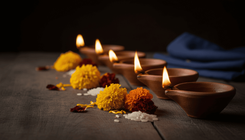
Diwali is celebrated as the return of Lord Rama to Ayodhya because this story lies at the heart of the festival's spiritual meaning. Rama, the seventh incarnation of Vishnu, represents dharma—righteousness and duty—and his fourteen-year exile was marked by struggle against adharma. When Rama finally returned home after defeating the demon king Ravana, the people of Ayodhya lit diyas (oil lamps) to welcome him and mark the triumph of good over evil. This is why Diwali is called Deepavali, meaning "row of lights". For millions of Hindus, lighting lamps during Diwali is an act of devotion that echoes this homecoming and honours the values Rama embodies.



The Story of Rama's Exile and Return
The narrative of Rama's journey is preserved in the Ramayana, one of the two great Sanskrit epics of Indian literature. Rama was born as the eldest son of King Dasharatha of Ayodhya, destined to inherit the throne. However, due to an old promise made to one of his wives, Dasharatha was compelled to exile Rama for fourteen years. Rather than resist, Rama accepted this duty without anger or complaint. He left Ayodhya with his wife Sita and his devoted brother Lakshman, choosing duty over personal comfort.
During the exile, Ravana, the ten-headed king of Lanka, abducted Sita and held her captive. Rama crossed the ocean with an army of monkeys led by Hanuman—a figure of unwavering devotion—and defeated Ravana in a great battle. With Sita recovered and the demon kingdom vanquished, Rama's exile came to an end. When the fourteen years were complete, he returned to Ayodhya. This homecoming was cause for immense celebration, and the people welcomed him by illuminating their homes and streets with lamps, a tradition that became the foundation of Diwali.
Dharma as the Core of Diwali
Rama is not celebrated merely as a warrior or a king. He is revered as an embodiment of dharma—the cosmic order and moral law that upholds the universe. Every choice Rama made was guided by dharma, even when it brought personal suffering. He accepted exile rather than challenge his father's word. He rescued Sita not from anger, but from duty. He ruled Ayodhya with wisdom and justice.
When we celebrate Rama's return during Diwali, we are celebrating the victory of dharma over adharma—disorder and unrighteousness. Ravana, despite his power and learning, represented adharma because he used his strength to harm the innocent and violate sacred bonds. Rama's victory affirms that dharma, even when tested and delayed, ultimately prevails. This is why lighting lamps on Diwali carries spiritual weight beyond mere festivity. Each diya is a reminder that light—understood as knowledge, goodness and truth—will always overcome darkness.
The Festival Across Different Traditions
While the Rama narrative is central to Diwali in North India and among many Hindu communities, the festival is observed differently across the subcontinent and within different spiritual traditions. In some regions and sampradayas (lineages), Diwali marks the day Lakshmi, the goddess of wealth and abundance, was born from the ocean of milk. In other places, it commemorates Krishna's victory over the demon Narakasura. In Jain tradition, Diwali marks the day Mahavira attained moksha, or liberation.
These different stories are not contradictory within Hindu philosophy. They reflect the way different communities and regions developed their own expressions of the core theme: the triumph of good over evil, and the celebration of spiritual awakening. The act of lighting lamps, however, remains constant across these variations. Whether celebrating Rama, Krishna, Lakshmi or another aspect of the divine, the lamp represents illumination, guidance and the presence of the sacred in our homes and hearts.
How Diwali is Observed Today
On the day of Diwali, houses are cleaned and decorated, and people create rangoli—coloured patterns made on floors using natural pigments, rice flour or flower petals. Diyas are lit in homes, temples and public spaces. Many families prepare sweets and savoury foods, exchange gifts, and spend time with loved ones. Fireworks light up the sky in many places, adding to the festive atmosphere. Lakshmi puja, a prayer to the goddess of prosperity, is performed in many households on Diwali evening, regardless of whether the primary focus is on Rama or another deity.
For many, Diwali is also a time for spiritual renewal. The lighting of lamps is an outward ritual with an inward meaning: the lamp within each person—consciousness, wisdom, compassion—is kindled and brightened. Some people use Diwali as an opportunity to reflect on what has darkened their year, whether that is anger, fear, or harmful habits, and commit to letting those go as the festival's lights grow brighter.
Why This Story Matters Today
The story of Rama is not merely historical or mythological. It speaks to experiences that remain relevant: the struggle between right and wrong, the cost of holding to principle, the power of devotion, and the belief that justice and goodness can be restored. When Rama returned to Ayodhya, the people lit lamps not just in celebration, but in recognition of what his victory represented—the return of order, safety and dharma to their world.
This is why millions of people still light diyas at Diwali. The act connects them to that ancient story, but more importantly, it connects them to the values that story carries. In a world where it can feel easy to lose sight of what is right, Diwali reminds us to choose dharma, to support what is good, and to trust that light will eventually dispel the darkness. Whether you light a single diya or many, the act is an echo of that first homecoming, and a prayer that dharma may flourish.
Common questions
Is Diwali always celebrated on the same date?
No. Diwali falls on a different date each year because it is observed on the new moon day (Amavasya) in the month of Kartik according to the lunar calendar, which aligns with October or November in the Gregorian calendar. The exact date shifts yearly.
Do all Hindus celebrate Diwali for the same reason?
While Rama's return to Ayodhya is the main narrative in North India and among many communities, other traditions emphasise different events: some celebrate Krishna's victory over Narakasura, others honour Lakshmi's birth, and in Jain tradition, Diwali marks Mahavira's attainment of moksha. The themes overlap—good over evil, light over darkness—but the specific story varies.
What is the spiritual meaning of lighting lamps on Diwali?
Lighting diyas represents the kindling of inner light—wisdom, consciousness and goodness—within each person. It echoes the lamps lit to welcome Rama home and serves as a reminder to dispel darkness, both outward and within, through dharma and spiritual awareness.

Related Articles


