
Why Amla Trees Are Worshipped on Akshaya Navami
Endless gifts from an ancient tree

Sunil Chaurasia
25 Oct 2026 • 6min
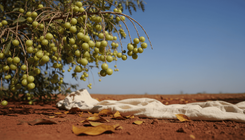
Akshaya Navami, also called Amla Navami, is the day Hindus honour the amla tree—the Indian gooseberry—as a symbol of infinite abundance and healing grace. It falls on the ninth day of the bright half of Kartik, the Hindu month roughly overlapping October and November. On this morning, many people visit amla trees, offer prayers, circle them, take their fruit, and sometimes plant new saplings. The practice is rooted in the belief that the amla tree is immortal, ever-giving, and blessed by divine grace.



The Amla Tree in Hindu Scripture and Belief
The amla holds a place of reverence across Hindu texts and philosophy. It is said to have emerged from the cosmic ocean during the churning of the devas and asuras, and is therefore considered a gift of the gods to humanity. Some traditions associate the tree with Lakshmi, the goddess of prosperity and abundance, while others link it to Dhanvantari, the divine physician and source of Ayurvedic medicine. The name "amla" comes from the Sanskrit word amlika, meaning "sour," but the fruit is valued far beyond its sharp taste—it represents nourishment, longevity and the flow of endless grace.
In Hindu philosophy, the amla embodies akshaya, which means inexhaustible or eternal. The tree gives fruit year after year without needing much care. It thrives even in poor soil, endures harsh climates, and regenerates after being pruned. This resilience became a metaphor for divine abundance that does not diminish with giving, and for the spiritual principle that generosity and blessing flow without end.
Why This Day Matters in the Calendar
Akshaya Navami has been observed for centuries as a day aligned with themes of increase and permanence. The word "akshaya" appears in Hindu texts to describe gifts that bring lasting benefit—the akshaya patra, the inexhaustible vessel given to Arjun in the Mahabharata, is one such example. By performing puja on Akshaya Navami, devotees believe they invite that same quality of endless abundance into their lives and homes.
The timing on the ninth lunar day holds significance too. Nine is considered auspicious in Hindu numerology, representing completion and cycles of renewal. Placing this observance in Kartik, a month traditionally linked to wisdom and clarity, adds another layer to the spiritual intention. Kartik is also the harvest season in many parts of India, a time when new crops are gathered and gratitude flows naturally.
How Akshaya Navami Is Observed
On Akshaya Navami morning, the ritual is simple and does not require elaborate arrangements. Many people bathe, then visit an amla tree with flowers, incense, and offerings of fruit or sweets. They circle the tree while chanting or simply speaking words of gratitude. Some anoint the tree with oil or turmeric paste. The fruit gathered on this day is believed to carry special blessing, and it is eaten fresh or dried and kept for use throughout the year. Taking fruit from the tree is not seen as taking; it is receiving a gift already given.
Planting new amla saplings on this day is common practice. In cities where wild amla trees are rare, families may perform puja at a potted amla plant at home. The ritual is not rigid—what matters is the intention to honor the tree and the principle it represents. Some families make amla juice or murabba (preserve) on this day, transforming the fruit into something that will nourish them for months to come.
In temples dedicated to Dhanvantari or in Ayurvedic centres, Akshaya Navami may be marked with wider observances: distribution of amla products, talks on the fruit's medicinal properties, or collective planting drives. In South India, the day is sometimes called Amalaka Navami, and the observance follows similar patterns with regional variations in the specific rituals performed.
The Amla's Place in Daily Wellness
Beyond the ritual, Akshaya Navami draws attention to the amla's practical role in Indian wellness traditions. The fruit is one of the three components of triphala, a foundational Ayurvedic formula used to support digestion and overall health. It is rich in vitamin C and is believed in Ayurvedic theory to balance all three doshas—vata, pitta and kapha—making it one of the most versatile fruits in the system.
Eating amla on Akshaya Navami is both an act of devotion and a gesture toward one's own health. Whether fresh, dried, powdered or preserved, the fruit becomes a thread connecting the spiritual observance to everyday wellness. For many people, beginning a course of amla supplements or amla-based remedies on this auspicious day adds intention to the practice. The tree teaches by example: resilience, generosity and the capacity to nourish others are not separate from long life and strength—they are its foundation.
Carrying the Spirit Beyond the Day
The deeper lesson of Akshaya Navami lives beyond the single day of observance. In worshipping the amla tree, we acknowledge that abundance comes not from endless acquisition but from recognizing what we already have and using it wisely. A tree that gives much but asks for little; a fruit that costs little but nourishes deeply—these are reminders that the richest life is often the simplest one.
If you live where amla trees grow, visiting one on Akshaya Navami and spending a few moments in gratitude is a direct way to engage with the practice. If you do not, eating amla or amla-based products on this day, or planting a sapling if you have space, connects you to the same spirit. The act of honoring an ancient tradition, of pausing to remember abundance, is itself what the day is for.
Common questions
When is Akshaya Navami in 2026?
Akshaya Navami follows the lunar calendar and falls on the ninth day of the bright half of Kartik, which typically occurs in October or November. For the exact date in 2026, check a Hindu lunar calendar or panchanga, as the Gregorian date shifts each year.
Can I do Akshaya Navami puja without an amla tree nearby?
Yes. You can perform puja at a potted amla plant at home, or simply eat amla fruit or amla-based products on the day with gratitude and intention. Planting an amla sapling on this day, even in a container, is also a meaningful way to honour the observance.
What should I do with amla fruit gathered on Akshaya Navami?
The fruit is believed to carry special blessing. You can eat it fresh, dry it, make it into juice or preserve (murabba), or powder it for use throughout the year. Many families also offer the fruit as prasad in home worship or to others as a gift.

Related Articles


