
Why Abhyanga Snan Is Performed Before Sunrise on Diwali
Cleansing the self before the festival of light

Aditya Pandey
04 Nov 2026 • 7min
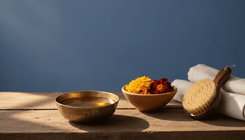
On Diwali, the festival of light that marks the victory of good over evil, many households begin their day before dawn with abhyanga snan—an oil bath that is more than personal hygiene. It is a ritual cleansing of the body and spirit before the day's worship and celebration. The specific timing, before the sun rises, and the method, an oiling and bathing of the whole body with warm oil, carry meanings rooted in both Ayurvedic wellness and the spiritual framework of Hindu observance. Understanding why this practice endures and what it signifies can deepen your experience of Diwali itself.



What Abhyanga Snan Means
Abhyanga means oil massage, and snan means bathing. Together, abhyanga snan is a full-body oil treatment followed by washing—not a quick rinse, but a deliberate practice. Warm oil, usually sesame or coconut depending on the season and region, is massaged into every part of the body with intention: the scalp, face, limbs, hands, feet and torso. The oil is left to absorb for a few minutes or longer, and then the body is washed with water, often with a gentle cleanser like chickpea flour or a mild herbal paste. It is a practice older than Ayurveda as a written science, appearing in daily routines described across Sanskrit texts and continuing in households across India today.
On Diwali, abhyanga snan takes on an extra layer of significance. It is not merely self-care but preparation—a way of honouring the festival and the divine by arriving at worship in a state of purity.
The Pre-Sunrise Timing
The choice to perform abhyanga snan before sunrise is not arbitrary. In Hindu cosmology and daily spiritual practice, dawn is a threshold moment: the transition from night to day, from darkness to light, mirrors the larger spiritual narrative that Diwali celebrates. The hours before sunrise, called brahma muhurta in Sanskrit texts, are considered auspicious for spiritual practice and ritual. The mind is naturally quieter, the body less burdened by the day's activity, and the atmosphere is held to be sattvik—pure and conducive to inner work.
On Diwali specifically, beginning the day with abhyanga snan before the sun rises creates a intentional break with the night and aligns the self with the festival's central theme: the triumph of light. By the time you have completed the massage, bathing and drying, the sun may be rising or already risen. You move into the day refreshed, your body warm and cared for, your skin nourished by oil, and your mind settled by the ritual. You are then ready to light lamps, offer worship, and gather with family from a place of inner cleanliness.
The Ayurvedic Foundation
From an Ayurvedic perspective, abhyanga snan in cool or cold months supports health by warming and lubricating the body. Sesame oil, warm, penetrating and slightly heating in its qualities, is traditionally chosen for winter abhyanga. It nourishes the skin, the largest sense organ, and calms vata—the Ayurvedic dosha associated with air and space, with dryness, and with nervous energy. In warmer seasons, coconut oil or other cooling oils may be used.
Diwali falls during late autumn or early winter, depending on the lunar calendar, making it a natural time to turn to warming practices. The early morning oil bath begins to shift the body's temperature and energy toward balance as daylight hours shorten and the cold season deepens. This is not separate from the ritual purpose; it works in the same direction. The Ayurvedic recognition that the body needs different kinds of care at different times sits comfortably alongside the spiritual intention to cleanse and prepare.
The Ritual and Spiritual Layer
Beyond hygiene and wellness, abhyanga snan on Diwali is an act of reverence. The practice says: before I celebrate and worship, I care for this body as a vessel. I oil and wash it. I slow down. I arrive at the festival unhurried and attentive. This preparation mirrors other rituals of Diwali—cleaning the house, arranging flowers and rangoli, preparing sweets—all of which ready the home and the self for worship and gathering.
The oil used in abhyanga snan is traditionally chosen with care. Sesame oil carries associations with warmth, stability and nourishment; it has been offered in lamps for centuries and held as sacred. To massage this same oil into the skin is to draw its qualities inward. Some families add fragrant herbs or flowers to the oil before the massage, infusing the practice with scent and additional intention.
Regional and Family Variations
The specifics of abhyanga snan differ across regions and families. In some households, the practice is performed by one person alone as a quiet morning ritual. In others, family members apply oil to each other's heads or backs, turning it into a moment of care and connection. Some families use sesame oil year-round; others shift oils with the seasons. Some perform abhyanga snan on Diwali morning as a special observance; others keep it as a daily practice that simply continues through the festival.
What remains constant across these variations is the core understanding: that beginning Diwali with abhyanga snan is a way of honouring the day, of preparing the body and mind for worship, and of recognising that cleanliness and care are not separate from spirituality but woven into it.
How to Approach This Practice
If you want to begin abhyanga snan on Diwali morning, you need not perform it perfectly or elaborately. Warm some sesame or coconut oil gently—never boil it, as high heat damages its qualities. Set aside 20 to 30 minutes in a warm space where you will not be rushed. Massage the warm oil into your entire body, scalp to feet, with slow, deliberate strokes. Let it rest for 5 to 10 minutes. Then bathe thoroughly with warm water and a mild cleanser, rinsing completely so your skin feels clean but still nourished. Dry yourself, dress warmly, and move into your day.
The meaning of abhyanga snan comes as much from the intention you bring as from the technique. Beginning Diwali with this practice—this choice to slow down, to care for the body, to mark the threshold between night and day—is what transforms a bath into a ritual.
Perform abhyanga snan on Diwali morning
- Warm the oil gently Pour sesame or coconut oil into a bowl and warm it by placing the bowl in hot water for a few minutes. Test the temperature on your inner wrist—it should feel warm and comfortable, never too hot.
- Massage the entire body Beginning with the scalp, massage warm oil slowly and deliberately over your head, face, neck, shoulders, arms, hands, chest, abdomen, back, legs and feet. Use long strokes on the limbs and circular motions on the joints and torso.
- Let the oil rest Once covered, allow the oil to absorb into your skin for 5 to 10 minutes. You can sit quietly, lie down, or perform light stretches if desired.
- Bathe with water and cleanser Rinse your entire body with warm water. Use a mild cleanser such as chickpea flour paste or a gentle herbal soap to wash away the oil, rinsing thoroughly until your skin feels clean but still soft and nourished.
- Dry and dress warmly Pat your skin dry with a clean cloth. Dress in warm clothing to maintain your body heat as the practice settles into your system.
Common questions
What type of oil should I use for abhyanga snan on Diwali?
Sesame oil is traditionally preferred for abhyanga snan during the winter season when Diwali falls, as it is warming and nourishing. Coconut oil is also used, especially in warmer regions. The oil should be warmed gently before use, never boiled.
What if I cannot wake up before sunrise on Diwali morning?
The spiritual essence of abhyanga snan lies in performing it as a deliberate preparation ritual before beginning your Diwali celebrations, rather than in a specific clock time. If dawn is not possible, perform it early in the morning with the same care and intention.
How long should I leave the oil on my skin before bathing?
Traditionally, the oil is left on the body for 5 to 10 minutes, allowing it to absorb slightly into the skin. If you have more time, 15 to 20 minutes is also appropriate. Leaving it on too long—longer than 30 minutes—can make it difficult to rinse completely.

Related Articles


