Which Navratri mantra should you chant?
Nine nights, nine forms, nine mantras

Sunil Chaurasia
08 Oct 2026 • 6min
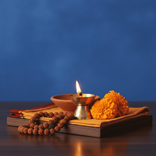
A mantra to chant during Navratri depends on which form of Durga you wish to honor, and whether you are following a daily practice or an extended sadhana. There is no single "correct" mantra for the festival—instead, Navratri gives you nine nights to work with nine distinct mantras, each linked to one form of the goddess and one day of the observance. The most widely used is the Devi Mahatmya or Durga Saptashati, the 700-verse sacred text recited in full or in part during the festival. Many practitioners also work with the Durga Mantra or the personal mantra of their chosen deity, and some follow a specific mantra for each of the Navdurga—the nine forms of Durga.



The Devi Mahatmya and Durga Saptashati
The Durga Saptashati, a 700-verse text from the Markandeya Purana, forms the core of Navratri worship for many households. It recounts the victory of Durga over the buffalo demon Mahishasura and celebrates her power across multiple forms and battles. During Navratri, families chant this text in its entirety or select portions like the Devi Kavach (the armor hymn) or the Argala Stotram (the invocation prayer that prepares the way).
You do not need to chant the entire Sanskrit text if it is unfamiliar to you. Many temples and households chant the Devi Kavach alone, which is a 61-verse prayer for protection. Others recite only the Argala Stotram before moving to devotional chanting or meditation. The structure is flexible—what matters is the regularity of your practice over the nine nights. If you have access to a Sanskrit teacher or an audio recording in your preferred language, even listening to the full Durga Saptashati is considered a valid form of engagement with the text.
The Durga Mantra and personal practice
The most accessible mantra for many practitioners is the Durga Mantra, a chant that invokes Durga directly without requiring knowledge of Sanskrit or the specific mythology of each of the Navdurga. The Durga Mantra is simple enough to memorize and can be chanted on mala beads (a string of 108 beads) or simply repeated as a meditation.
If you follow a particular sampradaya or have a guru, you may have received an initiation mantra. Navratri is an ideal time to deepen this practice by increasing the number of repetitions over the nine days, or by setting aside dedicated time each evening for meditation and japa (repetition). Many households keep a mala specifically for this purpose, bringing it out each Navratri.
The Navdurga mantras, day by day
Each of the nine nights of Navratri is associated with a different form of Durga, and some traditions prescribe a specific mantra for each day. The nine forms are Shailaputri, Brahmacharini, Chandraghanta, Koosmanda, Skanda Mata, Katyayani, Kali, Mahagauri, and Siddhidatri. Each has her own characteristics, and devotees who follow this practice shift their mantra daily to reflect the particular energy of that form.
If you want to follow this approach but are not fluent in Sanskrit, focus on learning the names themselves. Many households simply invoke each of the Navdurga by name and sing devotional songs dedicated to that form. This is no less sincere than reciting a Sanskrit mantra. Regional traditions vary—some areas have specific bhajans (devotional songs) and stotras (hymns) for each day, and you may find that following your local temple or family custom fits better than attempting a standardized approach.
Creating a manageable daily practice
The key to a sustaining Navratri practice is choosing something you can do consistently for nine days. If you are new to mantra chanting, begin simply: select one mantra and commit to 11 rounds on your mala, or 5 to 10 minutes of quiet repetition each evening.
You might start with the Devi Kavach or the Durga Mantra. You might use a recording of the Durga Saptashati as a backdrop to an evening meditation. You might learn one specific Navdurga mantra and build from there. The tradition is flexible enough to hold all of these approaches. What transforms a practice from intellectual to lived is showing up consistently—the act of dedicating time each night, even for 10 minutes, creates a rhythm that honors the festival itself.
Mantra and household worship
Many Navratri households combine mantra chanting with ritual—placing flowers before an image of the goddess, lighting a lamp, and then beginning their chanting practice. This creates a simple but purposeful space in which the mantra can deepen. If you have access to a specific temple or community gathering during Navratri, attending one evening to hear the Durga Saptashati chanted collectively can give you a felt sense of the practice and connect you to its communal dimension.
Choose a mantra that speaks to you or fits your existing practice. Set a time each evening when you will chant. Let the nine nights become a rhythm rather than a task. This is how mantra practice during Navratri deepens from words into devotion.
How to build a simple Navratri mantra practice
- Choose your mantra Select one mantra that draws you—the Durga Mantra, the Devi Kavach, or a specific Navdurga mantra. If you have received a guru mantra, use that for deeper engagement.
- Set a consistent time Pick an evening time when you will practice, ideally the same time each night. This creates a rhythm and trains the mind to turn inward at that moment.
- Prepare a small space If possible, create a simple altar with flowers, a lamp, or an image. Light a flame or place fresh flowers before beginning to mark the practice as sacred.
- Begin with intention Sit quietly for a moment and set an intention for why you are chanting—for protection, devotion, health, or peace. This anchors the words to your own purpose.
- Chant on a mala or by time Use a 108-bead mala for 108 repetitions, or simply chant for 5 to 10 minutes without counting. Let the rhythm of the words settle into your mind.
- Maintain the practice for nine days Continue each evening through all nine nights of Navratri. Consistency matters more than perfection—even a brief practice, sustained, transforms the observance.
Common questions
Can I chant a Navratri mantra in English or my own language?
Yes. If Sanskrit is not accessible to you, chanting the names of the Navdurga in English, singing devotional songs, or listening to the Durga Saptashati in translation are all valid approaches. What matters is consistent practice and sincere intention, not the language you use.
How many times should I repeat a Navratri mantra each day?
A common practice is 108 repetitions using a mala, or 11 rounds of a mala (1,188 repetitions), but this is flexible. Even 5 to 10 minutes of steady chanting each evening is meaningful if done consistently over the nine days.
What's the difference between the Durga Saptashati and the Devi Kavach?
The Durga Saptashati is the full 700-verse sacred text that narrates the goddess's battles. The Devi Kavach (armor hymn) is a 61-verse excerpt from it, used as a standalone protective prayer. You can chant either one, or both, depending on your time and preference.

Related Articles