Which Navratri colour should you wear each day?
Nine days, nine colours, nine moods of the divine

Kushal K
14 Oct 2026 • 6min
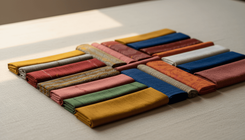
During Navratri, the nine-day festival honouring Durga and her nine forms, many families follow a tradition of wearing a specific colour each day. These Navratri colours are not mandated by scripture; rather, they are a living custom that varies by region and community. Across India, however, the same core sequence appears most often, and wearing the daily colour is a way to align your devotion with the energy of each day. This article guides you through the nine Navratri colours, what each represents, and how the tradition is observed.



The nine Navratri colours: the sequence
The most widely followed list of Navratri colours runs like this. Day one is yellow or golden; day two is green; day three is grey or sometimes red; day four is orange; day five is white; day six is red; day seven is blue or royal blue; day eight is pink; day nine is purple or green. These nine colours are sometimes called the navaratri dress colours or Navratri costume colours when people wear them consciously through the festival.
Not every region or family follows this exact order. In South India, particularly Tamil Nadu and Karnataka, Golu (the display of dolls during Navratri) may be accompanied by slightly different colour associations. In Bengali Durga Puja, the sequence may differ or be less emphasised. What matters is your own family custom or the custom of the community where you are observing Navratri. If you are new to the practice, the list above is a trustworthy starting point.
Why colours matter during Navratri
Each colour in the Navratri sequence is believed to carry its own spiritual quality and resonance. Yellow or golden is associated with purity, light and the rising of divine power. Green stands for nourishment and new growth. Grey represents courage and restraint. Orange calls to mind tapasya (disciplined spiritual practice) and sacrifice. White signifies purity and calm. Red is strength and transformation. Blue or royal blue evokes wisdom and the infinite. Pink brings joy and devotion. Purple or violet suggests mystery, completion and the merging of material and spiritual.
Wearing a colour does not change the outcome of Navratri or make your prayers more potent if you forget the colour one day. Rather, the practice is a gentle way to keep the festival present in your mind and body as you move through your ordinary day. A colour seen in the mirror or on your body can remind you which day you are in and what quality of the divine you are invited to honour. This is especially helpful if you are also fasting or observing other practices during Navratri.
How to wear Navratri colours
Most commonly, families wear the colour as part of their everyday clothes: a shirt, dupatta, saree or kurta in that day's colour. You need not wear head-to-toe colour or expensive new clothes each day. A coloured scarf, shawl or even a simple wristband or bangle works just as well. Some families wear the colour in their jewellery, bangles or bindis. Others tie a coloured thread around their wrist.
Work and school are not traditionally held to be incompatible with Navratri colours. You can wear the colour subtly if your workplace requires formal dress: a coloured undershirt visible at the neck, a coloured scarf, or coloured socks. The principle is that you have made a small, intentional choice to mark the day. The visibility or impressiveness of the colour matters far less than the awareness it brings you.
If you are fasting during Navratri, wearing the colour becomes an even more present practice, something you encounter each time you dress. If you are not fasting, the colour alone may be your main observance, and that is a complete and valid way to observe Navratri.
Navratri colours by region
In North India, particularly among Hindi-speaking communities, the colour sequence mentioned above is standard. This list is also followed widely in urban India across states and in diaspora communities abroad.
In Gujarat, Navratri is celebrated with Garba and Dandiya Raas, community dances often performed in the evening. The colours matter less for daily dress and more for the clothes worn to the dance. Still, the nine-colour framework is familiar in Gujarat.
In South India, the emphasis is often on Golu, where families display dolls and invite neighbours to view them. Golu traditionally happens in the morning before work. The colours are less strictly observed in everyday dress, though the colour of flowers, cloth or decorations around the Golu display may loosely follow the nine-colour pattern.
In Bengal, Durga Puja dominates Navratri. The celebration centres on the temple pandal and community events rather than on home-based colour practices. Colour traditions, where they exist, are particular to each community.
If you belong to a family with its own tradition, follow that. If you are adopting the custom for the first time, the all-India sequence given above is your reliable guide.
Navratri colours and everyday practice
Navratri colours are often chosen to invite a particular energy into your day. On a day when you need courage, wearing red can remind you of that quality. On a day when you seek clarity, wearing white or blue serves that purpose. Some families choose which day to do important tasks based on the colour's association: conducting financial affairs on yellow day, healing conversations on green day, major decisions on red day.
This is not superstition but a form of intentional living. You are using the structure of Navratri to be conscious about what you bring to each part of your life. The colour becomes a touchstone.
If you forget the colour or cannot wear it one day, it is not a failure. Navratri, like all Hindu festivals, is forgiving of imperfection. You can return to the practice the next day. If you want to wear a colour that is not in the traditional list because it suits you better, there is room for that too. The custom is yours to follow, not a law to obey.
Common questions
What are the nine Navratri colours in order?
The most widely followed sequence is: day one yellow or golden, day two green, day three grey, day four orange, day five white, day six red, day seven blue, day eight pink, and day nine purple or green. Regional variations exist; for example, some communities follow a different order or emphasise colours less, so check your family or community tradition first.
Can I wear a different colour if I prefer it?
The Navratri colour tradition is a custom, not a requirement, so there is room for personal preference. If another colour feels more right to you or aligns better with your spiritual practice, you can wear it. What matters is your intention and awareness during the festival.
Do I need to buy new clothes for each Navratri colour?
No. A coloured scarf, shawl, wristband, bangle or even a coloured thread works equally well. The practice is about conscious intention, not expense or elaborate new clothes.

Related Articles