
What Vishnu's Four Symbols Mean: Shankha, Chakra, Gada and Padma
Divine weapons, vessels and offerings woven into one

Sunil Chaurasia
31 Oct 2026 • 6min
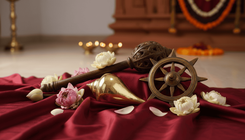
When you see an image of Vishnu, the preserver within the trinity of Brahma, Vishnu and Shiva, he always appears with four sacred objects in his hands. The conch shell (shankha), the discus (chakra), the mace (gada) and the lotus (padma) are not ornaments or accidents of artistic tradition. Each symbol carries profound meaning about Vishnu's nature and his role in protecting and sustaining all creation. Understanding what each object represents deepens how we experience devotion to him, whether in meditation, puja or simply looking at an image on the altar.



The Shankha: The Conch and Sound
The conch is one of the most recognisable of Vishnu's symbols. In temples and homes, you will hear it blown before many pujas and at auspicious moments. When Vishnu holds the shankha, it represents the primordial sound—the vibration from which all existence emerges. In Hindu philosophy, sound is not separate from creation itself; it is the first manifestation of the divine, the sacred "Om" taking tangible form.
The conch also stands for purification and protection. Its spiral shape, which appears throughout nature—in hurricanes, in the unfurling of a fern—mirrors the unfolding of the universe itself. When you hear the conch blown, that sound is said to dispel negativity and call forth auspiciousness. In Vishnu's hand, it represents his power to maintain cosmic order through this primordial vibration, keeping the universe aligned with dharma, or right action.
Beyond the cosmic, the shankha is also a vessel. In older rites, water collected in a conch shell and blessed is used as a purifying agent in homes and temples. By holding the shankha, Vishnu offers blessing and protection to those who call upon him.
The Chakra: The Discus of Power and Time
The discus or wheel (chakra) that Vishnu holds in one hand is his most formidable weapon. It represents his power to cut through ignorance and evil, but the chakra also symbolises something subtler: the cycle of time itself. The wheel has no beginning or end, just as creation is eternal and cyclical in Hindu cosmology.
The chakra embodies both protection and discipline. In warfare and mythology, Vishnu's chakra never misses its target. Symbolically, it teaches that the consequences of our actions—the fruits of karma—always return to us, and that justice and order will ultimately prevail. When you see Vishnu holding the chakra, you are looking at a reminder that nothing chaotic or unjust stands outside his sphere of influence.
The chakra also represents the eye of the divine—an all-seeing awareness that watches over the cosmos. It cuts through illusion and brings clarity. For someone practising devotion, meditating on the chakra can help quiet mental confusion and bring a sense of steadiness. Many people who wear the chakra symbol as jewellery or tilak do so to invoke this protection and clarity in their daily lives.
The Gada: The Mace and Strength
The mace or club (gada) that Vishnu carries represents his strength and his power to overcome obstacles. Unlike the chakra, which cuts through with precision, the gada is a tool of direct, overwhelming force. In myths and stories, when chaos threatens order, the gada comes into play.
The gada also symbolises the quality of steadfastness. It is solid, immovable, reliable—qualities Vishnu embodies as the sustainer. When trouble comes, the gada reminds us that Vishnu does not hesitate or doubt. He acts with conviction to restore balance. In rituals and prayers, people sometimes ask for the strength of Vishnu's gada—the courage to face difficulties with certainty rather than fear.
The mace also stands for the power of knowledge that destroys ignorance. Just as the gada strikes down an enemy, spiritual knowledge destroys the confusion and delusion that cloud the mind. By holding the gada, Vishnu shows he possesses both the intellect to understand what needs to change and the strength to make that change real.
The Padma: The Lotus of Purity and Beauty
In Vishnu's hand, the lotus flower (padma) is the symbol of absolute purity and grace. The lotus is one of the most beautiful and spiritually charged flowers in Indian tradition. It grows from mud and water—impure places—and yet emerges unstained, with petals of perfect beauty. This is why it appears again and again in Hindu, Buddhist and Jain imagery.
For Vishnu, the lotus represents his transcendence: he dwells in the world and sustains it, yet remains untouched by the chaos and suffering within it. The lotus teaches that spiritual development is possible for anyone, no matter what difficulties surround them. Just as the lotus rises from murky water to reach the sun, souls can rise toward the divine.
The padma is also the symbol of divine prosperity and abundance. Lakshmi, the goddess of wealth and fortune, is often shown holding lotuses. When Vishnu holds the lotus, it speaks to his capacity to bring beauty, grace and flourishing into the world. In meditation and puja, gazing at the lotus in Vishnu's hand reminds us that the divine does not withhold grace—it is always offered freely to those ready to receive it.
How These Symbols Work Together
The four symbols do not exist in isolation. Together, they tell a complete story of what it means to be Vishnu. The sound of the shankha calls out that the divine is present. The chakra ensures order and justice. The gada provides the strength to maintain it. And the lotus promises that this maintenance is offered with purity and grace, not tyranny.
When you encounter an image of Vishnu, you are seeing not just a deity but a statement about how the universe is sustained. Each hand, each object, invites you into a deeper understanding of protection, order and love. This is why people meditate on these symbols, why temples keep conch shells to sound at auspicious times, and why Vishnu's four attributes remain central to Hindu devotional practice across centuries and across the whole of India.
Common questions
Can I wear Vishnu's symbols as jewellery or tilak?
Yes. Many people wear the chakra symbol as a tilak on the forehead, or wear jewellery bearing the conch, chakra or lotus to invite Vishnu's protection and blessings into their day. The symbols are widely used in jewellery, pendants and bindi designs across India, and this is a common expression of personal devotion.
Do different temples show Vishnu's symbols in different ways?
Iconography can vary slightly by region and tradition. In most temples and images across India, Vishnu holds these four objects in his four hands, though the specific order or arrangement may differ. Some regional or sectarian traditions emphasise certain symbols more than others in their worship.
What happens if Vishnu is shown with different objects?
In rare or specific forms—such as in his ten avatars or divine incarnations—Vishnu or his forms may carry different weapons or symbols suited to the story and purpose of that particular manifestation. The four primary symbols of shankha, chakra, gada and padma remain the most universal representation of Vishnu in mainstream worship.

Related Articles


