
What Is Navami Havan and Why Is It Performed?
Fire, Blessing and Closure on Navratri's Final Day

Aditya Pandey
18 Oct 2026 • 9min
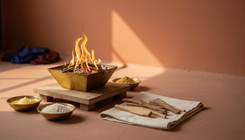
Navami Havan is the fire ritual performed on Navami, the ninth lunar day and final day of Navratri, usually in the morning as the festival draws to a close. It is a havan or homa - a sacred fire ceremony in which offerings are made to the divine through flames - carried out to seek blessings, give thanks and ritually complete the nine days of worship. For many families and temples, this havan is the formal ending of Navratri, marking the transition from intense devotion to everyday life with the grace of the Goddess.
The havan is central to Vedic practice, and Navami Havan sits within that tradition. It is performed to fulfil the vows taken during Navratri, to invite the Goddess's protection into the home for the year ahead, and to purify the space and the people who have observed the festival. The havan brings the nine days of devotion to a collective close. In many parts of India, temples perform a communal Navami Havan where devotees gather to participate together, making it a shared moment of completion. Many families perform the closing havan on Ashtami, the eighth day, instead of Navami, according to their family tradition.



The Significance of Navami in Navratri
Navami, the ninth lunar day, holds particular weight in the Navratri story. It is the day associated with Siddhidatri, the form of the Goddess who bestows all perfections and spiritual achievements. Some traditions also mark it as the culmination of the victory of Durga over the buffalo demon Mahishasura, when the divine triumph is acknowledged and celebrated with gratitude. By performing havan on this day, worshippers invite those blessings of victory, perfection and spiritual fulfilment into their lives.
In much of North India, Navami Havan is closely followed by Kanya Puja, also known as Kanjak, in which young girls are worshipped and fed as living forms of the Goddess. After the havan and Kanya Puja, many devotees break their Navratri fast. In the southern tradition, especially in Tamil Nadu, Karnataka, Andhra Pradesh and Kerala, Navami is celebrated as Ayudha Puja, the worship of tools, vehicles, instruments and weapons, and often also as Saraswati Puja, when books and musical instruments are honoured. Golu, the display of dolls representing the divine, is kept throughout the nine days of Navratri in many South Indian homes. In Bengal, the Navami Homa is an important rite of Maha Navami during Durga Puja. Whether north, south or east, the havan performed on this day carries the weight of all nine days' devotion and channels it into a final offering to the sacred fire. Navami is the day when Navratri moves from being lived to being completed.
The Purpose and Benefits of the Havan
The havan is performed for several reasons, each grounded in both spiritual belief and ritual practice. The act of making offerings into fire - ghee, grains, herbs and fragrant materials - is believed to carry those offerings directly to the divine realm, with Agni, the fire deity, acting as the messenger between humans and the gods. As the materials burn, they are transformed, carrying the intentions of the worshipper upward.
Navami Havan is specifically performed to seek the Goddess's continued protection throughout the year, to give thanks for her presence during the nine days of Navratri, and to ensure the household remains blessed. Many families also use the havan as an opportunity to release what no longer serves them - to ask for obstacles to be removed and for a fresh start as the festival ends.
The ritual also aims to purify the space where it is performed and everyone present. Traditionally, the fragrant smoke from the havan - from ghee, guggul, camphor and herbal samagri - is believed to cleanse the environment. The sound of the mantras chanted during the havan and the concentration of many people's devotion in one place is believed to create an atmosphere of sanctity and strength.
How Navami Havan Is Conducted
The structure of a Navami Havan follows traditional havan vidhi, or procedure, though the exact format can vary by region and by the sampradaya or tradition observing it. The havan usually begins with the invocation of Agni, the fire deity, and then proceeds with the offering of materials into the fire while mantras are chanted. During Navratri, offerings are often made while reciting verses from the Durga Saptashati, also known as the Chandi Path, or while chanting the Navarna mantra of the Goddess: "Om Aim Hreem Kleem Chamundayai Vichche." Each offering is completed with the word "Swaha." In South India, the Goddess's fire ritual is often performed as the Chandi Homam.
A typical havan uses a havan kund - a fire pit or vessel made of copper, brass, iron, brick or clay - placed on a stable base and filled with sacred wood, called samidha, which is then lit. Mango wood is commonly used, along with other traditional woods such as palash, peepal or khair. Around this central fire, offerings of ghee and havan samagri - a mixture typically including til (sesame seeds), jau (barley), rice, guggul, loban, camphor, sugar or jaggery, and dried herbs - are made in sequence. Each offering is accompanied by chanting, either led by a priest or by the family members gathered. The person performing the havan or the head of the household usually leads the offerings, while others may participate in the chanting. The havan concludes with the Purnahuti, the final and complete offering, often a dry coconut filled with ghee and samagri, placed into the fire to mark the fulfilment of the ritual.
In temples, the Navami Havan is often more elaborate, with multiple priests and elaborate arrangements. In homes, families perform a simpler version but with the same intention and respect. Some households invite a priest to guide the havan, while others who are familiar with the practice perform it themselves. The havan is typically done in the morning while the Navami tithi is in effect, when the mind is calm and the atmosphere is considered most receptive to ritual. Your local panchang will give the timings of the Navami tithi for your area.
Regional Variations in Navami Havan
The way Navami Havan is observed differs across India and among different communities. In north India, particularly in states like Delhi, Uttar Pradesh, Madhya Pradesh, Punjab and Himachal Pradesh, the havan is a central ritual of Navratri's closing, usually followed by Kanya Puja. In Gujarat, where Navratri is celebrated with Garba and Dandiya, the communal havan often takes place in temples and community spaces, with hundreds of devotees participating. In Bengal, the Navami Homa forms part of the Maha Navami rituals of Durga Puja.
In the south, especially in temples dedicated to Durga or Devi, the Navami fire ritual is often performed as a Chandi Homam as part of a larger temple celebration, sometimes followed by the distribution of prasad - blessed food - to all present. In some regions, the havan is performed not just on Navami but also on Dussehra, the day after the ninth lunar day concludes, extending the ritual cycle of closure.
Certain sampraday or spiritual lineages have their own specific mantras and procedures for the Navami Havan. What unites all these variations is the core purpose: to complete Navratri with gratitude, to invoke blessings, and to transition consciously from the festival back into daily life.
Preparing for and Participating in Navami Havan
If you are planning to participate in or perform a Navami Havan, preparation usually begins a day or two before. The space where the havan will be performed should be clean and free from clutter. The materials needed - samidha (mango or other sacred wood), ghee, havan samagri, til, jau, rice, camphor and a dry coconut for the Purnahuti - should be gathered in advance. If you are unfamiliar with the ritual, it helps to either learn from someone experienced or invite a knowledgeable priest to guide you.
On the day itself, it is customary to bathe before the havan and to wear clean clothing. If possible, observe some silence or inward focus in the hours before the ritual. When the havan begins, approach it with sincerity rather than concern for perfect execution. The intention and devotion matter far more than flawless technique. If you are gathering family members or friends, explain to them what the havan represents so that everyone can participate with understanding.
The havan need not be long - even twenty to thirty minutes of sincere offering and chanting fulfils the purpose. When it concludes, the ashes from the havan are usually collected and can be kept in the home or scattered respectfully, often in a garden or near a water source. Some families carry the ashes to a temple or river. This too is part of the ritual's completion: the return of the offering to the earth or water.
Perform a Home Navami Havan
Prepare the space and materials Clean the area where you will perform the havan. Arrange a havan kund on a stable, fire-safe platform. Gather mango wood or other samidha, ghee, havan samagri, til, jau, rice, camphor and a dry coconut for the final offering. Keep all materials within easy reach before you begin.
Bathe and dress mindfully Bathe and wear clean clothing before the ritual. If possible, observe quiet time or light meditation in the hour before to settle your mind and intention. Invite any family members who will participate to do the same.
Light the fire and invoke Agni Carefully light the wood inside the havan kund, using camphor to help it catch. Once the fire is established, ring a bell or chant to invoke Agni, the fire deity, and greet the sacred fire. You may chant a simple invocation or the Gayatri Mantra.
Make offerings into the fire Offer a little ghee and a small pinch of samagri into the fire with each mantra, completing every offering with the word "Swaha." You may recite verses of the Durga Saptashati, chant the Navarna mantra, or simply repeat a mantra of the Goddess with gratitude or intention. Continue for ten to twenty minutes, maintaining a steady rhythm.
Offer the Purnahuti and close the ritual Conclude with the Purnahuti, placing a dry coconut filled with ghee and samagri into the fire as the final offering. Then chant closing mantras or simply sit in silence with the fire. You may say a personal prayer or intention. Ring the bell once more to mark the completion. Many families then perform Kanya Puja and break their Navratri fast.
Collect and respectfully dispose of ashes Once the fire has cooled completely, carefully collect the ashes in a cloth or container. Keep them, scatter them in a garden or natural space, or carry them to a temple or river to release them.
Common questions
What day is Navami Havan performed?
Navami Havan is performed on Navami, the ninth lunar day (tithi) of Navratri, usually in the morning while the Navami tithi is in effect. Because tithis do not align exactly with solar days, Navratri can occasionally last eight or ten days, so Navami does not always fall on the ninth calendar day of the festival. In 2026, most calendars place Navami on Monday, 19 October, while Bengal's Durga Puja calendar observes Maha Navami a day later. Many families also perform the closing havan on Ashtami instead, according to their tradition.
Can I perform Navami Havan at home without a priest?
Yes, families who are familiar with the ritual can perform a simplified Navami Havan at home. If you are new to the practice, it is helpful to invite a knowledgeable priest to guide you the first time or to learn from someone experienced in your family or community.
What should I do with the havan ashes after the ritual?
The ashes are traditionally kept, scattered in a garden, or taken to a river or temple. Some families scatter them respectfully in a natural space or keep them in the home as a blessed reminder of the ritual completed.

Related Articles


