
What is an Akhand Jyot, and why is it kept burning during worship?
Light that never wavers, faith that burns eternal

Aditya Pandey
20 Nov 2026 • 7min
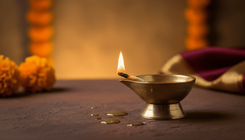
An akhand jyot is a lamp kept burning without interruption, either throughout a puja ceremony or continuously for a set period of time. The name comes from two Sanskrit words: akhand, meaning unbroken or undivided, and jyot, meaning light or flame. It represents an uninterrupted flow of devotion and divine presence. When you keep an akhand jyot burning during worship, you are making an offering of light itself to the divine—a gesture that carries deep meaning across Sanatan Dharma.



The meaning of light in Hindu worship
Light holds a central place in Hindu spirituality. It is not merely a physical element but a symbol of knowledge, consciousness and the divine. When we light a lamp during puja, we are acknowledging the presence of the sacred in our lives and inviting that presence into our space. The lamp dispels darkness, just as spiritual knowledge removes ignorance. In the Upanishads, the divine is described as the light of all lights, and the individual soul is understood as a reflection of that eternal light. By keeping a light burning, you are not performing a transaction with the divine—you are creating an atmosphere of devotion and mindfulness in which both the worshipper and the space are transformed.
The flame of a lamp is believed to carry prayers and intentions upward. As the lamp burns, it consumes itself in an act of surrender, much like the spiritual seeker surrenders the ego to reach the divine. For this reason, the lamp is one of the five elements traditionally offered in puja, alongside water, flowers, incense and food.
Why an akhand jyot specifically
An akhand jyot differs from an ordinary lamp lit during puja because it does not go out. Its continuous burning emphasises constancy and unwavering faith. In many households and temples, an akhand jyot is kept burning for the duration of a vrat (vow or fast) or a spiritual observance, or sometimes for weeks or months as part of a family's practice. Some families maintain an akhand jyot year-round, treating it as a permanent expression of their relationship with the sacred.
The unbroken flame also represents continuity—the idea that devotion is not something that begins and ends with a single worship session, but rather forms a continuous thread through daily life. When you keep a lamp burning, you are declaring that worship does not stop when you step away from the altar. The light continues through the night, through the hours when you sleep, carrying your intentions forward even when you are not consciously engaged in prayer.
In many traditions, if an akhand jyot goes out unintentionally, it is relighted immediately without any sense of failure or ritual impurity. The intention and continuity of purpose matter more than absolute perfection. If the lamp is allowed to go out deliberately or through genuine carelessness, many families relight it as a fresh start, renewing their commitment to the practice.
How akhand jyot is kept burning
An akhand jyot is traditionally maintained using a deepak (lamp) with oil and a wick. The most common choice is ghee or coconut oil, both of which burn steadily. Some people use sesame oil or neem oil. The type of oil chosen often depends on family tradition, regional practice and what is available. The wick is usually made from cotton, rolled tightly so that it draws fuel up evenly and burns without excessive smoke.
The lamp is placed in a safe, sheltered location where it will not be knocked over or exposed to strong drafts that could extinguish it. Many people keep their akhand jyot in a puja room or on a household altar. Some traditions use a brass lamp with multiple wicks, which can burn longer before needing more oil. Others use a simple earthen deepak, which is replaced as needed.
The lamp needs regular attention: checking that there is enough oil, trimming the wick so it does not produce excessive smoke, and ensuring the flame is upright and steady. Some families assign one person to care for the akhand jyot as an act of seva (service). This regular tending becomes a form of meditation in itself—a small, repeated gesture that keeps the practice alive in daily consciousness.
Regional and sectarian variations
The practice of maintaining an akhand jyot appears across different regions and spiritual traditions within Hinduism, though the specifics vary. In many Shakti traditions, an akhand jyot is kept burning during the nine days of Navaratri as an offering to the divine feminine. In some Vaishnava families, it forms part of daily worship of Krishna or Vishnu. Shaiva practitioners may keep an akhand jyot as an expression of devotion to Shiva.
In some families, the akhand jyot is lit for specific purposes: to mark the birth of a child, during a period of illness or challenge, or throughout a vrat undertaken for a particular intention. Others maintain one year-round as a steady expression of their spiritual commitment. The reasons for keeping an akhand jyot are as varied as the families who practice it, but the underlying intention remains constant—an unbroken offering of light and devotion.
The spiritual benefit of tending the lamp
Keeping an akhand jyot alive requires mindfulness. Each time you tend to it, checking the oil, adjusting the wick or simply pausing to watch the flame, you are brought back to your spiritual practice. In a household full of distractions, the small routine of caring for the lamp becomes an anchor. It is a reminder that spiritual life is not confined to formal worship time, but woven through the texture of daily living.
The flame itself becomes a focal point for meditation. Trataka, the yogic practice of gazing at a single point, is traditionally performed by looking at a candle flame or lamp. As you watch an akhand jyot burn, your mind naturally settles. The gentle, rhythmic movement of the flame quiets restlessness and draws attention inward. For this reason, many people find that simply sitting with an akhand jyot for a few minutes each day, whether in formal meditation or simply as a pause in their day, brings a sense of peace and stability.
Common questions
Can an akhand jyot go out, and does it ruin the practice?
If an akhand jyot goes out unintentionally, you simply relight it immediately. There is no ritual impurity or failure. If you choose to let it go out deliberately, many families relight it as a fresh start and renewing of their spiritual commitment. The intention and continuity of purpose matter more than absolute perfection.
Which oil is best for keeping an akhand jyot burning?
Ghee and coconut oil are the most common choices and burn steadily for long periods. Sesame oil and neem oil are also used in different traditions. The choice often depends on family practice, regional custom and what is available to you. Any of these will work well for an unbroken lamp.
How long does an akhand jyot typically burn?
An akhand jyot may burn for the duration of a puja ceremony, throughout a vrat or spiritual observance, or continuously for weeks or months as part of family practice. Some families maintain one year-round as a permanent expression of devotion. The duration depends entirely on your intention and what your practice calls for.

Related Articles


