
What Char Dham Means: The Four Sacred Pilgrimage Sites of India
Four temples, four directions, one spiritual journey

Abhilash Ramakrishna
20 Nov 2026 • 7min
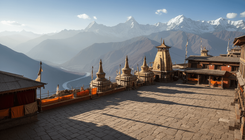
Char Dham means "four abodes"—four of the holiest pilgrimage destinations in Hinduism, each located in a different direction across India. These four temples are Badrinath in the north, Dwarka in the west, Puri in the east, and Rameswaram in the south. Together they form a pilgrimage circuit that devotees undertake to seek moksha, liberation from the cycle of birth and death. The Char Dham is not a single journey you can complete in one trip: each temple is a major pilgrimage in itself, separated by vast distances and the geography of India's landscape.
The significance of these four sites lies in their connection to different aspects of Hindu dharma and devotion. Each temple is associated with a different deity and different spiritual teachings. Pilgrims visit not because they must do all four in sequence, but because each one holds particular meaning in their own spiritual practice. Some undertake the full circuit once in their lifetime; others visit individual sites repeatedly over many years. There is no prescribed order, and no single "correct" way to be a Char Dham pilgrim.



Badrinath: The Northern Shrine
Badrinath sits high in the Himalayas in Uttarakhand, dedicated to Vishnu. The temple stands at the source of the Alaknanda River, one of the tributaries of the Ganges, in a landscape of snow-capped peaks and alpine meadows. The name itself means "abode of berries"—in ancient times, the site was surrounded by wild berries that sustained pilgrims on their journey.
The temple is associated with the teaching of Advaita Vedanta, the non-dual philosophy, and with the sage Shankara who is believed to have meditated there. Pilgrims come to Badrinath to seek spiritual enlightenment and connection to the sacred geography of the Himalayas. The journey itself is challenging: the high altitude, the mountain passes, and the short pilgrimage season (typically between May and October, when snow clears the high passes) mean that visiting Badrinath is itself a form of tapasya, spiritual discipline.
The temple remains closed during winter months due to heavy snowfall, which is why the pilgrimage season is limited. This cycle of opening and closing has shaped the practice around the site for centuries. Pilgrims plan their visits carefully, often combining Badrinath with nearby sacred sites like Auli and Chopta.
Dwarka: The Western Gateway
Dwarka stands on the coast of Gujarat in western India, dedicated to Krishna. According to tradition, Krishna established his kingdom in Dwarka after leaving Mathura, making it one of the sacred cities most closely associated with Krishna's life and teachings. The temple faces the Arabian Sea, and the landscape of Dwarka is shaped by the ocean and the tidal patterns of the coast.
Dwarka represents devotion through bhakti, the path of emotional connection and love for the divine. Pilgrims come to feel the presence of Krishna and to engage in devotional practices rooted in Krishna's life story. The city itself is considered one of the four cardinal sacred sites established by Shankara to anchor the spiritual practice of Hinduism across the four directions.
The journey to Dwarka often involves crossing the Kutch region and engaging with the desert landscape of Gujarat. Many pilgrims combine Dwarka with visits to nearby sacred sites, making it part of a longer circuit through western India. The local temple traditions and festivals here reflect the deep roots of Krishna bhakti in Gujarat's religious life.
Puri: The Eastern Temple
Puri, located on the coast of Odisha on the eastern coast of India, is home to the Jagannath Temple, one of the four major pilgrimage sites in the Hindu tradition. The temple is dedicated to Jagannath, a form of Krishna, and is known for the Rath Yatra festival, where enormous wooden chariots carrying the deity are pulled through the streets by thousands of devotees.
Puri represents the path of karma and seva, selfless service. The temple has a long tradition of inclusive worship and has historically welcomed pilgrims from all backgrounds. The pilgrimage to Puri is often undertaken during the Rath Yatra festival, though devotees visit throughout the year. The eastern location of Puri in the Char Dham circuit completes the spiritual geography of India.
The temple's practices and rituals have been maintained for centuries, and the city of Puri itself has grown around the spiritual energy of the Jagannath Temple. Pilgrims experience the vibrant devotional culture of Odisha, with its distinct regional practices and traditions.
Rameswaram: The Southern Shore
Rameswaram lies on an island off the southern coast of Tamil Nadu, dedicated to Shiva in the form of the Ramanatha Lingam. The temple is strongly associated with Rama, the avatar of Vishnu, who is believed to have worshipped at this lingam after returning from Lanka in the Ramayana. The site sits between the Indian Ocean and the Palk Strait, surrounded by the sea on three sides.
Rameswaram represents the path of bhakti through devotion to Rama and to Shiva. The temple is famous for its long corridors and intricate stone carvings that reflect the artistic traditions of Tamil Nadu. The pilgrimage to Rameswaram often includes ritual bathing in the sacred waters, drawing on the sanctity of the ocean and the site's association with Rama's journey.
The southern location of Rameswaram completes the circle of the Char Dham across India's four directions. Many pilgrims undertake the journey to Rameswaram as a final destination, seeing it as the culmination of their spiritual practice.
The Pilgrimage as Spiritual Practice
The Char Dham is not primarily about checking off four temples. It is about undertaking a physical and spiritual journey across the landscape of India, visiting places where generations of devotees have sought moksha and connection to the divine. Each temple draws pilgrims for different reasons: some come for the specific deity, some for the spiritual philosophy associated with the site, some for the blessing of completing the circuit, and some simply because they feel called to that particular place.
The distances between the four temples mean that most pilgrims do not complete all four in a single year or even in a single lifetime. This is not a failure. The pilgrimage is understood as a practice that unfolds over time, in step with a person's own spiritual journey. Some pilgrims make the circuit once; others make it many times. Some visit only one or two of the four, focusing their devotion on a particular deity or philosophy.
The Char Dham represents a deep structure in Hindu spirituality: the idea that the sacred is present across all of India's geography, and that pilgrimage to these places—undertaken with intention and devotion—is a path toward spiritual freedom. Whether you are planning a pilgrimage or simply wanting to understand this tradition, knowing what Char Dham means is an entry point into the broader landscape of Hindu devotion and practice.
Common questions
Can I visit all four Char Dham temples in one trip?
Most pilgrims do not complete all four in a single journey, as they are separated by vast distances across India's four directions. Some devotees make the circuit over several years or multiple visits. There is no prescribed timeline—the pilgrimage unfolds according to each person's own spiritual practice.
Do I have to visit the Char Dham temples in a specific order?
No. There is no required order for visiting the four temples. Pilgrims visit them based on personal devotion, convenience and spiritual calling. Some focus on one or two temples repeatedly rather than attempting all four.
When is the best time to undertake a Char Dham pilgrimage?
Badrinath, in the north, has a limited pilgrimage season from May to October due to heavy winter snowfall. The other three temples—Dwarka, Puri and Rameswaram—can be visited year-round, though many pilgrims undertake the full circuit during the warmer months or during major festivals like Rath Yatra at Puri.

Related Articles


