Vrikshasana
Rooted in Strength, Rising in Balance
Shanti Arunkumar
23 Jul 2025 • 6min
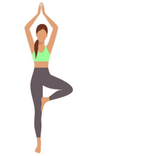
“Like a tree, find your roots. Then rise.”
In a world of constant movement and noise, balance becomes a rare treasure. We find ourselves rushing from one thing to another, rarely stopping to notice our body’s posture, our breath, or the quiet instability that creeps into our physical and emotional lives. Vrikshasana, or Tree Pose, is a timeless yogic posture that brings us back to stillness and centeredness. It is a simple yet profound way to train the body, mind, and breath to stand steady, grounded, and tall—like a tree.
Balance is often mistaken for stillness, but it’s actually a dynamic process. Even when you appear unmoving in Tree Pose, hundreds of small muscles are firing, your brain is working to stabilize you, and your breath is feeding the body with focus and poise. Practicing Vrikshasana regularly builds neuromuscular coordination, improves posture, and cultivates inner stillness that radiates throughout your day.
At the heart of Vrikshasana is the idea that true balance starts within—when we align ourselves physically, emotionally, and mentally. It doesn’t matter if you wobble or fall out of the pose; what matters is that you root yourself again, just like a tree stands tall even after a storm.
How to Practice Vrikshasana
Preparation:
- Begin in Tadasana (Mountain Pose)—feet together, arms by your side, gaze soft.
- Breathe deeply and evenly, connecting to the ground beneath you.
Steps:
- Shift your weight gently onto your left foot.
- Bend the right knee, lifting the foot and placing it on the inner left thigh or calf (avoid placing it on the knee joint).
- Fix your gaze on a non-moving point (drishti) in front of you to help maintain balance.
- Bring your palms together in Namaste at your heart center.
- Once stable, raise your arms overhead if comfortable, either joined or shoulder-width apart.
- But, if difficult to balance, you can still stand in the same position, with the namaskar mudra against your diaphragm, without raising the hands above your head.
- Keep your core gently engaged, shoulders relaxed, and breathe slowly.
- Stay in this position for 30 seconds to 1 minute, then slowly return to the starting position.
- Repeat the process on the other side.
Benefits of Vrikshasana
- Strengthens leg muscles including thighs, calves, and ankles.
- Improves neuromuscular coordination, helping with body awareness and control.
- Enhances concentration and focus through steady breath and visual fixation.
- Aids in building core stability and spinal alignment.
- Helps alleviate mild sciatica and improves hip flexibility.
- Cultivates a sense of inner calm by reducing mental chatter.
- Promotes postural awareness, helping in correction of habitual imbalances.
- Boosts confidence by fostering a sense of mastery through sustained balance.
Contraindications
- Avoid this pose if you have vertigo, balance disorders, or neurological issues without support.
- Do not practice if you have severe ankle, knee, or hip injuries.
- People with low or high blood pressure should avoid raising their arms overhead.
- If pregnant, do this pose with wall support or under professional guidance.
Pros of Vrikshasana
- Simple to perform, requires no props or elaborate setup.
- Highly effective in strengthening stabilizing muscles often neglected in daily life.
- Teaches mindful breathing and builds patience.
- Enhances equilibrium, making everyday movements like walking or climbing stairs easier and safer.
- Promotes a meditative state through mental discipline and stillness.
Cons of Vrikshasana
- May be frustrating initially for those with poor balance or low concentration.
- Risk of strain or falls if done without warm-up or awareness, especially for seniors.
- Can exacerbate joint pain if done incorrectly or with poor alignment.
- Requires a quiet environment for best results—may be hard to practice in noisy or distracting settings.
Grow Through Stillness
Balance isn’t the absence of movement—it’s the quiet conversation between sway and stability. Vrikshasana (Tree Pose) reminds us of that every time we plant one foot and feel subtle tremors ripple up the standing leg. Those micro-adjustments awaken dormant muscles in the ankles, knees, and hips, training the body to meet life’s unexpected nudges with calm strength.
Rooting the foot presses the earth’s energy up through the arches, calves, and powerful quadriceps; drawing the belly inward hugs the spine, and lifting the heart broadens the collarbones—anatomy and intention entwined. Meanwhile, the gaze fixes on a single still point (a drishti), teaching the mind to filter out the day’s chatter just as leaves filter harsh sunlight.
Metaphorically, Tree Pose is an everyday rehearsal for resilience:
Storms: When your arms waver overhead, imagine gusty winds of deadlines, traffic, or doubt. The pose trains you to sway without snapping.
Seasons: Some days the foot slides; other days it feels glued. Trees don’t judge their own growth rings, and you needn’t judge yours either.
Community: In forests, roots interlace beneath the soil, sharing nutrients and support. Practising Vrikshasana in a class reminds us that personal balance flourishes in collective energy.
To deepen the experience, try these playful variations:
Closing the eyes for three breaths—suddenly the internal stabilisers come alive.
Cactus arms instead of prayer hands—opening the chest amplifies confidence and lung capacity.
Twisted branches—gently rotate the torso to one side, broadening the rib cage and massaging the digestive organs.
Carry the lesson off the mat: pause at a red light, feel both feet, lengthen the spine, breathe slowly—mini-trees sprouting in urban chaos.
So when life tugs you in a hundred directions, step onto your mat, lift your arms, and become a tree: grounded yet ever-growing, steady yet supple. Let your balance be a quiet rebellion against the noise, and remember—every mighty neem or peepal began as a patient seed. Plant yours today, tend it daily, and watch stillness bloom into strength.

Related Articles