
Vivah Panchami: The Wedding of Rama and Sita
When Two Lives Became One

Kushal K
21 Oct 2026 • 7min
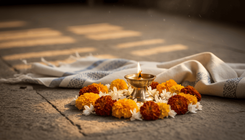
Vivah Panchami celebrates one of the most cherished moments in Hindu tradition: the wedding of Rama and Sita. On this day, devotees across India commemorate their marriage, which took place in the kingdom of Mithila during the Tretayuga. The word vivah means wedding, and panchami refers to the fifth day of the lunar fortnight. This festival falls in the month of Kartik, usually in November or December depending on the lunar calendar, and is observed with prayer, fasting and the exchange of sweets.
The story of Rama and Sita's wedding is not merely a historical event but a sacred narrative that has shaped Hindu thought about dharma, duty and devotion for thousands of years. Their union represents the ideal marriage, bound by mutual respect, righteousness and love. For many, Vivah Panchami is a day to reflect on these values and to honour the couple whose lives gave meaning to them.



The Story of Sita's Swayamvar
King Janaka of Mithila sought a worthy husband for his daughter Sita. Rather than arrange a marriage through traditional means, he held a swayamvar, a ceremony in which a bride chooses her own husband from among assembled suitors. Kings and princes from many lands came to Mithila, each hoping to win Sita's hand.
Janaka set a test: any suitor who could string the bow of Shiva would win Sita. This was not an ordinary bow. It was so mighty that even great warriors could not lift it, let alone draw its string. One by one, kings and princes tried and failed. The bow remained untouched, unstrung, impervious to their strength.
Then Rama arrived at the swayamvar. He was an exile at the time, living in the forest with his brother Lakshman and their guru Vishvamitra. Though he came as a guest rather than a suitor, his presence changed everything. When Rama stepped forward to try the bow, something extraordinary happened. He lifted it effortlessly, strung it with grace and drew the string so powerfully that the bow broke. Sita, moved by his strength and dharma, placed a garland around his neck. By this act, she had chosen him.
The swayamvar was not simply about physical strength. It was a test of worthiness, of the virtue and power needed to support a wife and uphold righteousness. When Rama succeeded where others failed, he proved that he possessed the qualities Sita's father wished for her. More importantly, Sita chose him freely, exercising her own will and judgment. This choice was central to their union.
The Wedding Ceremony and Significance
Vivah Panchami marks the actual wedding day. The ceremony took place with elaborate rituals that honoured both families and invoked the blessings of the gods. Janaka, though delighted by Sita's choice, insisted on conducting the marriage according to Vedic rites. Sage Vasishtha, Rama's family priest, performed the sacred rituals.
The wedding of Rama and Sita was not an ordinary event. It was the union of two beings of extraordinary virtue. Rama is worshipped as Vishnu incarnate, the embodiment of dharma. Sita is revered as Lakshmi incarnate, the embodiment of abundance, grace and devotion. Their marriage represented the coming together of the divine masculine and divine feminine principles. In this sense, Vivah Panchami is a celebration not just of a historical marriage but of a sacred cosmic union.
For householders, the marriage of Rama and Sita provides a model of dharma in relationships. Rama upheld his duty to his parents and to his kingdom. Sita followed her husband with unwavering devotion, accompanying him into exile and enduring trials that tested her virtue. Their relationship was not sentimental but rooted in shared commitment to righteousness. Vivah Panchami reminds devotees of these ideals, especially for those celebrating marriage or reflecting on its meaning.
How Vivah Panchami Is Observed
Different regions of India observe Vivah Panchami with their own customs, but common threads run through most celebrations. Many people fast on this day, either partially or fully, and break their fast with sweets and prasad, food blessed as an offering to the divine. In temples, special prayers are offered to Rama and Sita, and the story is often recited or sung.
In some parts of North India, particularly in Rajasthan, Vivah Panchami is marked with fairs and processions. Images of Rama and Sita are carried through the streets, and devotees dress in festive clothes. In temples in Varanasi and other holy cities, the day is commemorated with elaborate rituals. In South India, while the festival is less widely observed as a major event, many devotees still mark it with prayer and puja, worship.
Many families light lamps and prepare sweets at home. Some recite passages from the Ramayana, the ancient epic that tells Rama's story, especially the sections that describe the swayamvar and wedding. This is also a day when many people visit temples dedicated to Rama, offering flowers and prayers. The festival creates a moment to pause and reflect on what Rama and Sita's marriage means: the joining of duty and love, strength and grace, commitment and devotion.
The Deeper Meaning of Their Marriage
The marriage of Rama and Sita was not depicted in the Ramayana as a tale of romance, though affection clearly existed between them. Instead, it was presented as a dharmic bond, a partnership rooted in righteousness and mutual respect. Both were willing to sacrifice everything for duty. Rama set aside his claim to the throne when his father asked it of him. Sita willingly followed him into forest exile rather than remain in comfort without him.
This willingness to prioritise dharma over personal comfort is what makes their union exemplary. In the forest, Sita faced trials of loneliness and danger. She was eventually kidnapped by the demon king Ravana, an event that set in motion the great war described in the Ramayana's later sections. Throughout these ordeals, both Rama and Sita remained steadfast to their principles. Sita never wavered in her devotion to Rama, and Rama never abandoned his duty to rescue her.
For devotees who observe Vivah Panchami, the festival is an opportunity to honour these ideals. It is a time to acknowledge that the most meaningful relationships are those built on shared commitment to what is right, not merely on personal pleasure or comfort. The marriage of Rama and Sita, in this sense, transcends time and place. It speaks to something universal about human dignity, duty and the possibility of enduring partnership.
Common questions
When is Vivah Panchami celebrated in 2026?
Vivah Panchami is observed on the Panchami (fifth lunar day) of the Kartik month, which typically falls between November and December. The exact date shifts each year according to the lunar calendar, so you can check a panchanga or Hindu calendar to find the specific date for 2026.
Why did Sita choose Rama at the swayamvar?
Sita chose Rama because he alone could string and draw Shiva's bow, proving his exceptional strength and virtue. In a swayamvar, the bride's choice was based on the suitor who demonstrated the worthiness and dharma needed to be a righteous husband and protector.
How is Vivah Panchami observed differently across India?
In North India, particularly Rajasthan, Vivah Panchami involves fairs, processions and public celebrations. In South India, the festival is observed more quietly in temples with prayer and puja. Across most regions, fasting, preparing sweets and visiting temples are common practices.

Related Articles


