
Viruddha Ahara: Understanding Incompatible Foods in Ayurveda
Eating Well with Foods That Work Against You

Abhilash Ramakrishna
10 Nov 2026 • 7min
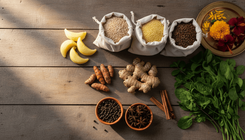
Viruddha ahara is an Ayurvedic concept describing foods that are fundamentally incompatible with each other. When eaten together, they weaken your digestive fire (agni), create toxins (ama), and disturb the balance of the three doshas. This is not about personal preference or mild discomfort: Ayurveda sees certain food combinations as actively harmful to health over time. Understanding which foods clash and why helps you protect your digestion and build lasting wellness.
The principle rests on the idea that every food carries particular qualities: temperature, taste, weight, how quickly it digests. When you combine foods with opposing qualities, your digestive system becomes confused. It cannot process them efficiently, and undigested food turns into toxins that accumulate in the tissues. This is why two wholesome foods eaten separately might be damaging together.



The Eight Types of Viruddha Ahara
Ayurvedic texts classify incompatible foods into eight categories, each describing a different kind of mismatch.
Krama viruddha (incompatibility of sequence) happens when you eat in the wrong order. Ayurveda teaches that you should eat lighter foods first, then heavier ones, so your digestive power can handle each stage. Eating heavy food before light food reverses this, taxing the digestive fire before it has settled.
Desha viruddha (incompatibility with place) means eating foods unsuited to your climate or season. In winter, warming and nourishing foods support health; in summer, cooling foods are needed. Eating heavy, warming foods in hot weather, or cold, drying foods in cold weather, creates imbalance.
Kala viruddha (incompatibility with time) refers to eating foods at the wrong time of day or year. Heavy foods eaten at night, when digestive power is lower, are harder to process. Similarly, foods suited to one season become incompatible when eaten in another.
Agni viruddha (incompatibility with digestive capacity) occurs when your digestive power is already weak and you eat something difficult. A person with low agni eating raw, cold or oily food compounds the problem.
Matra viruddha (incompatibility of quantity) happens when you eat too much of a good food. Even a wholesome food becomes toxic in excess, especially when combined with other ingredients.
Satmya viruddha (incompatibility with constitution) means eating food your body is not accustomed to. Someone raised on a light vegetarian diet eating large quantities of meat, or vice versa, may experience incompatibility even if the food is good for others.
Dosha viruddha (incompatibility with the doshas) occurs when a food exacerbates a dosha that is already elevated. Eating warming, oily food when pitta is high increases imbalance.
Veerya viruddha (incompatibility of potency) happens when foods have opposing energetic effects. Combining heating and cooling foods that actively oppose each other creates internal conflict rather than balance.
Common Examples of Incompatible Combinations
Many everyday food pairings fall into viruddha ahara. Understanding them helps you make small changes with real impact on digestion.
Fish and milk together are classically incompatible. Both are heavy, both build tissues, and their combined weight overwhelms most digestive systems. Ayurveda especially cautions against yoghurt and fish, as the sour and cooling properties of yoghurt conflict with fish's oily heaviness.
Fruit and milk are often mixed in modern diets as smoothies and lassis, but Ayurveda sees them as antagonistic. Fruit digests quickly; milk digests slowly. Eaten together, the fruit ferments while waiting for the milk to digest, creating ama.
Honey and ghee in equal proportions are considered incompatible. Honey is heating and drying; ghee is cooling and oiling. Mixed together, they create a toxic combination that poisons the tissues. However, ghee and honey can be used together in unequal measures—honey should not exceed the amount of ghee.
Radish and milk are another common clash in Indian cuisine. Radish is sharp, pungent and helps move stagnant food through the system; milk is heavy and nourishing. Together they confuse digestion.
Melons with other foods are problematic because they digest quickly on their own. When mixed with slower-digesting foods, they ferment and create gas. Eating melons separately, finished at least 15 to 20 minutes before other food, is the Ayurvedic approach.
Why These Combinations Matter
The consequences of regular viruddha ahara are subtle at first but accumulate over time. You might feel bloating, gas or heaviness after meals. Your energy dips. Your skin becomes unclear. You gain weight despite eating wholesome food. These are all signs that ama is building in your system.
Over years, ama clogs the channels that carry nutrients and carry waste. This blockage is how Ayurveda explains many chronic conditions: sluggish digestion, food sensitivities, skin conditions, joint stiffness. None of it happens overnight, but poor food combinations are a reliable way to create the underlying toxicity.
This is also why viruddha ahara affects people differently. Someone with naturally strong digestion might tolerate fish and milk without obvious harm, at least for a time. Someone with weak digestion or high vata and pitta will notice symptoms immediately. Your constitution, season, age and current state of health all matter.
Practical Approaches to Better Eating
The Ayurvedic response to viruddha ahara is not perfectionism—it is awareness. You do not need to overhaul your diet overnight. Start by noticing which combinations make you feel heavy or uncomfortable, and reduce them gradually.
Eating simple meals helps most. When you limit each meal to a few well-chosen ingredients that digest well together, you support your agni. Traditionally, a meal might be grain, a vegetable, a legume or light protein, and a small amount of ghee or oil. This simplicity gives your digestion a clear task.
Spacing meals properly matters too. Allow at least three to four hours between meals so your digestive fire can complete one cycle before starting the next. This prevents undigested food from mixing with newly eaten food.
Pay attention to eating when your digestive power is strongest—usually midday, when the sun is high. Lighter meals at breakfast and supper, heavier meals at lunch, align with natural rhythms of agni through the day.
If you do eat a combination that troubles you, ginger tea or warm lemon water with a pinch of salt can help kindle agni and support digestion. These small supports go a long way.
The principle of viruddha ahara is ultimately one of respect: respect for how your body processes food, and respect for the simple intelligence of your digestive system. By choosing compatible foods, you work with that intelligence rather than against it.
Common questions
What exactly is viruddha ahara?
Viruddha ahara is the Ayurvedic concept of food incompatibility. It describes combinations of foods that have opposing qualities and weaken your digestive fire (agni), creating toxins (ama) in the body. Even two wholesome foods can be harmful when eaten together due to incompatible properties.
Is fish and milk really that harmful?
According to Ayurvedic theory, yes—both fish and milk are heavy and oily, so combining them overwhelms most digestive systems. The combination is especially problematic in yoghurt, as the sour and cooling properties of yoghurt conflict with fish's density. Your experience may depend on your digestion strength and constitution.
Can I ever eat honey and ghee together?
Honey and ghee can be used together, but not in equal proportions. When used in equal amounts, they become toxic. However, when ghee significantly exceeds honey or honey significantly exceeds ghee in a recipe or preparation, they work together without harm.

Related Articles


