Virabhadrasana I
The Warrior's Stance of Strength and Focus
Shanti Arunkumar
06 May 2025 • 6min
In the vast tapestry of yoga asanas, few poses embody power, courage, and spiritual transformation as explicitly as Virabhadrasana I, or Warrior Pose I. Named after the fierce warrior Virabhadra, this foundational standing pose represents more than just physical strength—it embodies the warrior spirit that resides within each practitioner.
The Mythological Origins
The story behind Virabhadrasana offers profound insight into its significance. According to Hindu mythology, Lord Shiva created the powerful warrior Virabhadra after learning of the death of his beloved consort, Sati. In his grief and rage, Shiva tore a lock of his hair and threw it to the ground, from which arose Virabhadra—a fierce warrior who embodied Shiva's fury and determination.
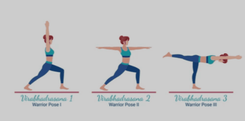
The three Warrior Poses (Virabhadrasanas I, II, and III) symbolize different moments in this mythological tale. Virabhadrasana I specifically represents Virabhadra emerging from the ground with swords in both hands, reaching up toward the heavens—a posture of tremendous power and purpose.
Physical Benefits of Warrior I
- This dynamic standing pose offers numerous physical benefits:
- Strengthens the legs and core: The sustained hold in Warrior I develops strength in the quadriceps, hamstrings, gluteal muscles, and abdominal core.
- Opens the chest and shoulders: The upward reach of the arms creates expansion in the chest, improving respiratory capacity and posture.
- Builds stability and balance: The grounded stance with feet firmly planted develops proprioception and steadiness.
- Stretches the hip flexors: The lunging position provides a deep stretch to the psoas and iliacus muscles, countering the tightness that comes from prolonged sitting.
- Engages the back muscles: The slight backbend and upward gaze strengthen the spinal extensors and improve spinal mobility.
Mental and Energetic Benefits
Beyond the physical plane, Virabhadrasana I offers transformative benefits for the mind and subtle body:
- Builds courage and confidence: Embodying the warrior stance instills a sense of inner strength and resolve.
- Improves focus: The challenging nature of the pose requires concentration and present-moment awareness.
- Stimulates energy flow: The expansive nature of the pose activates the solar plexus chakra (Manipura), associated with personal power and transformation.
- Develops determination: Maintaining the pose through challenge cultivates willpower and tenacity.
Contraindications: When to Avoid or Modify Warrior I
While Virabhadrasana I offers numerous benefits, it's not appropriate for everyone. Consider these contraindications before practicing:
High Blood Pressure or Heart Conditions: The arms-overhead position combined with the mild backbend can elevate blood pressure. Those with hypertension or cardiac issues should modify by keeping arms lower or at heart center.
Acute or Chronic Knee Injuries: The deep bend in the front knee places significant stress on the joint. Practitioners with meniscus tears, ACL injuries, or osteoarthritis should reduce the depth of the bend or explore alternative poses.
Severe Hip Issues: The hip-squaring action in Warrior I can aggravate certain hip conditions, including labral tears, hip impingement, or recent hip surgery. Modify by reducing the stance or decreasing the square of the hips.
Spinal Disc Problems: The slight backbend in Warrior I can compress the lumbar spine, potentially exacerbating herniated or bulging discs. Those with disc issues should maintain a neutral spine and avoid the backbend component.
Shoulder Impingement or Rotator Cuff Injuries: The overhead arm position can compress already irritated shoulder structures. Practitioners should keep arms lower or in a cactus position if experiencing shoulder pain.
Severe Headaches or Migraines: The upward gaze and neck extension can trigger or worsen headaches in sensitive individuals. Maintain a neutral gaze or look slightly forward instead of up.
Dizziness or Vertigo Conditions: The combination of the lunge position and upward gaze can challenge balance and trigger dizziness. Practitioners with vestibular issues should keep gaze forward and may need wall support.
Recent Abdominal Surgery: The core engagement required for proper alignment may strain healing tissues after abdominal procedures. Wait for full medical clearance before resuming this pose.
Always consult with a healthcare provider before practicing yoga with any medical condition, and work with a qualified yoga instructor or yoga therapist who can offer appropriate modifications.
Proper Alignment in Warrior I
To practice Virabhadrasana I safely and effectively, follow these alignment principles:
- Begin in Mountain Pose (Tadasana) at the front of your mat.
- Step one foot back about 3-4 feet, keeping both feet planted firmly.
- Align your feet: Front foot points forward; back foot angles 45-60 degrees toward the front of the mat (not fully sideways as in Warrior II).
- Bend your front knee to a 90-degree angle, keeping the knee tracking over the ankle, not beyond the toes.
- Square your hips toward the front of the mat as much as possible without straining the back hip.
- Lift your arms overhead, palms facing each other or touching, biceps alongside ears.
- Lengthen your spine upward while allowing a gentle backbend in the upper back.
- Gaze upward between your hands without compressing the neck.
- Breathe deeply and hold for 30 seconds to a minute before switching sides.
Common Misalignments to Avoid
Even experienced practitioners can fall into alignment pitfalls in Warrior I:
- Leaning the torso forward instead of maintaining an upright or slightly backbent position
- Letting the front knee collapse inward rather than tracking over the middle toes
- Lifting the back heel too high, destabilizing the pose
- Hunching the shoulders around the ears instead of drawing them down the back
- Flaring the ribs excessively instead of engaging the core
- Hyperextending the elbows instead of maintaining a microbend in the arms
Modifications for Different Bodies
Warrior I can be adapted to suit various body types and conditions:
- For tight shoulders: Keep arms parallel in front of you or in prayer position at the heart
- For knee sensitivity: Decrease the depth of the front knee bend
- For balance challenges: Practice near a wall for support
- For hip tightness: Take a shorter stance or place the back heel against a wall
- For pregnancy: Widen the stance for better balance and make room for the belly
Advanced Variations
For experienced practitioners looking to deepen their practice:
Reverse Warrior: From Warrior I, keeping the legs stable, lean the torso back and reach the back arm down the back leg while the front arm extends overhead
Humble Warrior: From Warrior I, interlace hands behind back, fold forward inside the front leg
Warrior I with Eagle Arms: Wrap arms in eagle position while maintaining the Warrior I leg stance
Virabhadrasana I with Prayer Twist: Add a spinal rotation by bringing hands to prayer and twisting toward the front leg
Integrating Warrior I into Your Practice
This foundational pose appears in many sequences:
- As part of the Sun Salutation B sequence
- At the beginning of standing pose sequences to build heat and stability
- As preparation for deeper backbends
- Within vinyasa flows as a transitional pose
- As a standalone practice for developing strength and focus
The Philosophical Dimension
The true essence of Virabhadrasana I extends beyond physical posturing—it invites us to embody the warrior archetype within our everyday lives:
- The warrior faces challenges directly, with eyes and heart open
- The warrior stands firm in their truth while remaining flexible and adaptable
- The warrior cultivates strength not for domination but for protection and service
- The warrior recognizes that true power comes from integration of opposing forces—strength with flexibility, effort with surrender, courage with compassion
Conclusion
Virabhadrasana I reminds us that the yogi's path is not one of passive withdrawal but of active engagement with life's challenges. As we step into this powerful stance, we invoke the warrior spirit—not to battle external enemies, but to face our own limitations, fears, and attachments with courage and awareness.
The next time you practice Warrior I, remember that you're not just stretching muscles and building strength; you're tapping into an ancient archetype that speaks to the hero's journey within each of us—the journey toward self-knowledge, transformation, and liberation. This is the true promise of the warrior's stance. Virabhadrasana 2 and 3 are poses that stem from the strength of the first main one- Virabhadrasana 1. Since they are off shoots of the first one, they are not as complex as they appear.

Related Articles