
Vibhuti: Sacred Ash in Shaiva Tradition
The Ash of Transformation and Grace

Abhilash Ramakrishna
16 Nov 2026 • 8min
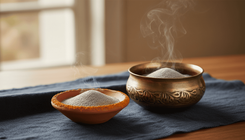
Vibhuti, or sacred ash, is a mark of spiritual devotion in Shaiva practice—the tradition that honours Shiva as the supreme reality. When you see ash applied in three horizontal lines across the forehead, or worn elsewhere on the body, you are witnessing an act of remembrance and surrender. This ash carries meaning that goes far deeper than outward appearance: it is a daily reminder of impermanence, the grace of Shiva, and the wearer's commitment to the spiritual path.



What Sacred Ash Represents
Vibhuti embodies several truths central to Shaiva philosophy. The ash itself comes from fire, and fire is understood as the force of transformation and purification. In the same way that fire reduces all things to ash regardless of their form, the spiritual path dissolves the ego and false identities that cloud our true nature. When ash is applied to the body, it is a gesture of acceptance: all that we are will one day return to dust, and that acceptance itself is liberating.
Shiva is often depicted with ash covering his whole body, especially in the form of Mahakala—the Lord of Time and death. This is not morbid imagery. Rather, it reflects the teaching that understanding impermanence and death is not to be feared, but to be lived with clarity. Vibhuti represents this wisdom made tangible. The ash also symbolizes the destruction of karma and the removal of obstacles on the spiritual path.
In many Shaiva communities, vibhuti is understood as the grace of the guru made manifest. When blessed ash is received from a teacher or temple, it carries the blessing of the lineage and the intention behind it.
Sources and Preparation of Vibhuti
Sacred ash used in temples and by serious practitioners is typically prepared from the burning of specific materials. Traditionally, cow dung cakes are burned, as cattle hold sacred status in Hindu practice. Some traditions burn specific herbs, wood from sacred trees, or offerings made during rituals. The preparation itself is often performed with mantra and intention, turning the burning into an act of worship rather than a mere chemical process.
The ash you receive from a temple or guru is considered sacred precisely because it has been prepared with these intentions. It is not merely the residue of fire, but fire that has consumed offerings made to the divine. This distinction matters: it is why ash purchased as a souvenir is not considered vibhuti in the traditional sense, and why many practitioners prefer to receive it directly from a place of worship.
The texture and colour of vibhuti varies. True sacred ash tends to be fine, grey or off-white, and has a light, slightly fragrant quality. The quality you receive often reflects the care and tradition behind its preparation.
How to Apply Vibhuti
Vibhuti is most commonly applied in three horizontal lines across the forehead, between the eyebrows and above them. The number three carries significance in Hindu practice—representing the three aspects of Brahman (creator, preserver, destroyer), the three states of consciousness, and the three gunas (qualities of nature). Some traditions apply vibhuti differently: as a vertical line down the centre of the forehead, as a tilaka or larger mark, or in other patterns depending on the sampradaya (lineage) and individual practice.
The application itself is a moment of intention. Many practitioners apply vibhuti after bathing in the morning, as part of their daily worship. The ash is moistened slightly with water or oil—often coconut oil—to help it adhere, then gently pressed onto the forehead with the finger. Some apply it to the arms, chest, or neck as well, especially before attending temple or undertaking spiritual practice.
There is no single "correct" way to apply it. What matters is that the application is done with awareness and respect. Some traditions teach specific mantras to recite while applying vibhuti; others simply call for a moment of inner focus. The ash itself does not work by magic, but the practice of applying it, repeated each day, deepens your connection to the values it represents.
Regional and Lineage Variations
Vibhuti carries slightly different meanings and applications across India's many Shaiva traditions. In South India, especially in Tamil Nadu, vibhuti forms an important part of daily worship for followers of Shaivism, and the ash is often distributed at temples as a form of grace. The Nayanmar saints—renowned Shaiva devotees whose hymns are still recited—are often described as being covered in vibhuti as a sign of their devotion.
Some traditions, particularly those following the Shaiva Siddhanta philosophy, emphasize the cleansing power of vibhuti and its role in removing impurities accumulated through past actions. Other lineages stress the ash as a mark of belonging to Shiva, a seal of dedication.
Even the materials used in preparation vary. While cow dung ash remains most common, some temples use ash from the burning of bilva leaves (sacred to Shiva), neem, or sandalwood. These variations reflect local custom and the specific teachings of each sampradaya, not a hierarchy of correctness.
Vibhuti and the Concept of Grace
One reason vibhuti holds such importance in Shaiva practice is its connection to the concept of grace—the free gift of spiritual blessing that cannot be earned but only received. When sacred ash is offered by a guru, a temple, or an elder, it is understood as prasad—blessed food or offering returned to the devotee. This is the reason many practitioners keep vibhuti received from their temple or spiritual teacher, sometimes for years, applying it carefully each day.
The ash does not change who you are by itself. It is not a talisman against harm. Rather, it is a tangible reminder of the teachings you are practising and the lineage you are connected to. Each time you apply it or see it in the mirror, you are prompted to remember: that all things pass, that you are not merely this body, and that you stand within a tradition of practice that stretches back through centuries.
Vibhuti in Daily Practice
For many Shaiva practitioners, vibhuti marks the transition from sleep into conscious practice. Applying ash becomes part of morning worship, a simple act that nonetheless sets an intention for the day. It is a way of saying: I am aware of impermanence; I am grateful for the teachings I have received; I am committed to a path of spiritual growth.
Some practitioners wear vibhuti to temple, to meditation, or throughout the day. Others apply it only when visiting a place of worship or undertaking specific spiritual work. There is no requirement—only the opportunity to use this symbol in whatever way deepens your own practice.
What matters is your relationship to the practice. If wearing vibhuti feels like an outward show with no inner meaning, it carries little value. But if it serves as a daily anchor to remembrance and intention, it becomes a powerful aid to spiritual life.
How to Apply Vibhuti
- Prepare Wash your face and hands. Ensure your forehead is clean and dry. Take a small amount of vibhuti (about the size of a rice grain) onto the tip of your finger.
- Moisten slightly Touch a drop of water or coconut oil to the vibhuti to make a soft paste, just enough to help it adhere. You want the ash visible, not dissolved.
- Apply the first line Using your index finger or ring finger, draw the first horizontal line across your forehead, between the eyebrows. Press gently so the ash adheres without streaking.
- Add the second line Draw a second line above the first, roughly the width of a finger higher. This line should be parallel to the first, or slightly curved to follow the arch of your brow.
- Complete the third line Draw a third line above the second, completing the three horizontal marks. Step back and ensure the lines are clear and visible.
- Settle into intention Pause for a moment and bring awareness to why you are marking yourself with ash. Whether you recite a mantra, offer gratitude, or simply sit with your intention, let this be a moment of inner focus rather than mechanical action.
Common questions
Can I buy vibhuti from anywhere, or does it need to come from a temple?
Vibhuti purchased from shops is not considered sacred ash in the traditional sense. Sacred vibhuti should ideally come from a temple, guru, or shrine where it has been prepared with mantra and intention. If you do not have access to a temple, receiving ash that has been blessed by a spiritual teacher carries the same significance. Many online retailers sell vibhuti, but this is treated differently from ash that has been made and offered within a spiritual community.
Is vibhuti only for Shaiva practitioners, or can others wear it?
Vibhuti is specific to Shaiva tradition and is not worn as a regular practice in other Hindu paths or sampradayas. However, anyone visiting a Shaiva temple may receive vibhuti as a blessing, regardless of their usual practice. It is respectful to wear it with intention and understanding rather than as a casual accessory if you do not follow the tradition.
What should I do if the vibhuti I applied washes off or smudges during the day?
There is no harm in vibhuti washing off naturally during the day. You are not required to reapply it or maintain perfect appearance. If it smudges or fades, simply allow it to. The spiritual value lies in the act of applying it with intention each morning, not in how long it lasts on your skin.

Related Articles


