
Varalakshmi Vratam: A Festival of Lakshmi's Grace
Blessings of Abundance, Honored in the South

Aditya Pandey
20 Nov 2026 • 6min
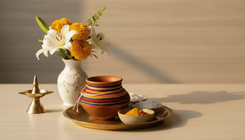
Varalakshmi vratam is a festival observed across South India, particularly in Tamil Nadu, Andhra Pradesh, Karnataka and Telangana, where devotees fast and perform puja to honor the goddess Lakshmi. Unlike the more widely known Diwali, varalakshmi vratam is celebrated on a specific day tied to the lunar calendar, falling on the second Friday before the full moon of the month of Shravana (July or August in the Gregorian calendar). The festival is a way for households to invoke the goddess's blessings for prosperity, health and well-being.



The Origins of Varalakshmi Vratam
The festival draws its name from Vara Lakshmi, a form of Lakshmi that means "the giver of boons" or "the goddess who grants wishes." The word vara comes from the Sanskrit word for a boon or wish granted by a deity. While the festival is deeply rooted in South Indian tradition, it does not feature prominently in the ancient Sanskrit texts that describe other major festivals and observances. Instead, varalakshmi vratam has evolved over centuries as a regional practice, passed down through oral tradition and local custom in Tamil, Telugu, Kannada and Malayalam-speaking households.
The puja performed during varalakshmi vratam is said to draw its inspiration from the worship of Lakshmi in the Vedic tradition, where the goddess is invoked for abundance and prosperity. Devotees believe that observing this vrat (fast) with sincere devotion brings the goddess's direct intervention in their lives. The festival represents the South Indian approach to honoring Lakshmi, one that emphasizes community participation and household ritual.
How the Date is Determined
Varalakshmi vratam falls on the second Friday before the full moon (Purnima) in the month of Shravana, which typically corresponds to July or August. This lunar calendar placement means the date changes each year in the Gregorian calendar. The festival is specifically timed to occur during the monsoon season, when farmers are dependent on rainfall for their crops and households traditionally sought blessings for abundance.
The choice of a Friday is deliberate: Friday is considered auspicious for worship of Lakshmi, the goddess of wealth and fortune. The timing before the full moon is also significant in Hindu tradition, as this phase is believed to be conducive to manifesting desires and receiving the goddess's grace. Many households plan their year around this date, marking it as a key moment for their spiritual practice and household rituals.
The Ritual of Varalakshmi Puja
The varalakshmi puja is performed early in the morning after a ritual bath. Devotees set up a small altar or puja space with an image of Lakshmi, flowers, incense and offerings. The altar is decorated with turmeric, kumkum (vermillion), rice and small pieces of silk cloth tied in intricate patterns, which are believed to attract the goddess's presence.
The puja typically begins with invoking the directions and purifying the space. Devotees then recite the Varalakshmi Vratam Katha (the story of the goddess), which narrates how Lakshmi appeared to a devotee's wife and asked her to observe the vrat. This recitation is central to the ritual; it is believed that hearing or reading the katha itself brings blessings. After the katha, devotees make offerings of flowers, sandalwood paste, rice, jaggery, coconut and besan (gram flour) to the goddess.
A key element is the tying of a sacred thread or ribbon around a banana trunk or a special clay pot, which represents Lakshmi's presence. This object is then kept in the home for the year as a symbol of the goddess's protection. Many families distribute the offerings as prasad (blessed food) to neighbors and friends after the puja, spreading the blessings beyond their own household.
Regional Variations Across South India
The way varalakshmi vratam is observed varies subtly across South India. In Tamil Nadu, the festival is deeply woven into household practice and many women observe it as a sacred duty for their family's welfare. The Tamil version emphasizes the katha recitation and the making of the sacred thread, with many families maintaining written versions of the story passed down through generations.
In Andhra Pradesh and Telangana, varalakshmi vratam is celebrated with similar rituals but often with greater community participation. Some temples organize collective pujas where many devotees gather to worship together. In Karnataka, particularly in areas with strong Tamil cultural influence, the festival follows Tamil traditions quite closely, while in Malayalam-speaking regions of Kerala, the observance is less widespread though still practiced by some communities.
Despite these regional differences, the core elements remain the same across all regions: fasting, the puja performed at home, the recitation of the katha, and the offer of prasad to the community. This consistency reflects how the festival has been preserved and transmitted across South India over centuries.
Why South India Celebrates Varalakshmi Vratam
The prominence of varalakshmi vratam in South India is tied to several factors. The region has a long history of goddess worship, with many powerful temples dedicated to various forms of Lakshmi and other mother goddesses. The festival also aligns with the agricultural calendar of South India, arriving at a time when the monsoon rains are crucial for the year's harvest. For farming communities, invoking Lakshmi's blessings at this moment has always held practical as well as spiritual significance.
Additionally, South India has maintained strong continuity with ancient ritual practices and local traditions that predate some of the pan-Indian festivals celebrated across the country. Varalakshmi vratam represents a tradition that belongs specifically to the Tamil, Telugu, Kannada and Malayalam-speaking peoples, and it remains an important marker of cultural identity and continuity in these communities. The festival is a reminder that Hindu practice is diverse, with each region honoring the divine according to its own history and need.
Common questions
When is varalakshmi vratam celebrated each year?
Varalakshmi vratam is observed on the second Friday before the full moon of Shravana, which typically falls in July or August. The exact date changes yearly because it follows the lunar calendar, so you should check the panchang (Hindu calendar) for your specific year.
Can men observe varalakshmi vratam?
While the festival is traditionally observed by women, there is no strict prohibition against men participating. The ritual emphasizes household well-being rather than gender, and men may join in the puja, the katha recitation, or the offering of prasad.
What is the significance of the thread tied during the puja?
The sacred thread or ribbon tied around a banana trunk or clay pot serves as a physical anchor for Lakshmi's blessings. Families keep this object in their home throughout the year as a symbol of the goddess's protection and presence in the household.

Related Articles


