
Vaikunta Ekadashi: The Opening of Vishnu's Heavenly Gate
When heaven's door opens for the devoted.

Kushal K
09 Nov 2026 • 6min
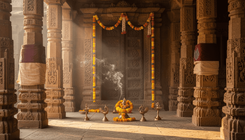
Vaikunta Ekadashi is the day when the gates of Vishnu's heavenly abode are said to open to humanity. It is one of the most sacred observances in the Hindu calendar, celebrated with particular intensity at major Vishnu temples across India. On this day, devotees fast, worship, and perform rituals with the belief that liberation—moksha—is within reach. If you have ever wondered why this festival moves people so deeply, it is because the tradition links it directly to spiritual freedom.
Ekadashi, for those new to the term, is the eleventh day of the lunar fortnight. The Vaikunta Ekadashi—also spelled Vaikuntha Ekadashi—falls during the month of Margazhi or Dhanur in the Hindu calendar, which corresponds roughly to December and January. In southern India, particularly in Tamil Nadu and Andhra Pradesh, it is observed with extraordinary fervour. At temples dedicated to Vishnu, the Vaikunta Dwaram (the special gateway symbolising heaven's door) is opened only on this day, allowing devotees to pass through in a ritual that echoes the spiritual pathway to liberation.



The Meaning and Mythology Behind Vaikunta Ekadashi
The name itself carries deep meaning. Vaikunta is the supreme realm of Vishnu, free from suffering and the cycle of birth and death. Ekadashi is the eleventh lunar day. Together, they mark a threshold: a moment when the invisible boundary between the earthly and divine is believed to become permeable.
The tradition rests on scriptural accounts, particularly in texts that describe Ekadashi as especially auspicious for worship. Fasting on Ekadashi is described as a practice that purifies the mind and body, making the devotee receptive to grace. Vaikunta Ekadashi holds this power in its fullest form. It is considered the most meritorious of all Ekadashi observances.
The spiritual reasoning is that on this day, the accumulated merit of sincere worship reaches its peak. Devotees believe that fasting, prayer and devotion on Vaikunta Ekadashi accelerate the journey toward moksha. For some, this is understood as liberation in the present lifetime; for others, as the attainment of Vishnu's realm after death. The emphasis is always on sincere intention rather than ritual alone.
How Fasting on Vaikunta Ekadashi is Observed
The fasting practice on Vaikunta Ekadashi follows traditional Ekadashi guidelines, though devotees often approach it with heightened seriousness. A complete fast—abstaining from food and water—is the most rigorous form. However, many observe a modified fast, consuming only fruits, milk, nuts or light vegetarian foods. Some devotees take only one meal, usually in the evening before sunset.
The fast typically begins the evening before Ekadashi and concludes the following morning after sunrise, or sometimes after midday prayers. Timing depends on local customs and the individual's capacity. What matters more than the strictness of the fast is the quality of mind: sustained focus on Vishnu through prayer, chanting, or meditation.
Throughout the fasting day, many devotees chant mantras dedicated to Vishnu, such as the Vishnu Sahasranama (the thousand names of Vishnu) or the Mahamantra. Some recite the Bhagavad Gita or listen to sacred narratives. The aim is to keep the mind absorbed in devotion rather than on hunger or discomfort. Breaking the fast—called parana—is done with simple, easily digestible food, usually rice, ghee and vegetables, sometimes accompanied by milk or fruit.
Temple Celebrations and the Opening of Vaikunta Dwaram
The most visible expression of Vaikunta Ekadashi occurs at major temples, especially those dedicated to Vishnu in the south. The Vaikunta Dwaram, a special gateway or passage within the temple, remains closed for most of the year. On Vaikunta Ekadashi, it is ceremonially opened.
The opening itself is a solemn, joyous ritual. Temple priests perform elaborate pujas, and devotees queue—sometimes for hours—to pass through the gateway. This passage is understood spiritually as a direct route to liberation. Even if only experienced symbolically, the act carries profound meaning for the worshipper. The gateway is a physical representation of the inner transformation sought through Ekadashi practice.
At major Vishnu temples, particularly in Tamil Nadu and Andhra Pradesh, the evening before Ekadashi sees thousands of devotees gathering. The temple grounds fill with prayer, devotional songs, and the scent of flowers and incense. Some sleep overnight in the temple to ensure they can pass through the Vaikunta Dwaram early the next morning. By dawn on Ekadashi, the crowds grow even larger, creating an atmosphere that is both serene and intensely concentrated.
Not all temples have a physical Vaikunta Dwaram, but most Vishnu temples mark the day with special rituals, extended worship hours, and the distribution of prasad (blessed food) to devotees. The celebration reflects the same principle: opening a passage—however it is understood—between the human and the divine.
Spiritual Meaning and Personal Practice
Beyond the external rituals, Vaikunta Ekadashi invites inward reflection. The opening of Vaikunta's gates is not merely an external event but a symbol of inner transformation. By fasting, praying and withdrawing attention from worldly concerns, the devotee creates internal space—a quietness in which divine grace can be received.
The Ekadashi fast itself is understood in multiple ways across different traditions. Some see it as a discipline that purifies the body; others as a practice that quiets the mind; still others as a direct offering of effort to the divine. All these understandings coexist within the broader Hindu framework.
Vaikunta Ekadashi does not require elaborate ritual arrangements or special circumstances. You can observe it wherever you are: by fasting, by dedicating the day to prayer or mantra, by reading scripture, or simply by holding Vishnu in your thoughts. The tradition teaches that sincere intention matters more than perfect execution. Even a simple fast undertaken with devotion is considered meritorious.
Many devotees combine the Ekadashi fast with seva (service), giving alms or helping others on this sacred day. This reflects the understanding that spiritual practice and ethical action support each other. The opening of Vaikunta's gates, in this view, is not a reward that descends from outside but a transformation that arises from within the practitioner's own sincere effort and growth.
Common questions
What is the difference between Vaikunta Ekadashi and other Ekadashi fasts?
Vaikunta Ekadashi is considered the most meritorious of all Ekadashi observances, celebrated with particular intensity at temples. It is distinguished by the ceremonial opening of the Vaikunta Dwaram (the gateway to heaven) in temples, which is closed for the rest of the year. While all Ekadashi fasts are spiritually significant, Vaikunta Ekadashi carries special significance in devotional practice.
Can I observe Vaikunta Ekadashi at home if I cannot visit a temple?
Yes. Sincere intention and devotion matter more than location. You can fast, chant mantras dedicated to Vishnu, read scripture, or meditate at home. Many devotees combine the fast with acts of service or charity. The personal spiritual practice—the focused attention and effort—is what carries merit.
What should I eat when breaking the Ekadashi fast?
Break the fast, called parana, with simple, easily digestible food. Rice cooked with ghee, plain vegetables, milk, fruit, nuts or khichdi (a mixture of rice and lentils) are common choices. Avoid heavy spices, salt in excess, or difficult-to-digest foods. The meal should be light enough to ease the digestive system back into normal eating.

Related Articles


