
Vaikasi Visakam: Murugan's Birth Star Festival
The day Murugan came to earth, celebrated across temples

Aditya Pandey
15 Nov 2026 • 6min
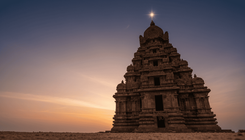
Vaikasi Visakam is the festival that celebrates the birth of Murugan, the god of war, wisdom and beauty in the Hindu tradition. It falls on the Visakam nakshatra (star) in the Tamil month of Vaikasi, which usually occurs in May or early June. On this day, Murugan devotees gather at temples across South India to mark his arrival into the world, making it one of the most important festivals in the Shaivite calendar, especially in Tamil Nadu and among Tamil-speaking communities.



The Birth of Murugan: Why This Star, This Day
Murugan was born to Shiva and Parvati as a response to the threats posed by the demon Tarakasura, who could not be defeated by any god except a child of Shiva. When the birth occurred, it took place under the Visakam nakshatra, and this astronomical event became the eternal marker of his arrival. The story appears in texts like the Skanda Purana, where the circumstances of his birth are described in detail—his emergence fully armed and ready to protect dharma.
The Visakam star itself is considered highly auspicious in Hindu astronomy. It is associated with radiance, courage and leadership—qualities that define Murugan's nature. By celebrating on his birth star each year, devotees align themselves with these cosmic energies and honour the moment when divine power took physical form to restore balance to the world.
The Festival Across South Indian Temples
In Tamil Nadu, Vaikasi Visakam is observed with remarkable unity across temples dedicated to Murugan. The most notable celebrations happen at major shrines like the Arunachaleswara Temple at Thirupparamkunram, the Murugan Temple at Palani, and the Sri Subramaniaswamy Temple at Tiruchendur. Each temple conducts abhisheka (ritual bathing) of the deity's idol using milk, honey, coconut water and sacred oils, followed by the offering of prasad (blessed food) to devotees.
In many temples, the festival spans several days with processions, special prayers and music. The deity is often taken out in a chariot or carried in procession through the temple streets, allowing the community to receive his blessings. Some temples perform an all-night vigil called a ratri jagaran, where devotees sing hymns and recite verses from the Tirupugazh, a celebrated Tamil hymn cycle dedicated to Murugan, throughout the night.
Regional variations exist. In Karnataka, the festival is sometimes called Skanda Shashthi when it coincides with the sixth day after the new moon in certain lunar months. In Telugu-speaking regions, devotees make offerings at Murugan temples but may incorporate their local customs. The core practice, however—honouring Murugan on his birth star—remains consistent across all these regions.
Personal Observance and Devotional Practices
Murugan devotees observe Vaikasi Visakam through prayer, fasting and temple visits. Many people wake early, bathe and go to the nearest Murugan shrine to receive darshan (the sight of the deity). Some devotees fast partially or completely, consuming only fruits and milk, as a way of concentrating their spiritual energy on the day.
At home, devotees create small altars with flowers, incense and fruit offerings, chanting mantras or singing bhajans (devotional songs) dedicated to Murugan. The most common mantra is the Shadakshari Mantra: Om Saravana Bhava. Repeating this mantra is believed to invoke Murugan's protection and blessings. Many families prepare special vegetarian dishes as offerings and then share them as prasad with family and friends.
The festival is also a day for seeking Murugan's guidance, particularly for those facing obstacles or uncertainty in their lives. Murugan is revered as the remover of obstacles and the keeper of dharma, so devotees often ask for his wisdom and strength on this auspicious day.
The Cosmic Significance of the Visakam Star
The Visakam nakshatra has deep meaning in Vedic astrology and Hindu cosmology. It is the sixteenth nakshatra in the lunar zodiac and is ruled by the planet Venus. Those born under Visakam are thought to possess the qualities of Murugan: brightness, courage, artistic talent and the ability to inspire others.
Celebrating on the Visakam star is not arbitrary. The ancient Hindu understanding of the cosmos held that celestial positions carry significance for spiritual life on earth. By aligning the celebration of Murugan's birth with his actual birth star, devotees participate in a rhythm that connects their earthly worship to the movements of the heavens. This is why the date shifts from year to year—because it is determined by the lunar calendar and the position of the Visakam star, not by a fixed Gregorian date.
This connection between mythology, astronomy and devotion is central to Hindu festivals. Vaikasi Visakam reminds us that the divine does not exist outside time and space but is intimately woven into the fabric of the cosmos itself.
Murugan's Significance in Contemporary Practice
For Tamil Hindus especially, Murugan holds a special place as a deity of the people. He is the protector of the Tamil language and Tamil culture, and worship of Murugan has been central to Tamil identity for centuries. Vaikasi Visakam is thus both a spiritual and cultural celebration, reinforcing this connection.
The festival is also a time when extended families reconnect, sharing meals and prayers together. For many, it is a day to step back from daily work and remember the values Murugan represents: courage in facing life's challenges, wisdom in making decisions, and beauty in living virtuously. Whether through formal temple worship or simple home prayer, the festival invites people to touch something eternal within themselves.
Common questions
When is Vaikasi Visakam celebrated each year?
Vaikasi Visakam is observed on the Visakam nakshatra in the month of Vaikasi according to the lunar calendar, which typically falls in May or early June. Because it follows the lunar calendar rather than a fixed Gregorian date, the exact date changes from year to year.
What offerings are made in temples on Vaikasi Visakam?
Temples perform abhisheka (ritual bathing) of the deity using milk, honey, coconut water and sacred oils, followed by the distribution of prasad to devotees. Many temples also conduct processions and special prayers throughout the festival period.
Is there a specific mantra to chant on Vaikasi Visakam?
The Shadakshari Mantra, Om Saravana Bhava, is the most commonly chanted mantra dedicated to Murugan. Many devotees repeat this mantra at home or in temples as a way to seek Murugan's protection and blessings on this day.

Related Articles


