
Vaikasi Visakam: Murugan's Birth Star Festival
Honoring the war god's cosmic arrival
Sunil Chaurasia
14 Nov 2026 • 5min
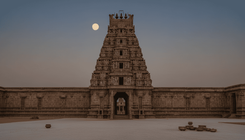
Vaikasi Visakam is the festival that marks the birth of Murugan, the war god and vanquisher of demons in Hindu tradition. It falls on the full moon day (pournami) in the month of Vaikasi, when the Visakam star is in the ascendant—hence the name. The festival is celebrated across South India, particularly in Tamil Nadu and in communities devoted to Murugan worship, and it carries deep spiritual meaning for those who revere him as the embodiment of valor, wisdom and divine grace.



Why Visakam Star Holds Significance
The Visakam nakshatra, or star, is one of 27 lunar mansions in Vedic astrology and holds particular importance in Murugan worship. This star is associated with ruling power, prosperity and the capacity to overcome obstacles. In Tamil tradition, Murugan himself is called Skanda, Arumugam, and many other names, each pointing to aspects of his divine nature. The star Visakam is linked to creative expression and the warrior spirit—qualities central to who Murugan is said to be.
Devotees believe that worshipping on this day when Visakam is strong amplifies the blessings of strength and courage. The convergence of the full moon and the star creates a particularly auspicious moment. In jyotish, or Vedic astrology, certain planetary positions and star constellations are considered gateways for spiritual practice and prayer. Vaikasi Visakam is one such moment when the cosmic conditions are thought to be especially favorable for invoking Murugan's protection and guidance.
The Mythology Behind the Festival
Murugan's birth is narrated in several Hindu texts, including the Skanda Purana and references in the Mahabharata. According to these accounts, Murugan was born to destroy the demon Tarakasura, who had terrorized the gods and received a boon making him nearly invulnerable. The birth of Murugan, also known as Kartikeya or Skanda, is celebrated as a victory of divine forces over chaos and tyranny.
Different regions and sampradayas have their own versions of the story. In some accounts, Murugan is said to be the son of Shiva and Parvati. In others, particularly in South Indian tradition, he is also described as the son of Shiva's cosmic power made manifest. Regardless of the version, the underlying theme is the same: Murugan represents the triumph of righteousness and the power to vanquish evil. This is why his birth is celebrated with such reverence, especially in regions where he is the primary deity.
How the Festival Is Observed
On Vaikasi Visakam, temples dedicated to Murugan overflow with devotees who come to offer prayers, flowers, incense and fruit. Many perform abhisheka, a ritual bathing of the deity, using milk, honey, coconut water, sandalwood paste and other sacred substances. Devotees may fast or observe a partial fast through the day, breaking it in the evening with prasad, the blessed food offered at the temple.
In many Tamil Nadu temples, the festival is marked with processions through the streets, with Murugan's idol carried on elaborately decorated platforms. Music, drumming and chanting accompany these processions, creating an atmosphere of celebration and spiritual intensity. In some places, vel puja is performed—the vel being Murugan's spear, a symbol of his divine power and authority.
The festival also sees the preparation of traditional foods. In Tamil households, dishes like adhirasam (a sweet made of rice flour and jaggery) and payasam are offered at home altars and shared with family and friends. The preparation and sharing of these foods is itself considered an act of devotion, extending the blessing beyond the temple walls into the home and community.
Vaikasi Visakam Across Regions
While Vaikasi Visakam is most prominently celebrated in Tamil Nadu, the festival is observed wherever Murugan temples stand and wherever devotees of Murugan live. In Karnataka and Andhra Pradesh, temples of Murugan also see special pujas and celebrations. Sri Lanka has a significant Murugan-worshipping population, and the festival is a major observance there as well, particularly in the northern regions.
The specific customs and rituals vary by region and local tradition. In some areas, young men and women participate in special dances and devotional songs. In others, the emphasis is on temple pujas and family prayers. What remains constant across all regions is the core purpose: honoring Murugan and seeking his blessings for protection, courage and the strength to face life's challenges.
Spiritual Significance for Devotees Today
For modern practitioners, Vaikasi Visakam offers a moment to reflect on Murugan's qualities and what they represent. The warrior spirit he embodies is not about violence but about inner strength—the courage to stand for what is right, the wisdom to discern truth from falsehood, and the power to overcome the obstacles within ourselves. In this sense, Murugan worship is about developing these qualities in oneself.
Observing the festival, whether through temple visits, personal puja, fasting or meditation, creates an opportunity to align oneself with these energies. Devotees often use the day for introspection and recommitment to spiritual practice. The festival is also a time when families and communities come together, strengthening bonds and sharing in collective devotion. This social and spiritual dimension makes Vaikasi Visakam more than a calendar event—it becomes a lived practice that connects the individual to the tradition, to the deity, and to a larger spiritual community.
Common questions
When is Vaikasi Visakam celebrated each year?
Vaikasi Visakam falls on the full moon day (pournami) in the Tamil month of Vaikasi, which typically corresponds to May or June. The exact date shifts yearly because it follows the lunar calendar rather than the solar calendar.
What is the difference between Vaikasi Visakam and other Murugan festivals?
Vaikasi Visakam specifically celebrates Murugan's birth and occurs during the Visakam star. Other Murugan festivals like Thaipusam (in Tamil month Thai) commemorate different events in his life. Thaipusam, for instance, marks when Murugan received a vel from his mother Parvati.
Is fasting required on Vaikasi Visakam?
While some devotees fast completely or partially as a form of devotion, it is not mandatory. Many devotees simply visit temples, offer prayers and participate in rituals. The level of observance depends on personal belief and capability.

Related Articles


