
Understanding Dwarapalakas: The Guardians at Your Temple Entrance
Sacred Sentries at the Threshold of Worship

Abhilash Ramakrishna
21 Nov 2026 • 6min
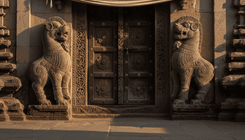
When you step toward the entrance of a Hindu temple, you often pass between two imposing figures carved or sculpted into niches on either side of the doorway. These are dwarapalakas—literally, doorkeepers or threshold guardians. They stand as sacred sentries, and understanding who they are and what they represent deepens your experience of the temple space itself.
A dwarapalaka is far more than a decorative element. In Hindu temple tradition, this figure holds a spiritual function: to protect the sanctified space within and to acknowledge the presence of those who enter with devotion. The dwarapalaka stands at the threshold—the boundary between the profane world outside and the sacred world within. This position is never accidental. The threshold is understood in Hindu practice as a charged and liminal space, a place where ordinary consciousness meets the divine.



The Role of the Threshold Guardian
The Sanskrit word dwara means door or gateway, and palaka means protector or guard. The dwarapalaka's primary duty is protective: to ward off negative or hostile forces and to permit the passage of sincere devotees. This is not merely symbolic. In temple theology, the inner sanctum houses the presence of the deity, and that presence radiates outward through the building. The dwarapalaka acts as a filter, so to speak, ensuring that those who cross the threshold do so with the right intention.
Different temples depict their dwarapalakas in different forms. Some are shown as fierce, muscular warriors armed with weapons—clubs, swords, or tridents. These fearsome guardians embody the fierce aspect of divinity, the shakti that destroys ignorance and protects righteousness. Others are depicted as semi-divine beings, yaksha or gana figures, attendants of the gods who have earned their post through devotion and service. In some temples, the guardians mirror each other; in others, they are paired as complementary forces—one representing protection, the other representing guidance or blessing.
The iconography is never random. A temple dedicated to Shiva might feature dwarapalakas styled as Shiva's attendants or as wrathful protectors of the Shaiva tradition. A Vaishnava temple would similarly place guardians appropriate to that sampradaya, or tradition. The guardian's appearance tells you something about the temple's deity and the theological emphasis of its community.
How Dwarapalakas Relate to Other Guardian Figures
The dwarapalaka is part of a broader system of sacred guardianship in the temple. At the outer gate, or gopuram, you may encounter different guardians again. Moving inward toward the sanctum, you pass through layers of sacred space, and each threshold has its own protectors. This layering reflects the Hindu understanding of the journey toward the divine: outer to inner, gross to subtle, worldly to transcendent.
In some temples, the dwarapalakas of the inner sanctum are understood to be particularly powerful, because they stand closest to the deity's presence. In others, the guardians at the main entrance bear the greater responsibility, because they stand first in the path of all who enter. The relative importance shifts with regional and sectarian custom.
Dwarapalakas also share qualities with other guardian deities in Hindu mythology. Nandi, the bull attendant of Shiva, acts as guardian at Shaiva temples. The nagas, or serpent deities, often guard thresholds in temples of the South. These figures serve similar functions but are distinguished by their own mythology and iconographic tradition. The dwarapalaka, by contrast, is defined by function: the sacred guardian at this specific threshold.
Approaching the Dwarapalaka with Respect
Although dwarapalakas are not worshipped as principal deities, they are part of the temple's sacred order and deserve respectful acknowledgment. Many devotees offer a small bow or namaste when they pass between the guardians. Some touch their palms together and make a small gesture of respect toward one or both figures. This is not an obligation, but it is a recognition that you are crossing a boundary and entering a space held sacred by others.
In some traditions, there is a practice of mentally requesting permission from the guardians before entering. This is not formalized in most temples, but the custom exists in certain sampradayas, particularly in South Indian traditions. The reasoning is simple: you are entering a sacred space under the guardians' watch, and acknowledging this transition marks your intention to approach the deity with devotion rather than casual curiosity.
The state of mind with which you pass between the dwarapalakas matters more than any outward gesture. Are you entering with focus and reverence, or are you distracted? In the Hindu understanding, intention shapes the quality of the space you inhabit. The dwarapalaka's presence is meant to help orient your consciousness toward that intention.
Regional Variations in Guardian Tradition
The tradition of dwarapalakas is pan-Hindu, but its expression varies widely. South Indian temples, particularly those following Dravidian architectural styles, feature dwarapalakas prominently at multiple thresholds. In Tamil Nadu and Karnataka, the guardians are often depicted with elaborate crowns, jewelry, and weapons, reflecting the martial traditions of those regions. They stand with authority and presence.
In North Indian temples, dwarapalakas may be less visually elaborate but are no less spiritually significant. Some North Indian temples carve the guardians into wooden doors rather than sculpting them in stone. Others commission metalwork guardians in bronze or iron. The material and style differ, but the function remains constant.
In some temples, particularly in Kerala and coastal regions, the dwarapalaka tradition blends with local traditions of door guardianship that predate or exist alongside Sanskrit temple literature. These regional guardians are understood in the same protective role but may be depicted according to local aesthetic and spiritual conventions. The guardianship itself is what matters; the form adapts to local culture.
What the Dwarapalaka Teaches You
The dwarapalaka stands as a permanent reminder that entering a temple is not an ordinary passage. You are crossing a threshold. You are moving from outside to inside, from the everyday world to a space dedicated to the sacred. The guardian's presence asks you to mark that transition internally—to gather your attention, to clarify your purpose, to approach with respect.
In a deeper sense, the dwarapalaka represents the boundary between the conscious and the transcendent, between knowledge and wisdom. In yogic and meditative traditions, passing through thresholds within the body—the chakras, the nadir of the breath—is understood as a kind of spiritual passage that requires protection and awareness. The temple dwarapalaka echoes this inner teaching: some thresholds must be crossed consciously and with reverence.
Common questions
Can I bow to a dwarapalaka?
Yes, many devotees offer a small bow or namaste when passing the guardians, though this is customary rather than obligatory. The gesture acknowledges that you are crossing into sacred space and shows respect to the temple's guardian order.
Are dwarapalakas the same in all temples?
No. South Indian temples tend to depict them with elaborate crowns and weapons, while North Indian temples may carve them in wood or metal with different styles. Regional traditions in Kerala and coastal areas blend Sanskrit temple customs with local guardian practices.
What do I do if the dwarapalaka figures look scary or fierce?
The fierce appearance is intentional and represents the protective, destructive aspect of divinity that guards against ignorance and hostile forces. This fierceness is directed outward at negative influences, not inward at sincere devotees entering with respect.

Related Articles


