
Understanding Dakshina: The Gift of Gratitude in Hindu Ritual
Honouring service with a sacred offering

Abhilash Ramakrishna
17 Nov 2026 • 7min
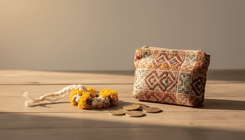
Dakshina is a respectful offering of money, gifts or goods given to a priest, ritual specialist or guru after they have performed a ceremony or imparted spiritual teaching. It is not payment in the ordinary sense—you do not negotiate the amount or withhold it if the ritual did not please you. Rather, dakshina is an expression of gratitude and respect for the knowledge and service given, and it honours the sacred nature of what has taken place. The giver acknowledges that certain kinds of work cannot be valued in coin alone.
The word itself comes from Sanskrit and means "the right or south side", a direction associated with gratitude and reverence in Hindu thought. When you give dakshina, you are performing a ritual gesture as much as a practical transaction. It completes the puja or teaching and frees both the giver and the receiver to move forward with blessing rather than obligation.



What Dakshina Represents
Dakshina embodies the principle that knowledge and spiritual service create a bond between teacher and student, priest and householder. It moves the ritual out of the realm of commerce into one of mutual respect. The person who performs the ceremony—whether a Brahmin priest, a mantra specialist or a yoga teacher—offers their time, knowledge and spiritual attainment. The householder or student responds with dakshina, which is as much a recognition of that gift as it is a practical offering.
In this exchange, both parties acknowledge something larger than themselves. The priest or guru has intermediated between the human and the divine, or transmitted knowledge that is not theirs alone to own. Dakshina says: you have placed yourself in service, and I am grateful. The amount matters far less than the gesture itself.
In some traditions, dakshina is understood to have spiritual fruit. The Dharma Shastras, the ancient texts that guide Hindu daily life and ritual, describe dakshina as creating merit for the giver and ensuring the purity and effectiveness of the ritual performed. When you give without calculation or expectation of return, you participate in the sacred economy of the ceremony, not merely its logistical side.
Dakshina in Different Rituals
The form and context of dakshina varies across the rituals of daily and ceremonial life. In a home puja performed by a priest, dakshina might be given after the ceremony ends, as the priest prepares to leave. In a major ritual like a wedding, thread ceremony or temple festival, multiple people may be given dakshina—the main priest, assistants, musicians, or the temple itself. The amount and form depend on the ritual's scale, the tradition followed, the giver's means and the region.
For a daily puja in your home, dakshina to a visiting priest might be small—whatever feels right to you, whether five hundred rupees or five thousand. For a major life ceremony, the amount may be larger. Many families consult their priest or elder family members beforehand to understand what is customary in their sampradaya or region.
Dakshina also features prominently in guru-student relationships. When a student receives initiation (diksha) or intensive teaching from a guru, dakshina is often given at the moment of initiation, or at intervals throughout the student's time with the teacher. In these cases, dakshina is less about fixed sums and more about the student offering what they can, as a symbol of their commitment to learning.
In temple worship, you may offer dakshina directly to the deity through the priest, or give it to the temple itself. Some temples maintain a list of prescribed amounts for different pujas and services; in others, the giver decides. The temple uses dakshina to maintain the shrine, support the priests and fund charitable work.
Regional and Sampradaya Variations
Practices around dakshina differ across India's regions and Hindu schools. In South India, where Brahmin priests called Iyers and Iyengars maintain strong ritual traditions, dakshina is a formal part of almost every ceremony, and its amount may be specified by the priest's lineage or the temple. In North India, the practice is equally important but often less formally prescribed, leaving more room for the giver's discretion.
Some samprayas or spiritual lineages have particular customs around dakshina. In some Vaishnava traditions, dakshina to a guru is understood as an offering to the deity through the guru. In Shaivite traditions, the emphasis may differ slightly, though the principle remains the same. If you are part of a particular spiritual community, asking your teacher or elder what is customary in your tradition is always appropriate.
The form of dakshina can also vary. In rural areas, gifts of grain, ghee, cloth or other goods may be offered alongside or instead of money. In modern practice, dakshina is usually given as cash or a digital transfer. The substance is more important than the form.
Dakshina as Spiritual Practice
Giving dakshina is not merely a social custom; it can be understood as a spiritual practice in itself. It cultivates the quality of gratitude—a recognition that some gifts cannot be repaid. It also dissolves the ego's tendency to calculate and bargain. When you give dakshina, you let go of the notion that every exchange must be equal or that you can measure what you have received.
This aspect of dakshina connects to the broader Hindu understanding of dana, or charitable giving, which is one of the key virtues described in the Bhagavad Gita and other scriptures. Dana given with a sincere heart, without expectation of return or recognition, is understood to purify the giver and create merit.
The act of offering dakshina also completes the ritual itself. A puja that ends with dakshina feels whole in a way that one which does not may not. The priest or teacher is honoured, and you as the householder or student have fully participated in the sacred exchange.
When and How to Give Dakshina
Dakshina is typically given at the conclusion of the ritual or teaching. A priest usually indicates when it is appropriate, though in some contexts you may offer it as you see the priest preparing to leave. If you are unsure of the amount, it is perfectly acceptable to ask the priest or temple beforehand, or to consult a family member familiar with your tradition.
If you have limited means, give what you can with a sincere heart. The value of dakshina lies in the intention, not the size. A small offering made with genuine gratitude is more auspicious than a large one given reluctantly or with calculation.
If you are a student receiving ongoing teaching, you might discuss with your guru how to express dakshina—whether through regular gifts, service to the guru or the community, or money. There is no single right answer; what matters is that the relationship is one of mutual respect and that you honour the role the guru plays in your life.
Some people struggle with the concept of dakshina, seeing it as payment or tipping. It helps to remember that dakshina is not payment for a service rendered in the commercial sense. You are not buying the ritual; the ritual is your opportunity to participate in something sacred, and dakshina is your way of honouring that opportunity and the person who made it possible.
Common questions
Is dakshina the same as payment for a puja?
No. Payment is a transaction where both parties agree on a price beforehand. Dakshina is an offering of gratitude given after the ritual, with no fixed amount or obligation. The priest cannot demand it or refuse to perform the ritual without it. The amount you give depends on your means and intention, not on what was promised.
What happens if I cannot afford to give dakshina?
Dakshina should reflect what you can genuinely give. A small amount offered with a sincere heart is more valued than a large amount given with reluctance or resentment. If you are truly without means, many priests and temples understand; what matters is your respect and participation in the ritual itself.
Does dakshina work differently in different regions of India?
Yes. In South India, dakshina is often formally prescribed and integrated into each ritual's structure. In North India, the practice is equally important but typically left more to the giver's discretion. Your particular sampradaya or spiritual community may also have its own customs, so consulting your priest or elder is always wise.

Related Articles


